

Two Years in Penghu
On 11 July 1622 the fleet of Cornelis Reijersen, commander for the Dutch East India Company, sailed into Penghu. What the Company had wanted was Macau. Macau held, so they settled for a base from which the Ming could be pressed into opening trade. That Penghu lay inside the Ming domain was something they knew.
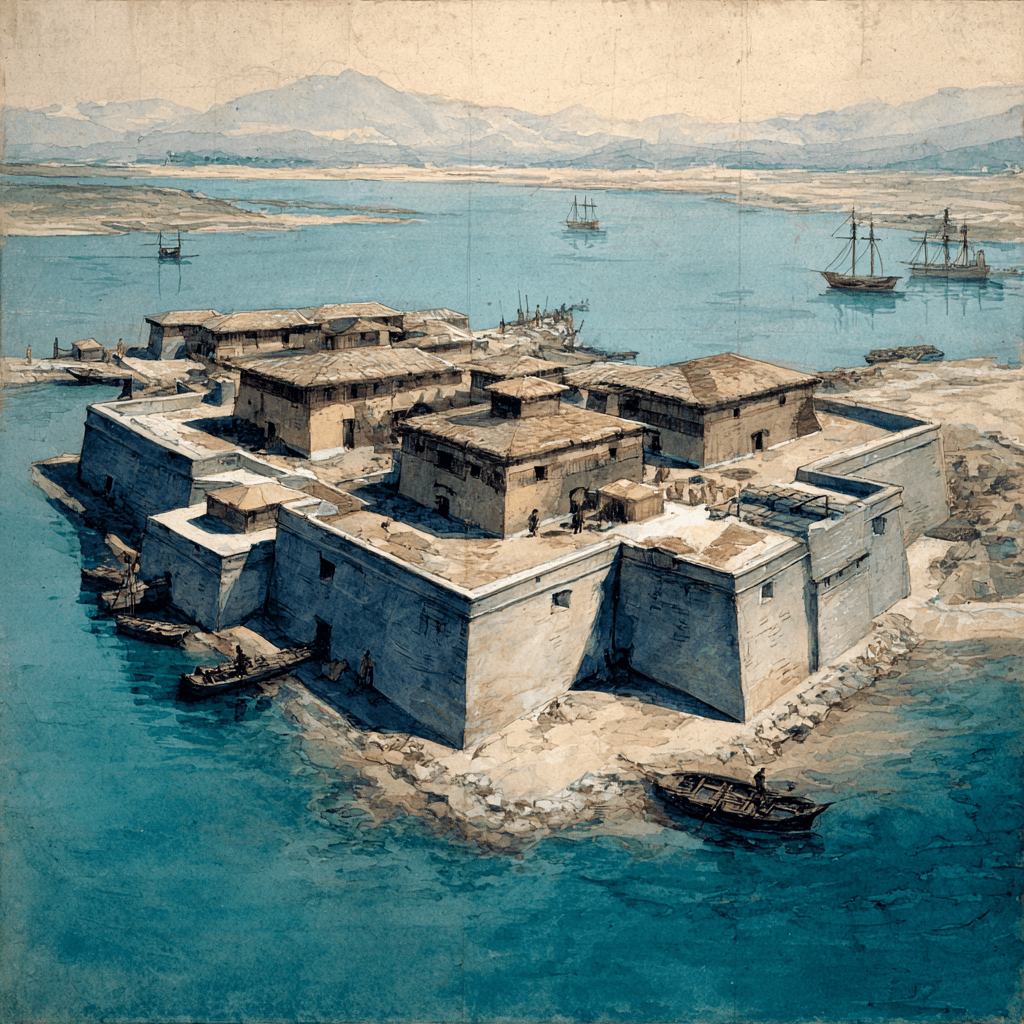
Building began on 2 August at the tip of the Fengguiwei peninsula. The fort was a square European work about fifty-five metres to a side, the rampart seven metres high, a bastion at each corner and twenty-nine guns mounted on them. It was finished in September 1623.
The Dutch did not build it. The Company seized Chinese labourers from the Fujian coast and from passing vessels, between fourteen and fifteen hundred of them. When the work was done and the Ming refused an exchange of prisoners, those still alive were shipped to Bantam and sold. Men died on the works, and nobody recorded how many. In Company papers this is an item of labour supply. In Ming memorials it is abduction.
In September 1623 Nan Juyi became grand coordinator of Fujian, and policy turned from delay to force. On 22 June 1624 a …
In September 1623 Nan Juyi became grand coordinator of Fujian, and policy turned from delay to force. On 22 June 1624 a third wave of troops under Yu Zigao reached Penghu. By the middle of August the Ming had some ten thousand men and two hundred vessels drawn around the square fort at the end of the peninsula.
A truce was signed on 22 August on plain terms: the Dutch would pull down fort and batteries and leave Penghu, and in exchange the Ming would not interfere with their going to Taiwan. Demolition ran from 26 August to 16 September, and whatever could be moved went aboard. In September the last of them reached Tayouan.
That material was later laid into the walls of Fort Zeelandia. The first stone the Dutch set down in Taiwan had been prised off a fort in Penghu. What travelled over with it was a method: build the fort first, discuss the trade afterwards.
The textbook sentence — the Dutch came to Taiwan in 1624 — leaves out the two years in front of it. They did not choose Taiwan. Taiwan was what remained after they were forced out of Penghu, and the Ming let them go precisely because Taiwan lay outside the territory it claimed.
Fourteen to fifteen hundred: both sides could write the number down, and neither side wrote down a name. The Company recorded labour — how many reported to the work, how many could still work. The Ming memorials recorded abduction — which coastal villages were short of whom. When the fort was done these men were neither prisoners of war nor hired hands, because the negotiation over an exchange had collapsed. Those left were put aboard ships for Bantam, and that was a voyage for selling people. This account can hold only that much. Past it there is no record to stand on.
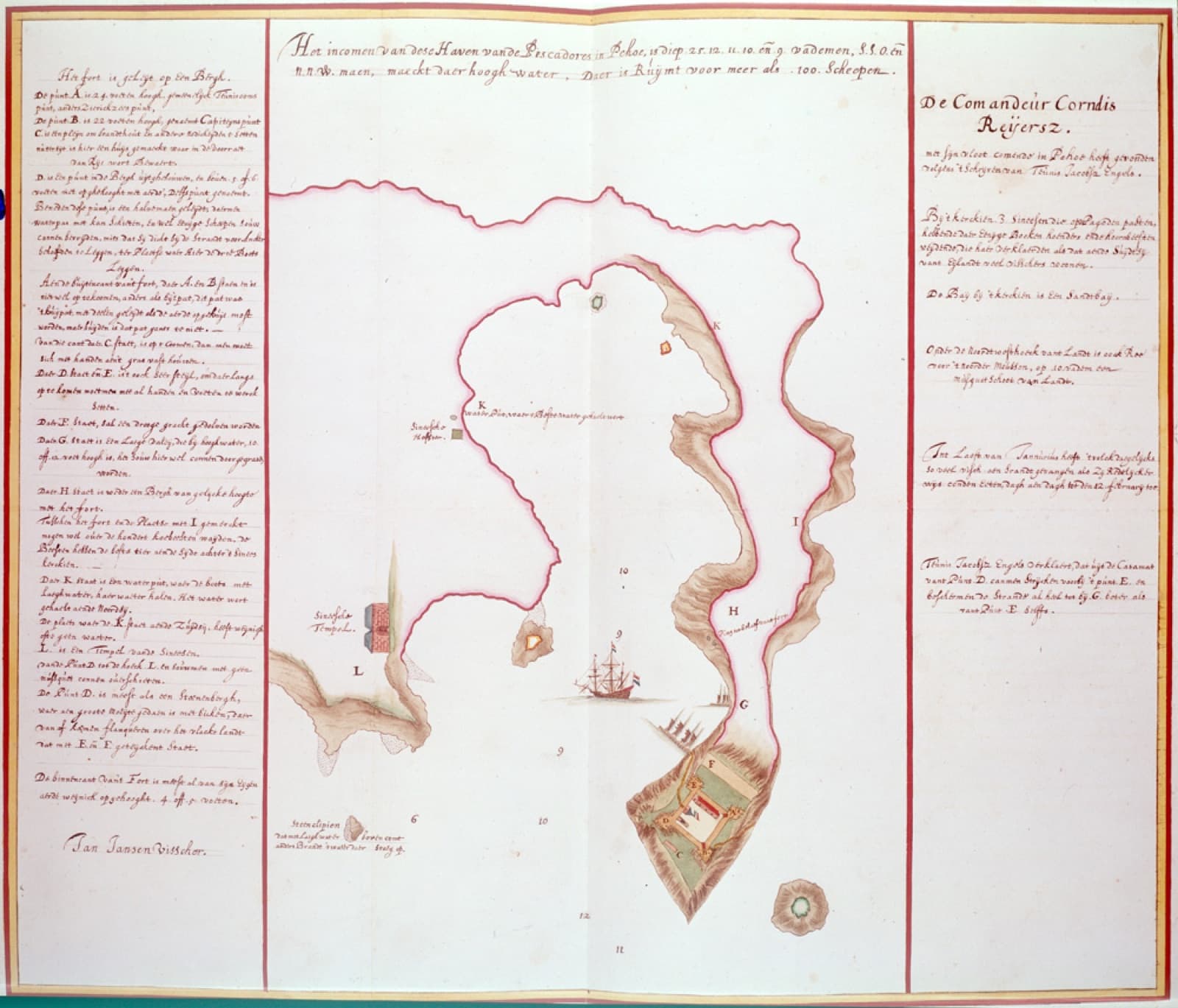
Plan of the fort the Dutch built at Fengguiwei in Penghu, 1623. The square four-bastion work is the one the Ming besieged the next year and the Dutch then demolished, shipping the materials to Tayouan.
Austrian National Library, Atlas Van der Hem, V. XLI, sheet 6 (public domain)
Isle of Time