

The Dutch Came Back
In February 1662 the Dutch marched out of Fort Zeelandia and thirty-eight years of rule ended. Textbooks usually stop there. In fact they were gone for two years.
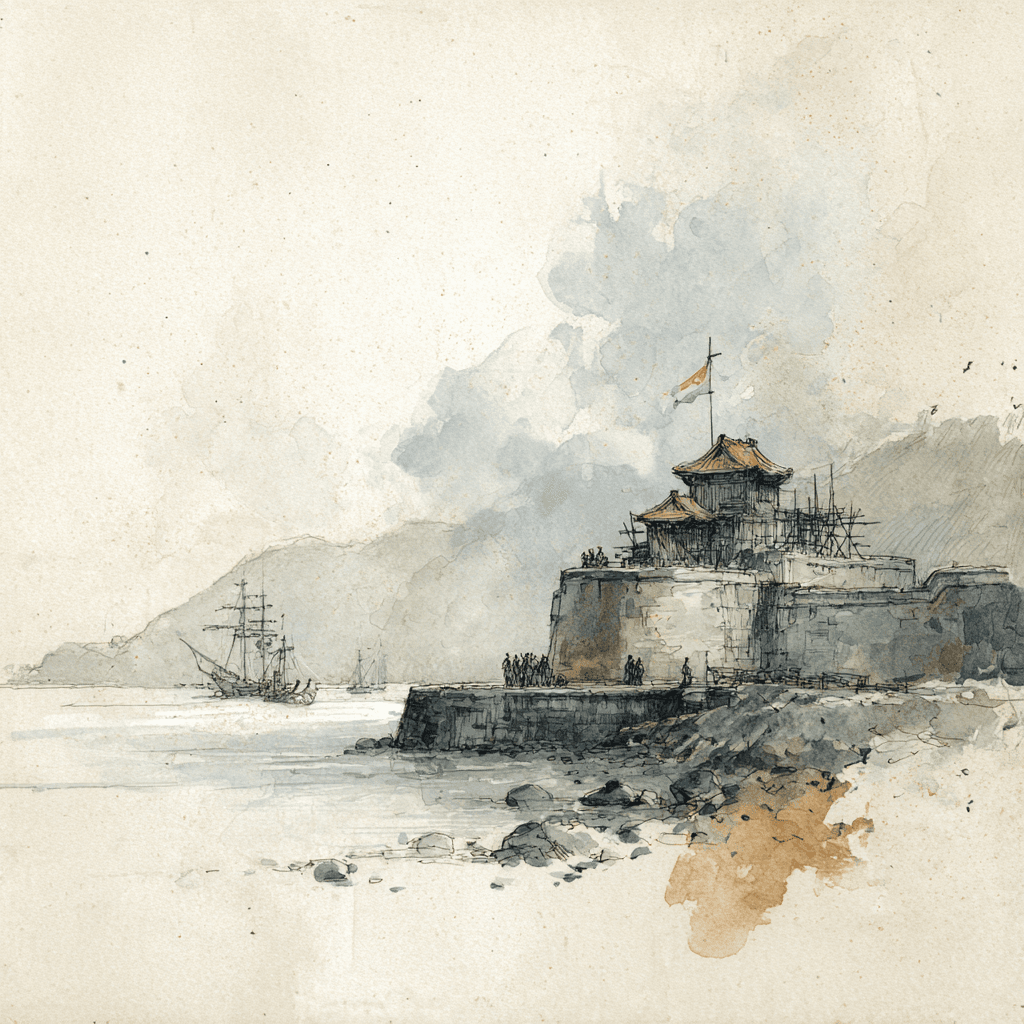
In 1664 a Company fleet went north, took Keelung again, and put back into repair the old fortress they had taken from the Spanish in 1642 and renamed Noord-Holland. The object this time was not Taiwan but the market beside it. The Qing were campaigning against the Zheng, and the Company wanted to be their partner at sea and get back its standing on the China coast in return.
So Keelung flew a third flag. The same bay, the same wall footings: in forty years they had been Spanish, Dutch, Zheng, and now Dutch again. For the Basay below the walls, what changed was the party demanding payment: a new set of books, the same firewood, rice and labour.
The posting was a hard one, and not one of the four years went smoothly. Supplies for the north had to come round from B…
The posting was a hard one, and not one of the four years went smoothly. Supplies for the north had to come round from Batavia, the winter monsoon held ships off the coast, and the sulphur and deerskin produced there could not carry a garrison. Cooperation from the Qing side never got past talk, and the joint attack that had been discussed was never launched; the men the Company sent to negotiate came back trip after trip with nothing but wait a while longer.
In 1668 Zheng Jing sent Huang An north with troops. The Dutch did not defend. They blew up the walls of Noord-Holland, loaded what could be carried, and withdrew from Keelung. From that day the Company held no post and no force anywhere in Taiwan, and this time the departure was final.
These four years are passed over in most accounts because they change no outcome. What they do show is this: the surrender of 1662 was not, to the Company, the loss of Taiwan but the loss of a post. As late as 1668 it was still working out whether the north could be traded back into the China market.
The end came on the day of the demolition, not on the day of the surrender. What remains of it is stratigraphy on Heping Island — a stretch of wall footing that was blown up, and then built over by every authority that followed.
What recurs in the records is not fighting but shortage: rice, medicine, shoes, powder. Ships could not get through in winter, and the numbers on the roll fell. A posting to the north was not advancement inside the Company. It was being sent where the return could not be calculated. In four years they fought nothing worth the name. The last act they carried out was demolition — blowing up their own wall so the other side would not have it. It was a duty with no feat of arms to write up.
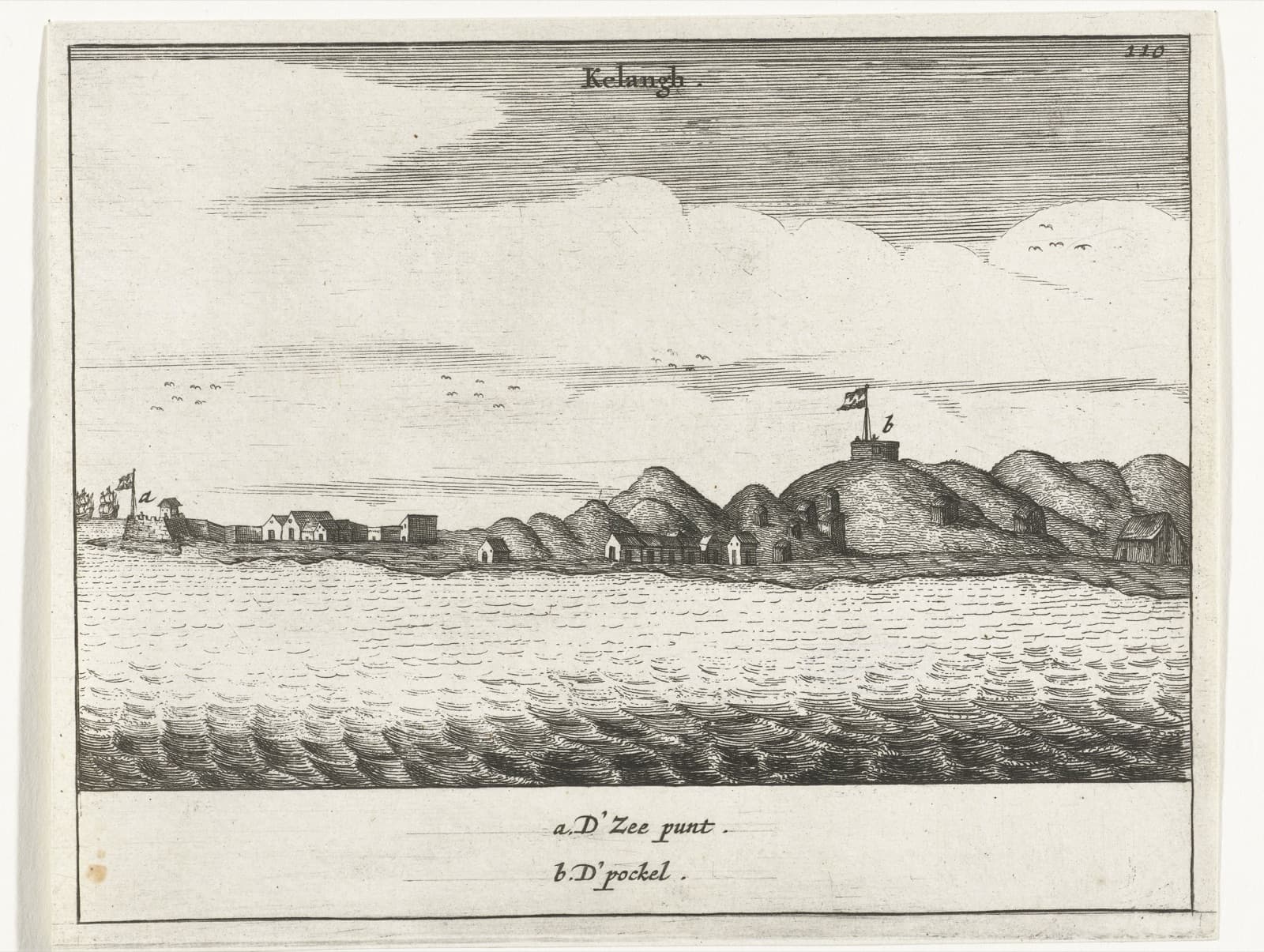
Quelang in 1664, from the plates of Bort's voyage. The Dutch reoccupied the place that year and blew up the fort when they left four years later.
Rijksmuseum, RP-P-OB-75.342 (CC0)
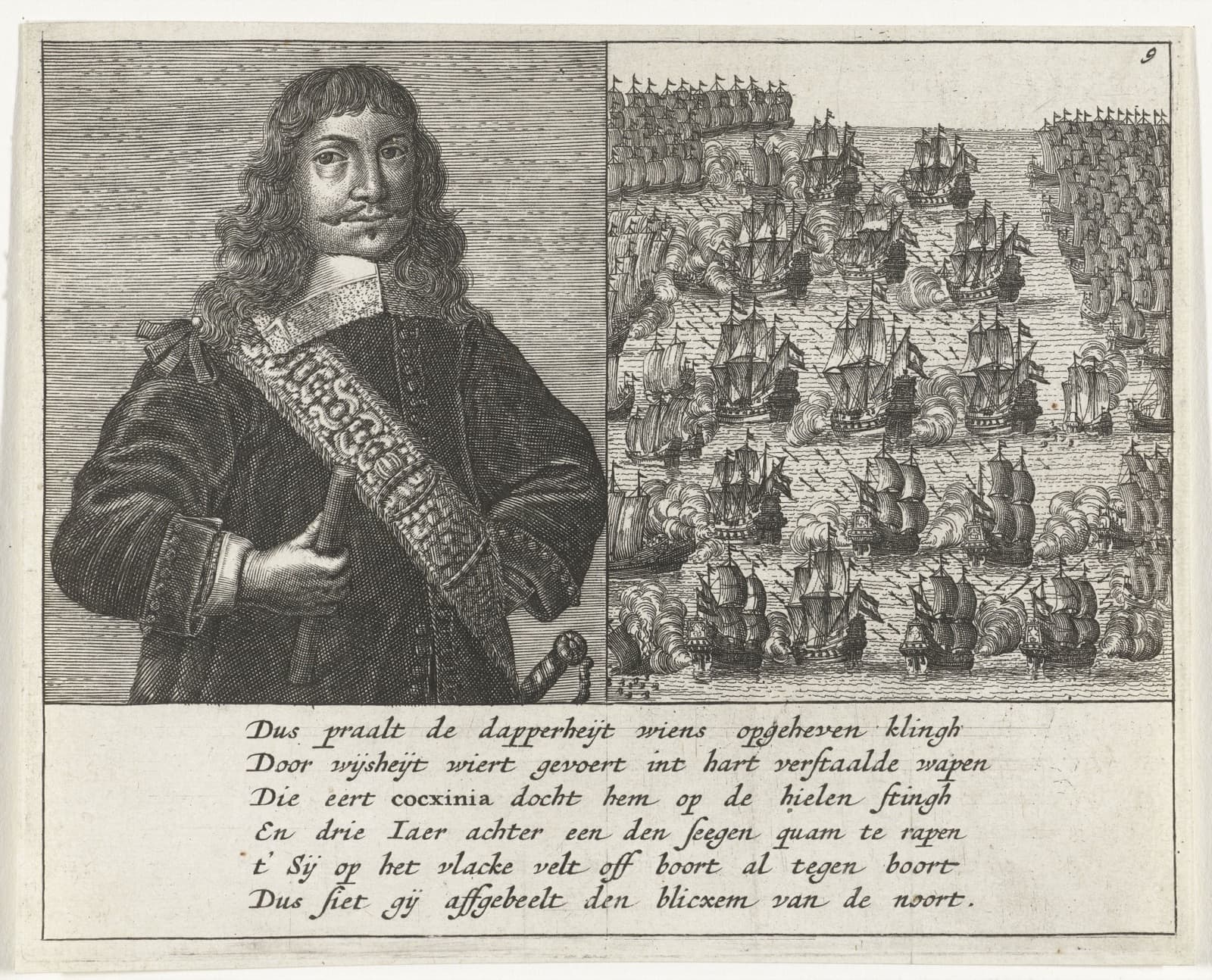
Balthasar Bort, 1662. He commanded the Company's fleets on the China coast and off Formosa between 1662 and 1664.
Rijksmuseum, RP-P-OB-75.333 (CC0)
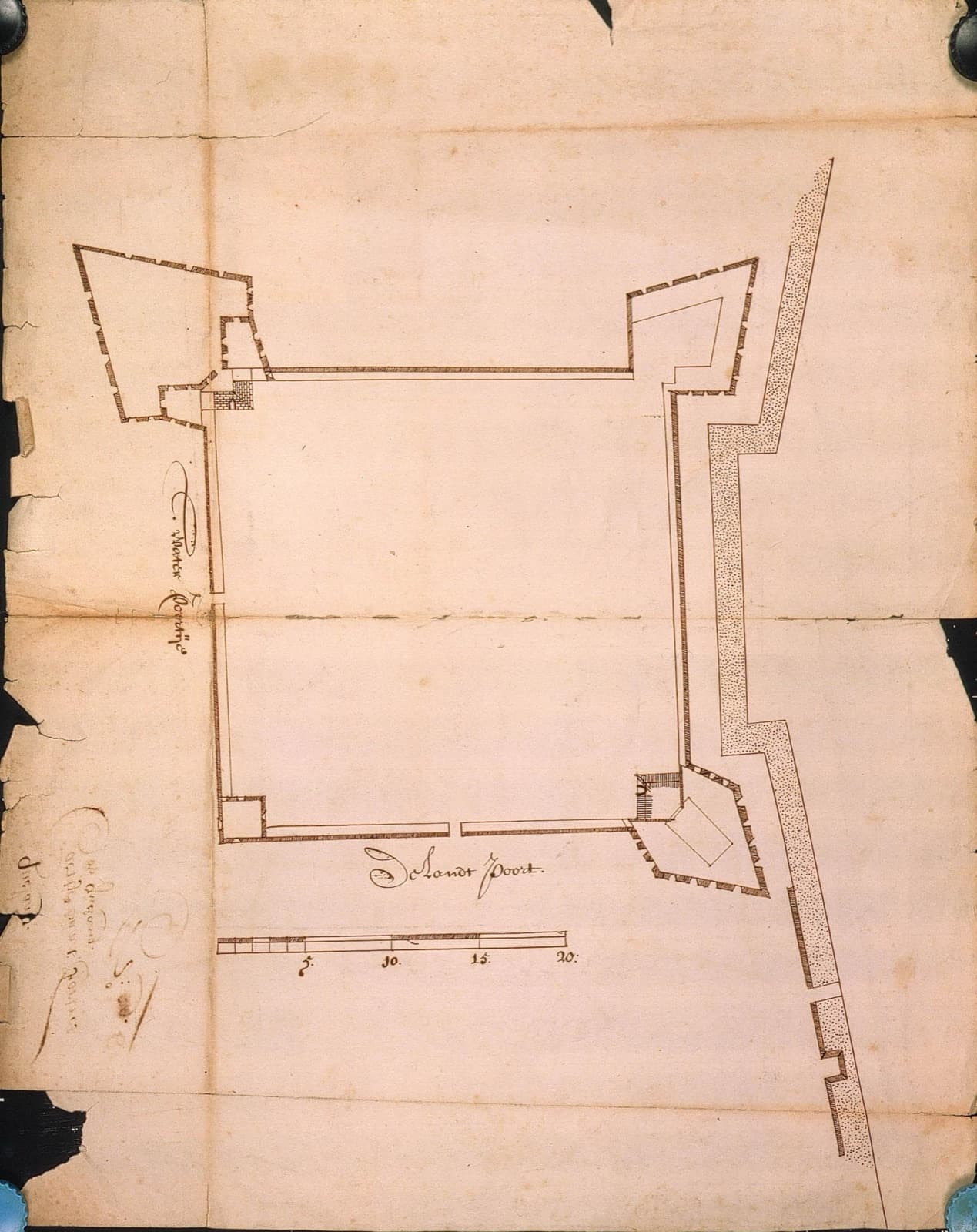
Plan of the fort at Quelang, 1667. By then it was Noord-Holland, rebuilt by the Dutch on the footings of San Salvador, and the following year they blew it up themselves.
Nationaal Archief / Atlas of Mutual Heritage (public domain)
Isle of Time