


The Architect of Tungning
In the year 1665, in the Ningnan Quarter of Tainan, the tropical sun pierced through the vibrant canopy of flamboyant trees, casting its warm glow upon the crimson walls of a newly constructed palace. This was the very first Confucian Temple in the history of Taiwan, destined to become the island’s highest institution of learning.
Standing at the opening ceremony, quietly observing the fruit of his labor, was a middle-aged scholar known to all as the "Prime Minister of Eastern Ning"—Chen Yonghua. He was the most trusted adviser to the young king, Zheng Jing.
At this moment, Taiwan was a fragile, turbulent frontier, still reeling from the sudden death of Koxinga and a bloody war of succession. Indigenous tribes in the central plains were restless, while across the strait, the Qing Empire maintained a suffocating economic embargo.
Facing an isolated island that many deemed a hopeless wasteland, Chen Yonghua chose not to echo the frantic military cries of his fellow generals. Instead, he presented a visionary blueprint to his king, encapsulated in a single, enduring philosophy: "Ten years to nurture the people; ten years to educate them."
To survive on an isolated island starved of resources, Chen Yonghua knew he had to first solve the desperate crises of food and manpower. To this end, he aggressively implemented the Tuntian (military settlement) system, dispatching tens of thousands of Han soldiers across the landscape to clear the wilderness. He decreed that whenever soldiers were not actively fighting, they must work the fields, achieving a state of "soldiers among farmers, and farmers in the military."
Under his masterful orchestration, military camps transformed into self-sustaining villages—a tactical settlement pattern that permanently shaped the geography of Taiwan, leaving its mark on modern city names like Xinying, Zuoying, Liuying, and Qianzhen. To shatter the Qing economic blockade, Chen Yonghua also acted as the chief economic architect of the kingdom.
He learned and refined sugar-refining techniques from the indigenous tribes, turning local sugarcane into a highly lucra…
He learned and refined sugar-refining techniques from the indigenous tribes, turning local sugarcane into a highly lucrative global commodity, while introducing the advanced "filtered-brine sun-drying method" to establish Taiwan's very first salt pans in Tainan. This single innovation ended the island's reliance on inferior smuggled salt from the mainland, ensuring the populace had access to clean, locally produced salt.
Yet, in the heart of Chen Yonghua, merely filling the bellies of the people was never enough. He understood profoundly that a regime relying solely on swords and silver was no better than a pirate crew; to give this island a true, enduring soul, it had to be injected with the cultural essence of civilization. In 1665, he fought through fierce opposition from military generals who slammed the project as a "waste of public funds," and successfully built the Tainan Confucian Temple—revered through the ages as the "First Academy of Taiwan."
Chen Yonghua did not just construct a building; he personally designed the island's very first system of public education and civil service examinations. He decreed that regardless of whether a child was the son of a high official or a penniless farmer, anyone who passed the tiered academic evaluations could enter the royal academy for advanced studies and earn the right to serve in government.
This meritocratic system reignited hope among the thousands of exiled Han scholars who had fled the mainland, and it drew countless literati to risk their lives crossing the dangerous Taiwan Strait. Confucian philosophy and classical education, from that moment on, took deep and permanent root in the soil of the island.
Chen Yonghua spent his entire life working himself to the bone for the state, a devotion so legendary that centuries later, the martial arts novelist Louis Cha transformed him into "Chen Jinnan," the mythical grandmaster of the anti-Qing secret society, the Heaven and Earth Society.
Yet, in the unvarnished truth of history, he possessed no gravity-defying martial arts; he was a slender, soft-spoken scholar who used institutions, education, and industry to build a centenary foundation for Taiwan. Though his twilight years were marred by the political betrayals of the ruthless courtier Feng Xifan, leading to his sorrowful death in Tainan, the blueprint he left behind permanently altered the destiny of the island.
He transformed Taiwan from a volatile pirate enclave and military outpost into a sophisticated, lawful Han society rich in education and global commerce. Today, when we walk beneath the weathered red walls of the Tainan Confucian Temple, or ride the high speed rail through the bustling cities that still bear the names of his ancient military camps, we are walking upon a landscape shaped by the sheer foresight and enduring warmth of the Prime Minister of Eastern Ning.
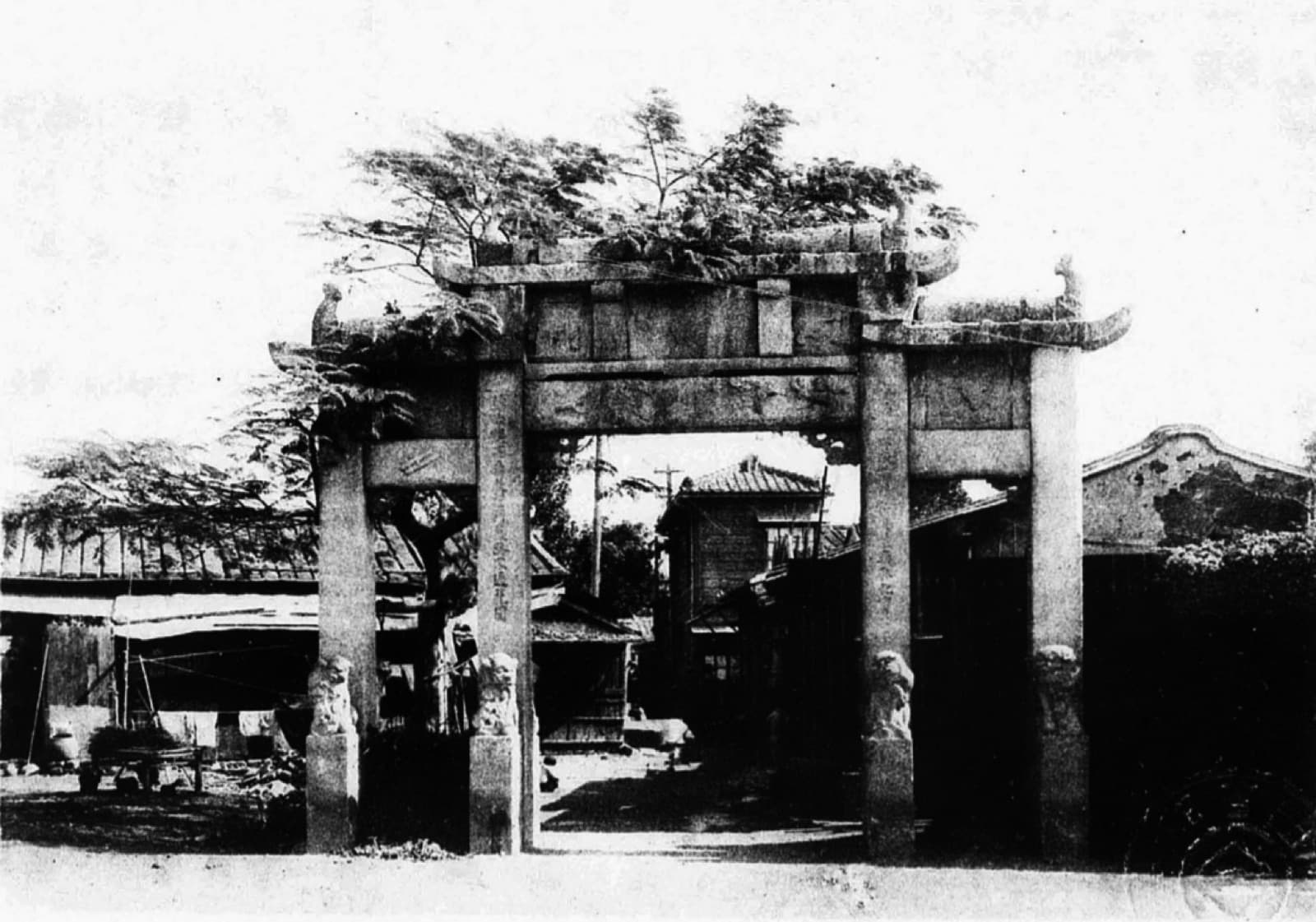
The ceremonial arch of the Tainan Confucius Temple. In 1665 Chen Yonghua petitioned to build a temple and a school here — Taiwan's first Confucian temple and its highest seat of learning, still bearing the name First Academy of Taiwan.
*Rites of the Confucian Temple*, Yicheng Academy, Tainan
Isle of Time