


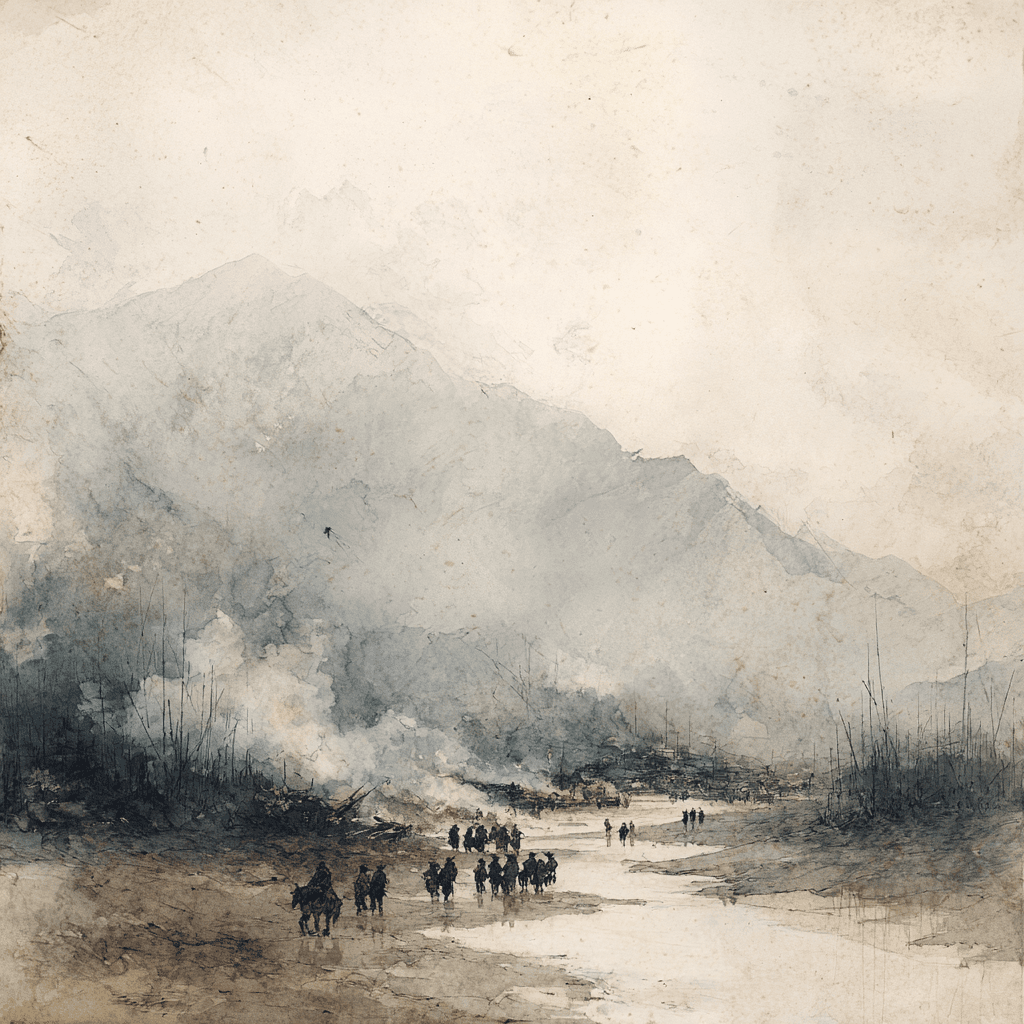
The Kavalan once lived on the Lanyang Plain. After Wu Sha led settlers in to farm it in 1796, Han fields pushed steadily deeper into the plain, and in the 1830s and 1840s a group of Kavalan, led by the people of Kaliawan village, moved south along the coast and rebuilt their villages around the Meilun River on the Qilai Plain. Their neighbours were the Sakizaya, whose main village was Takubuwan, written in Qing documents as Jinlaoye. Sakizaya territory ran roughly from south of the Liwu River to north of the Mugua River.
After 1874 the Qing court set out to open the mountains and pacify the aborigines, and battalion after battalion of troops was stationed on the eastern side of the island. In 1875 Wu Guangliang's troops cut the Central Route, 265 li from Linqipu to Pushige, and in 1877 he became Taiwan Brigade General. In the third and fourth months of 1878, friction built up between Kaliawan, on the north bank of the Meilun, and the troops. Men from the camps levied payments by the field and extorted money in the government's name, forced down the price of local produce they bought, and assaulted women. Chen Huihuang, a Han who bought rice for the battalions, had bullied the villagers for years, and a quarrel over grain lit the fuse.
On 18 June the Kaliawan people seized a Qing dispatch requesting grain, and the next day they attacked the fortified camp at Quezipu from several directions. On 19 August they ambushed and killed another party of soldiers. The court brought in eleven units, among them the Zhuosheng Army, the Zhenhai Central Battalion, the Flying Tiger Army and the Haizi Battalion, more than six thousand men in all. On the other side were some two thousand from Kaliawan and over a thousand from Jinlaoye.
The Sakizaya lived inside Amis villages for 128 years, and outsiders took them for Amis.
On 6 September the Qing troops attacked Jinlaoye first. Takubuwan was ringed by dense thorny bamboo, and the troops used fire, fighting for six hours before they broke in. At dawn on 8 September Wu Guangliang attacked through the bamboo from the south while Sun Kaihua crossed the Meilun from the southwest to strike from the flank. At noon the earthworks of Kaliawan fell. More than a hundred were killed and the rest scattered.
Komod Pazik, the paramount chief of the Sakizaya, was put to death by slicing. His wife, Icep Kanasaw, was pressed between two great logs while dozens of Qing soldiers stood on them and trampled, crushing her to death.
After the war the six Kaliawan villages had lost much of their population, and part of their land was confiscated. The Sakizaya scattered into Amis villages such as Tafalong and Lidaw, and those who fled to the east coast formed fourteen settlements over time. Some Kavalan moved to Xinshe and Lide in Fengbin, others to Changbin in Taitung. The two strongest peoples on either bank of the Meilun declined, and the Cikasuan Amis and the Truku expanded into the space.
The Sakizaya lived inside Amis villages for 128 years, and outsiders took them for Amis. On 25 December 2002 the Kavalan were recognised as Taiwan's eleventh indigenous people. On 1 July 2006 the Sakizaya held their fire god ceremony, Palamal, again after a break of 128 years. On 17 January 2007 the Sakizaya were recognised by name, as the thirteenth people. In Kavalan the war is called keliawan ay penasawan, in Sakizaya u palcawaw i Takubuwan. The Chinese records call it the Kaliawan Incident.
The Kavalan of Kaliawan had already moved once. After Wu Sha's settlers came in 1796, the fields of the Lanyang Plain became Han property one plot at a time, and in the 1830s and 1840s, led by Kaliawan village, they walked down the coast to the Qilai Plain and built their villages again beside the Meilun River. Forty years later, the troops were stationed at their door.
The trouble of spring 1878 piled up one thing at a time: levies by the field, extortion, forced-down prices, and men from the camps assaulting women. The Kavalan were matrilineal, and that last offence touched the whole village. Seizing the grain dispatch on 18 June and attacking Quezipu the next day was the answer they had. At noon on 8 September the earthworks fell and more than a hundred died fighting. The survivors moved once more, this time to Xinshe and Lide in Fengbin, and to Changbin in Taitung.
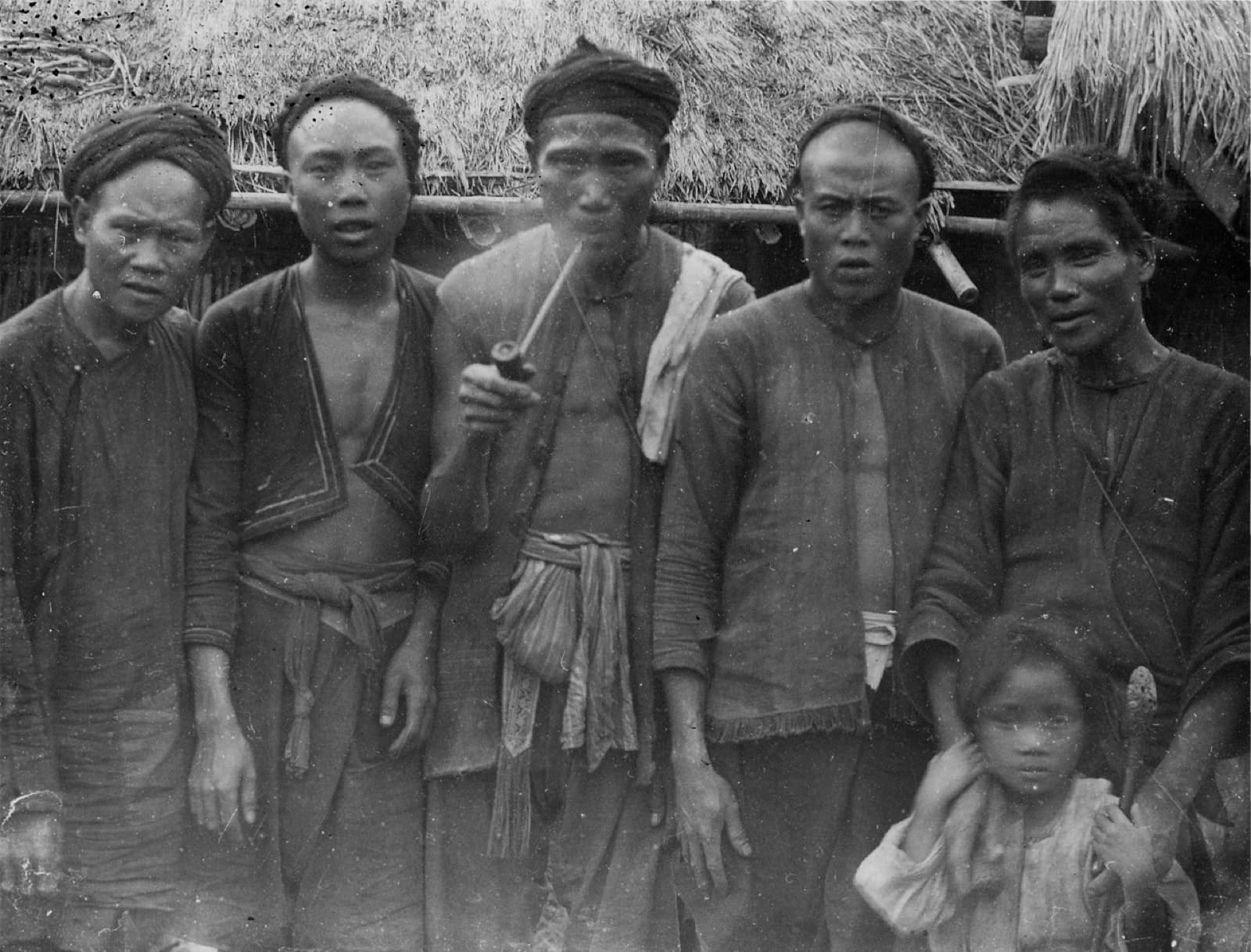
Kavalan people of Kaliawan photographed by the anthropologist Torii Ryūzō around 1900, about twenty years after the Kaliawan Incident.
Torii Ryūzō; University Museum, University of Tokyo
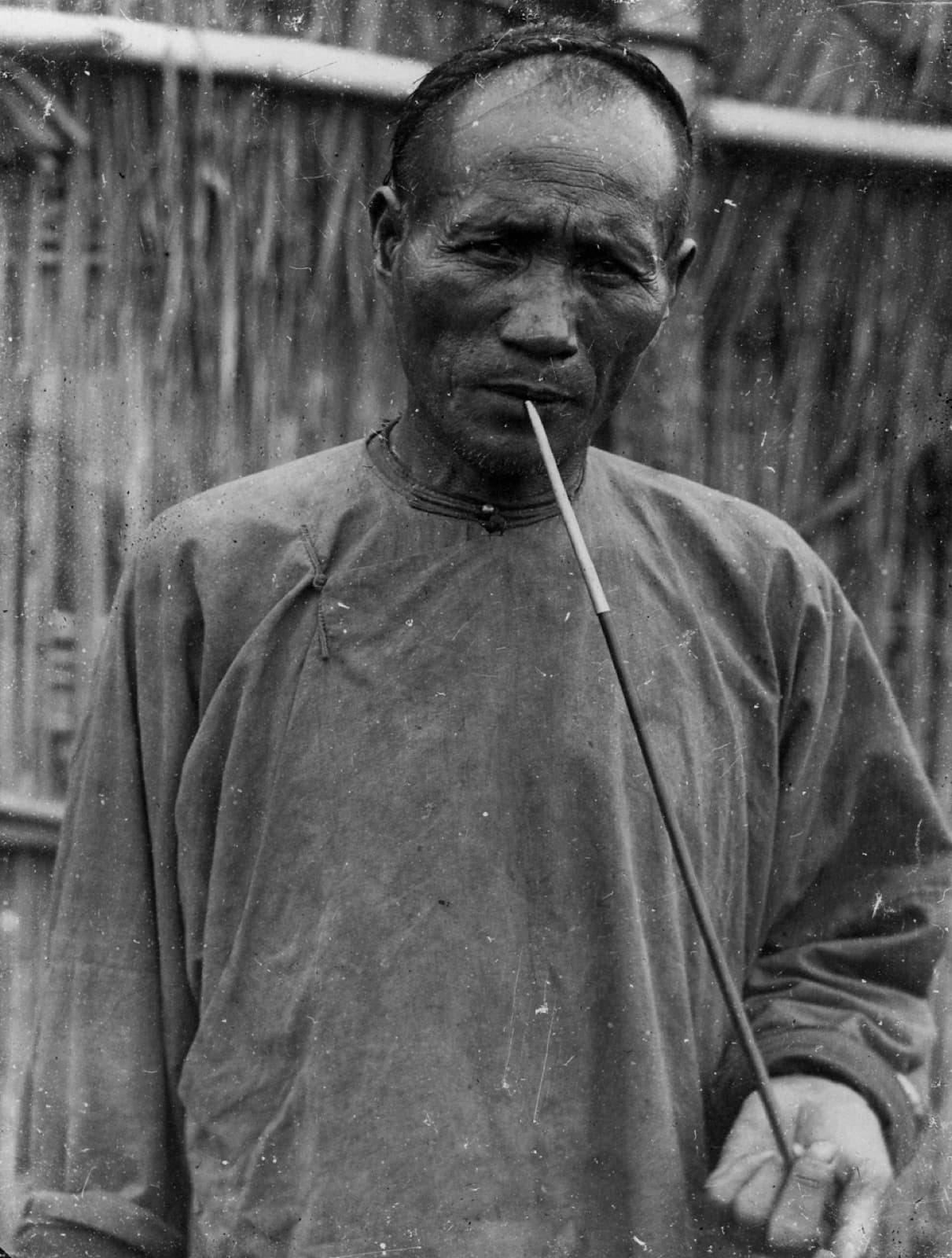
A Kaliawan man photographed by Torii Ryūzō in 1896. The original record notes his queue and long pipe.
Torii Ryūzō; University Museum, University of Tokyo, Report No. 18