


Modern Infrastructure
Japanese colonial rule brought systematic modernization to Taiwan on a scale unprecedented in the island's history. The colonial government constructed a north-south railway trunk line completed in 1908, expanded modern harbors at Keelung and Kaohsiung, built a comprehensive network of roads, and established a public health system that dramatically reduced mortality from malaria, plague, and cholera through quarantine stations, water treatment, and mandatory vaccination campaigns.
The agricultural transformation was equally far-reaching. The Chianan Irrigation Project — an engineering marvel designe…
The agricultural transformation was equally far-reaching. The Chianan Irrigation Project — an engineering marvel designed by Hatta Yoichi and completed in 1930 — converted the barren Jianan Plain into Taiwan's most productive rice and sugar-growing region by channeling water from the mountains through an extensive canal system. Scientific agriculture, improved seed varieties, and chemical fertilizers boosted crop yields to levels that made Taiwan a crucial food supplier for the Japanese homeland. Sugar refineries operated by zaibatsu corporations like Mitsui and Mitsubishi became the backbone of the colonial economy.
Yet this modernization was fundamentally extractive. Taiwan's resources — rice, sugar, camphor, timber — flowed overwhelmingly to Japan. Taiwanese students were segregated into a separate and inferior education track. Employment in government and major corporations was reserved for Japanese nationals. Political participation was nonexistent until the limited local elections of the 1930s. The contradiction between modern infrastructure and colonial inequality would become a defining tension of the era — one that shaped how later generations remembered and debated the legacy of Japanese rule.
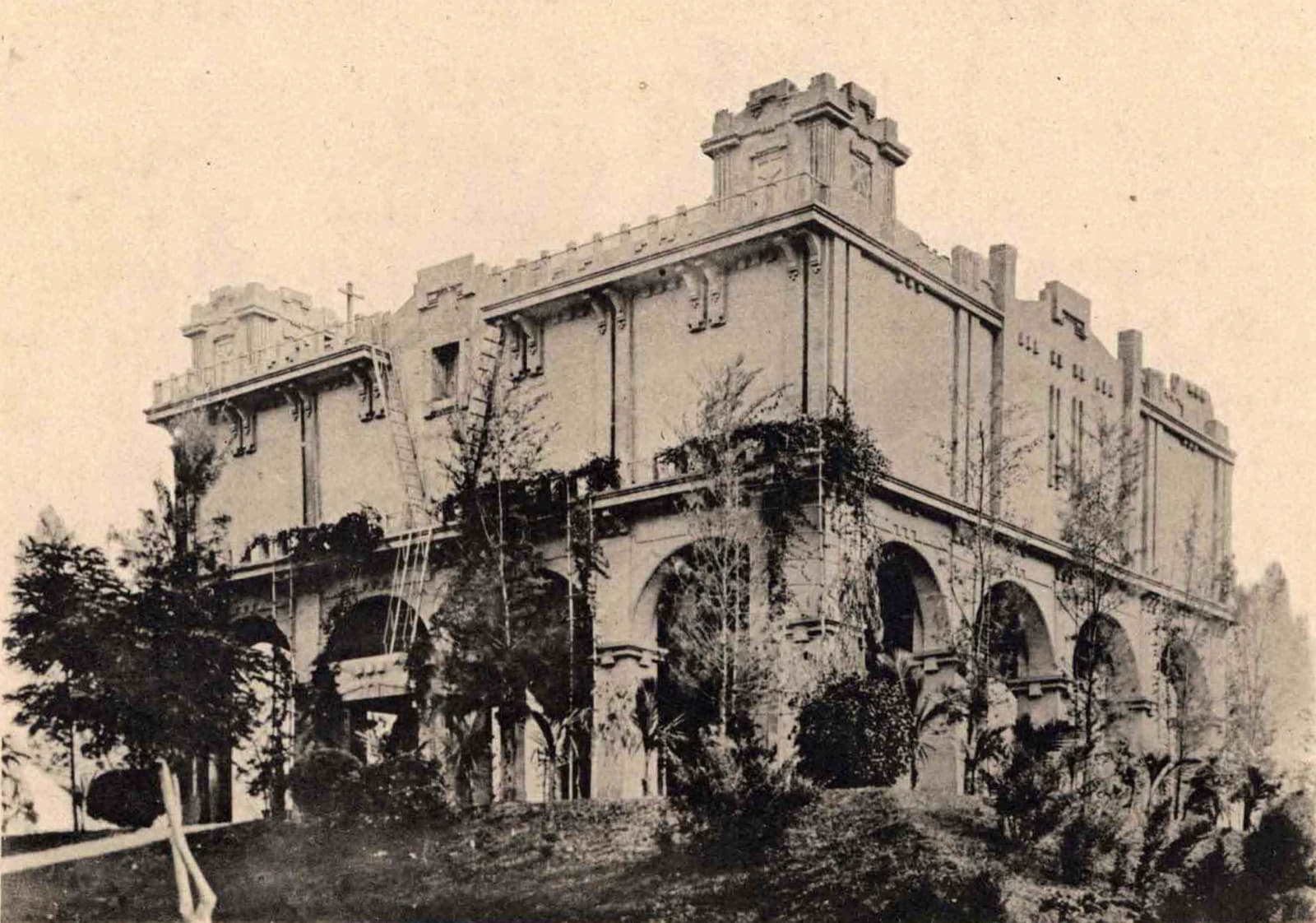
The purification tower of the Taichung waterworks. The Government-General laid piped water through the main towns, linking catchment, filter beds and distribution towers. Behind the language of modernity lay a calculation about controlling epidemics.
*Records of Taiwan's Waterworks*, Civil Engineering Bureau, Government-General of Taiwan
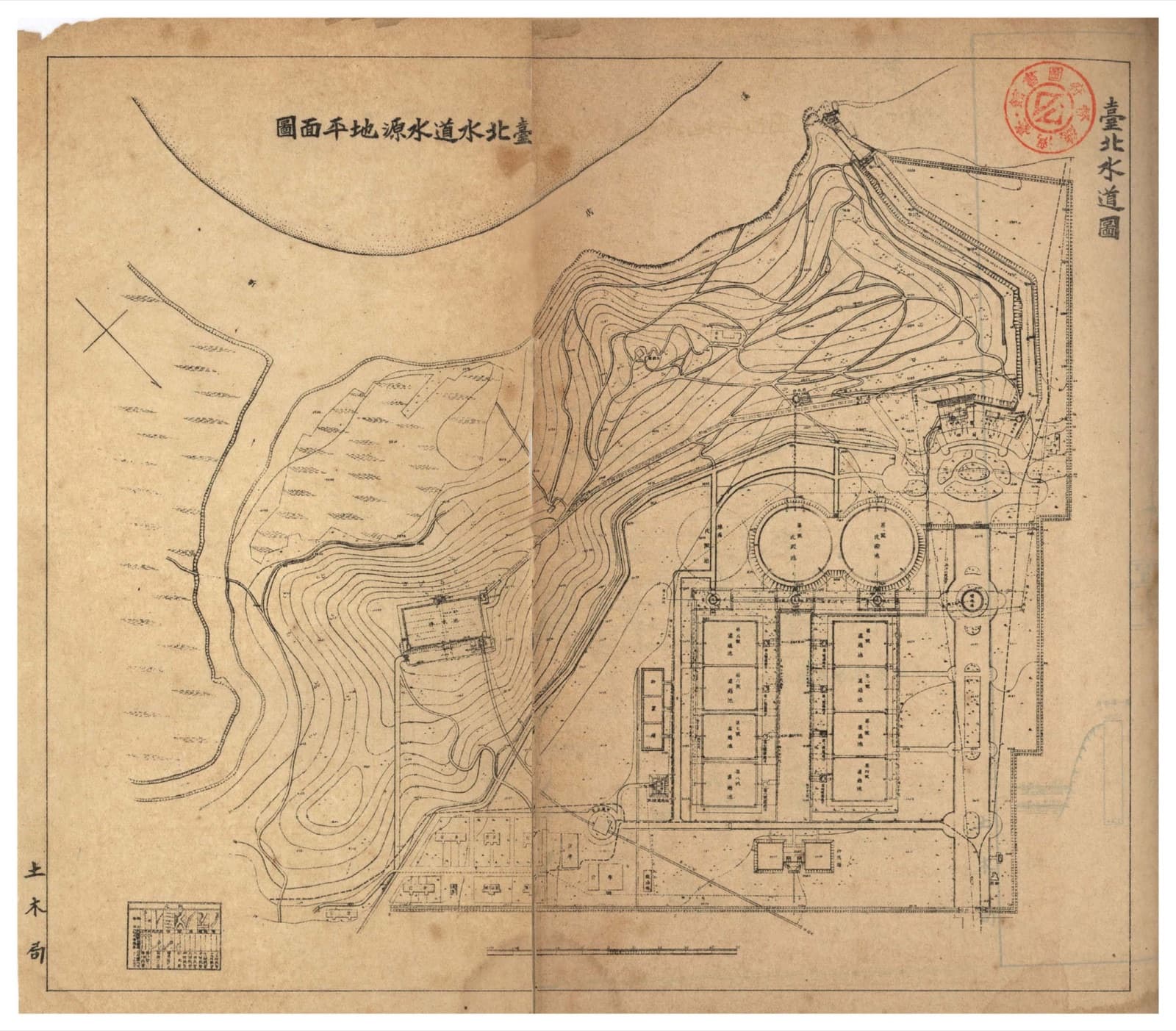
Site plan of the Taipei waterworks, 1918. Between the contour lines sit the intake, the settling basins and the pump house — a city's water supply set down as a drawing.
*Atlas of Taiwan's Waterworks*, Government-General of Taiwan; National Taiwan Library
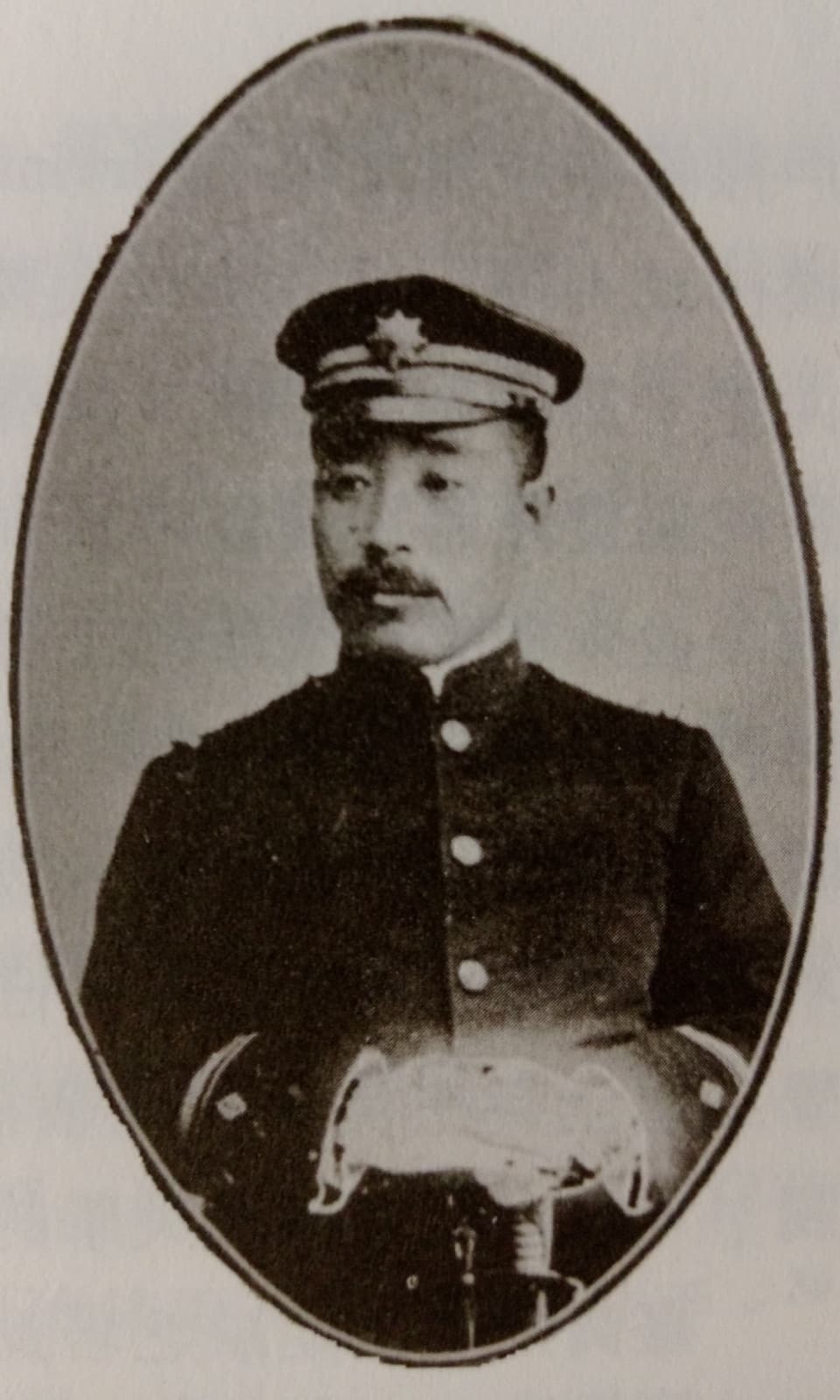
Watanabe Keinoshin, chief affairs officer of the railway bureau. The trunk line opened along its full length in 1908, cutting the journey from Keelung to Kaohsiung from days to a single day.
*History of the Taiwan Railway*, vol. 2, Railway Bureau, Government-General of Taiwan
Isle of Time