Archives

Under the Rising Sun

Japanese Colonial Taiwan: Resistance, Modernization, and Wartime Mobilization (1895–1945)

30 volumes

Vol. 1

The Treaty of Shimonoseki

On April 17, 1895, the Treaty of Shimonoseki ended the First Sino-Japanese War and ceded Taiwan and the Penghu Islands to Japan in perpetuity. The decision was made without any consultation of Taiwan's inhabitants — their fate was sealed in a conference room in the Japanese port city of Shimonoseki, where Qing envoy Li Hongzhang and Japanese Prime Minister Itō Hirobumi negotiated the terms of China's surrender. For the Qing court, Taiwan was a disposable bargaining chip; for the two million people living on the island, it was a catastrophe.

2 images

Vol. 2

The Yiwei War

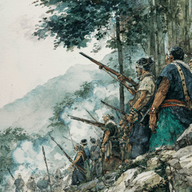
In the early summer of 1895, an enormous fleet darkened the sea off Cape Santiao near Keelung. It was the Imperial Guard Division, led by Prince Kitashirakawa Yoshihisa, a general of the Imperial Japanese Army. For the people of Taiwan, it was a moment of historical despair — of being torn open. Across the strait, the Qing Empire had suffered devastating defeat in the First Sino-Japanese War, signed the Treaty of Shimonoseki, and ceded Taiwan and Penghu to Japan in perpetuity. When the news of the imperial court's "abandonment of Taiwan" reached the island, lamentations rose everywhere. Gentry cried out in anguish: "The prime minister has the power to cede land — but this lonely subject has no strength to turn back the heavens!"

3 images

Vol. 3

The Yunlin Massacre

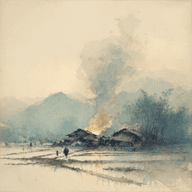
Between June 19 and June 22, 1896, Japanese troops burned their way through the villages of Yunlin, one settlement at a time. The Governor-General's own tally afterwards was 4,925 houses in 56 settlements; another report put it at 4,947 in 55. The area covered what are now Douliu, Dounan, Gukeng, Dapi, Citong and Linnei, along with Zhushan across the Zhuoshui River in Nantou. The worst hit was Angukeng, where 505 households burned.

Vol. 4

The Flatfish's Eyes

In March 1898 Kodama Gentaro became Taiwan's fourth Governor-General, and arriving with him to take charge of civil affairs was Goto Shinpei. For the previous three years the Government-General had relied on military campaigns. Dozens of villages around Yunlin had been burned, resistance had not stopped, and some in Japan were even proposing to sell Taiwan. Goto had trained as a doctor and had headed the Home Ministry's public health bureau, and he looked at the island much as he would look at a patient.

3 images

Vol. 5

Armed Resistance

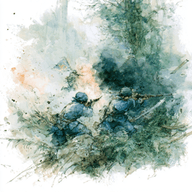
The early decades of Japanese rule were marked by persistent armed resistance, revealing the depth of opposition to colonial authority across both Han and indigenous communities. In the first years after annexation, guerrilla fighters known as 'righteous bandits' (義匪) waged a sustained insurgency across the countryside, prompting the colonial government to launch massive 'bandit suppression' campaigns that killed thousands.

3 images

Vol. 6

The Opium War

In early twentieth-century Taiwan, while "the Greatest Thief Under Heaven," Liao Tianding, leapt across rooftops in the dark and challenged the Government-General with raw force, another struggle — bloodless, yet even more breathtaking — was quietly opening in laboratories and hospital wards, waged by a scholarly young man in gold-rimmed glasses. The enemy of this war was not the proud Japanese police, but a white demon that had gnawed at Taiwan's social structure since two centuries of Qing rule had begun, leaving over a hundred thousand families ruined: opium.

2 images

Vol. 7

Modern Infrastructure

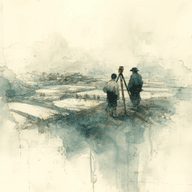
Japanese colonial rule brought systematic modernization to Taiwan on a scale unprecedented in the island's history. The colonial government constructed a north-south railway trunk line completed in 1908, expanded modern harbors at Keelung and Kaohsiung, built a comprehensive network of roads, and established a public health system that dramatically reduced mortality from malaria, plague, and cholera through quarantine stations, water treatment, and mandatory vaccination campaigns.

3 images

Vol. 8

The Greatest Thief

In the early twentieth century in northern Taiwan, while the Imperial Japanese Government-General forged the island into an iron-bound police state through the strict baojia system and the omnipresent "branch-station" Japanese police, in the damp midnight of Taipei's Dadaocheng a dark figure was moving — gliding across the red-brick roofs of Baroque-style mansions, leaping rooftops in the night sky like a swallow.

1 image

Vol. 9

The Miaoli Trials

In the winter of 1912 a Hakka man not yet thirty took ship from Guangdong back to Miaoli. Lo Fu-hsing had been born in Batavia in the Dutch East Indies, his family seat at Zhenping in Guangdong. He had come to Taiwan at seventeen with his grandfather, lived some years in Niulanhu village in Miaoli, and attended the Miaoli public school. Later he left the island to teach in the South Seas, and in 1911 he took part in the Canton rising at Huanghuagang and walked away from it alive. This time he came back with an assignment from the Chinese revolutionary alliance.

Vol. 10

The Taroko War

The high mountains of Taiwan were the homeland of Indigenous peoples who for centuries had bowed to no lowland power. To a colonial state hungry for the resources of the forests and determined to complete its rule over the whole island, these cloud-wreathed ranges were the last and hardest frontier to conquer. In 1910 Governor-General Sakuma Samata launched a Five-Year Plan to Subjugate the Aborigines of unprecedented scale, resolved to bring the highlands into the fold by force.

3 images

Vol. 11

Sun Moon Lake Hydropower

To remake Taiwan from a farming colony into an industrial base that could produce for the empire, the colonial state craved one thing above all: cheap, abundant electric power. Casting its eye across the island, it found the answer in the ceaseless mountain streams deep in the central ranges. And so a plan took shape, audacious almost to the point of fantasy — to tame the waters of the mountains and channel them into Sun Moon Lake.

3 images

Vol. 12

The Chianan Canal Miracle

In 1920s southern Taiwan, while the gunfire of the "indigenous pacification policy" still echoed faintly through the depths of the Central Mountain Range and the literati of Taipei's Dadaocheng still cried out for liberty and equality, a vast yet lifeless wasteland stretched across the horizon of southern Taiwan. That was the Chianan Plain — fully 150,000 hectares of it.

3 images

Vol. 13

Taiwan Parliament Petition

In the early 1920s, a group of Taiwanese students living in Tokyo began, under the lamplight of a foreign city, to rethink their own destiny and that of their island. Japan was then in the high tide of Taisho democracy; the vocabulary of parliamentary politics, liberty, and human rights circulated through the streets and campuses of the imperial capital. Taiwan itself, however, remained bound by a colonial system in which the Governor-General held legislative, executive, and judicial power in a single hand. It was within this gap that these young men formed the New People's Society in 1920 — a core group to gather like-minded comrades and search for a way forward, and the seed of a political movement that would last more than a decade.

3 images

Vol. 14

Awakening the Taiwanese Soul

In the Taiwan of the 1920s, as the armed resistance and outlaw legends of the dark night fell silent one after another under Japanese police pressure, a different revolution erupted — one without bloodshed, without weapons, yet striking far deeper at the heart of imperial rule. This "revolution of identity" exploded into the streets of Dadaocheng and the scent of tea. It was a golden age of global ideological currents, in which the Taiwanese subjective consciousness finally opened its eyes after a long dark night. Taiwan had stepped out of the wild disorder of the Qing era, only to fall into institutional discrimination as "second-class subjects" under the Government-General.

3 images

Vol. 15

The Chih-ching Incident

The Taiwan of the early 1920s stood in an unusual political season. In the wake of the First World War, the ideals of national self-determination and constitutional politics swept across the globe and quietly crossed the strait as well. A generation of Taiwanese intellectuals, schooled in the new learning, was no longer content to live under the Governor-General's unchecked rule. Instead they sought, within the seams of the system, to win a measure of voice for the island's six million people. The stage they chose was not the street with its blades and guns, but the assembly hall and the petition — a struggle waged in the language of law.

1 image

Vol. 16

The New Literature Movement

The Taiwan of the 1920s was living through a double awakening, political and cultural. As the parliament petitions and the lectures of the Cultural Association stirred the island's political consciousness, a parallel revolution quietly caught fire on the page. Inspired at once by China's May Fourth vernacular movement and by modern Japanese literature, a younger generation of Taiwanese intellectuals began to ask in earnest: in what language, and for whom, should literature be written?

3 images

Vol. 17

The Erhlin Incident

Under Japanese colonial rule, Taiwan's sugar industry was built into one of the empire's most important economic pillars — yet that sweet wealth rested on the sweat and humiliation of the cane farmers. Through the system of designated "raw-material collection zones," the Government-General carved every stretch of cane field into the territory of a single assigned sugar company, so that the cane a farmer grew could be sold only to the one mill within his zone. As a result, when the cane would be harvested and weighed, how it would be graded, and what price each hundred catties would fetch were all decided by the company alone. The farmers had no room to bargain and no way to check whether the scales — held entirely in the company's hands — were honest. Day after day of toil brought them suppressed prices and weights that had plainly been tampered with. Small wonder that a bitter, wry saying passed from mouth to mouth: "the smartest man in the world can't beat the sugar company's scales." That single refrain captured an entire generation of growers' resignation and resentment toward this structural exploitation.

2 images

Vol. 18

Horai Rice

In 1912 Iso Eikichi, twenty-six years old, reported for work at the Government-General's agricultural experiment station. The island grew native indica rice, long, slender and not very sticky, which Japanese diners did not care for. Rice seed brought from Japan did poorly on Taiwan's lowlands: the heat made it head too early, and the harvest was poor. What the Government-General wanted was a rice that could be grown in Taiwan and sold in Japan.

2 images

Vol. 19

The Taiwanese People's Party

In the early 1920s, driven by the newspaper Taiwan Minpao and by lecture meetings held across the island, Taiwanese society experienced an unprecedented awakening. Islanders who had once known only taxes and corvée began to speak openly of assemblies, local self-government, and basic civil rights. At the forefront of this current stood a generation of newly educated intellectuals, physicians, and young landowners, gathered beneath the banner of the Taiwan Cultural Association, founded in 1921 with cultural enlightenment as its mission. Through reading rooms, summer schools, and touring lectures, the sparks of awakening were scattered into towns and villages across the island.

3 images

Vol. 20

The Taiten Exhibition

In 1927 the history of art in Taiwan turned a new page. That year the colonial education authorities founded the Taiwan Fine Arts Exhibition — the Taiten — giving the island for the first time a grand and public stage on which painters could compete for recognition before every eye. Held annually and later continued as the Governor-General's exhibition, the Futen, it ran until 1943 and became the beating heart of Taiwan's first true art world.

3 images

Vol. 21

Seediq Bale

After the fires of the Yiwei War died out in 1895, the Rising Sun flag was planted across the plains and harbors of Taiwan. Yet deep in the Central Mountain Range — those forests forever wreathed in mist, revered by the Seediq as the sacred domain of their ancestral spirits — the empire's rule could never truly conquer the human heart. Thirty-five years later, a rage of blood and tears, long suppressed, would erupt upon the hunting grounds of Wushe.

3 images

Vol. 22

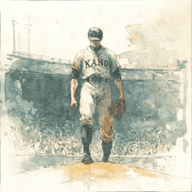
The Koshien Dream

In 1930s Taiwan, while the wastelands of the south, irrigated by Hatta Yoichi's Chianan Canal, broke into endless waves of golden rice, another miracle — a storm of sweat, tears, and black-earth youth — exploded onto the red-clay baseball diamond of Chiayi. It was a colonial era of rigid class lines and high ethnic walls. On the baseball map of the Empire of Japan, Taiwanese teams had long been regarded as "second-tier ragtag outfits," and no one ever believed that boys from this southern island could one day step onto Japanese baseball's supreme sanctum — Koshien.

3 images

Vol. 23

The Guandaoshan Earthquake

At two minutes past six on the morning of 21 April 1935 the centre and north of the island were shaken awake. The epicentre lay near Guandaoshan in Dahu district of Hsinchu prefecture, the magnitude was 7.1, and the focus was only a few kilometres down. At that hour most people were still indoors — lighting the stove, dressing, about to leave for the fields.

Vol. 24

Fifty Days of the Exposition

At half past nine on the morning of 10 October 1935, the Taiwan Exposition to commemorate forty years of rule opened in Taipei. The rule in question was Japan's, which had begun in 1895. Forty years had passed, and the Government-General wanted to lay out all the results at once. The exposition ran until 28 November, fifty days in all. It was the first island-wide exposition on this scale ever held in Taiwan.

2 images

Vol. 25

Kōminka Movement

In 1937, gunfire at the Marco Polo Bridge crossed the Yellow Sea and bore down upon this island. As freighters continued to load Taiwan's rice, sugar, and camphor for the Japanese home islands, and as the canals of the Jianan Plain went on watering a land already colonized for thirty years, atop the newly consecrated grounds of the Taiwan Grand Shrine at Yuanshan in Taipei, a ritual bell rang out through the morning mist, again and again. In that very same hour, inside a century-old temple on the island's western coast, the wooden body of Guanyin was kicked to the earth by the boots of the military police, and fire spread across the mud — this was the "Temple Rectification Movement." Shrine and flame together carved the deepest fissure in Taiwan's colonial history: the Kōminka Movement, a vast imperial project that sought, in less than a decade, to rewrite the soul of an entire generation of Taiwanese.

2 images

Vol. 26

Wartime Mobilization

When full-scale war with China broke out in 1937, Taiwan's fate was utterly rewritten. No longer merely the colonial agricultural base of the Japanese empire, it was pushed forward as a frontline springboard for the 'southward advance' into Southeast Asia. Beginning with the last military Governor-General, Kobayashi Seizo, who proclaimed the threefold line of 'imperialization, industrialization, and use as a southward base,' the whole island was progressively remade into an indispensable part of the empire's war machine. The eighteenth Governor-General, Hasegawa Kiyoshi, who succeeded him in 1940, was the key figure who drove this line to its extreme. A Japanese navy admiral by background, he governed Taiwan in the crucial years when the Pacific War broke out in full, and in 1941 he founded the Kominhokokai (Imperial Subjects Public Service Association), enrolling the whole island's population from the top down in a service organization that mobilized manpower, materiel, and spiritual energy in support of the front. Compared with his predecessor he took a somewhat more conciliatory cultural stance, courting the Taiwanese gentry under the slogan of 'Japan and Taiwan as one' in an effort to win their full commitment to the war.


2 images

Vol. 27

Beneath Jinguashi

In 1890, while the Qing government was building a railway bridge over the Keelung River, workers panned gold dust from the riverbed. The news travelled upstream. In 1893 someone found a gold deposit on the hills at Jiufen, and the following year another was found on a rocky hill to the east shaped like a pumpkin. That hill came to be called Jinguashi, Gold Melon Stone.

2 images

Vol. 28

The Takasago Volunteers

Japanese forces took Manila in January 1942, and the front kept moving south, closer to the equator, until it reached the rainforests of the Philippines and New Guinea. The Imperial Army had been trained for temperate ground. What broke there first was not the line but the supply: trucks could not get in, horses died, ammunition and tinned rations ended up on men's backs, and malaria and dysentery put soldiers down faster than bullets did. The army turned to the mountains of Taiwan — to people who had spent their lives moving where there were no roads.

1 image

Vol. 29

Orphan of Asia

In 1943, as the fires of the Pacific War swept across the South Seas and censorship on Taiwan reached its height, in the corner of a Taipei newspaper office a Taiwanese reporter past the age of forty spent his days writing copy that glorified the "holy war." By night, however, he returned to his rented room and, by the dim glow of a lamp, secretly filled sheet after sheet with a novel he knew could never be published. He understood that if the patrolling military police ever uncovered the manuscript, prison — or something worse — awaited him. This man was Wu Zhuoliu, and the manuscript he hid in drawers and in the gap above the ceiling would later be hailed as an immortal classic of Taiwanese literature: Orphan of Asia. The word "orphan" was the annotation he wrote for the inner life of an entire generation of Taiwanese.

Vol. 30

The Raid on Taipei

On 25 November 1943 thirty American aircraft wrecked the runway at Hsinchu. It was the first American attack on Taiwan. A year later, from 12 October 1944, the bombing became routine. In the same month the air battle off Taiwan and Okinawa all but wiped out Japan's fighter units on the island, and from then on American planes came and went through Taiwan's sky and were rarely intercepted.

2 images