


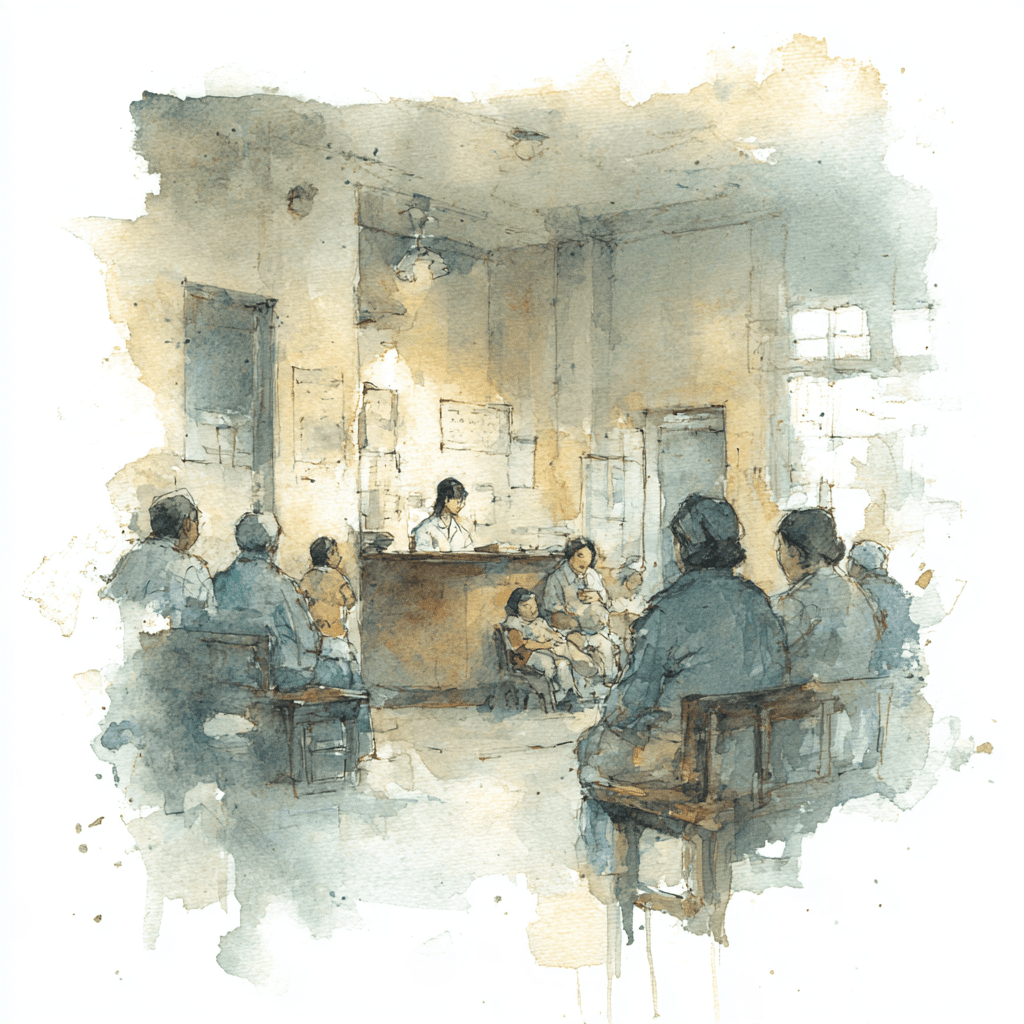
On 25 February 1995 Premier Lien Chan ordered that National Health Insurance would open as planned on 1 March. The Bureau of National Health Insurance, which was to run it, had only been set up on 1 January, and its first director-general, Yeh Chin-chuan, said later that the real preparation time was three days. The insurance cards had not been printed. The computer system was not in place.
Before this, health insurance in Taiwan was split across thirteen schemes. Civil servants, workers, farmers and the military each had their own rules, and all together they covered about 57 to 59 percent of the population. Most of those left out were children, the elderly and people without jobs. When they fell ill, they paid for it themselves.
It had been planned for a long time. In 1986 the government set 2000 as the target year for universal coverage. In 1988 the Council for Economic Planning and Development began detailed planning, and in 1990 the Department of Health took it over. On 19 July 1994 the Legislative Yuan passed the National Health Insurance Act on third reading, and on 9 August the President promulgated it. On 3 October it was amended, adding Article 11-1: all persons who qualify shall participate in this insurance. The sentence making enrolment compulsory entered the statute only with that amendment.
On the morning of 1 March, the front desks of hospitals and clinics had no insurance cards to take. Health Minister Chang Po-ya and Yeh's team decided that people would show their national identity card for now, that hospitals would file their claims afterwards, and that fees would follow the old schemes' schedules for the time being. The bureau had only three hundred staff on the job, and the survey of the uninsured population had not yet been updated.
By the end of 2023 coverage stood at 99.
The first insurance cards were made of paper, with six boxes on the back. Each visit to a doctor filled one box with a stamp, and when all six were full you got a new card. Cards started at A, and each new one moved on a letter. The first card went to President Lee Teng-hui. Within a month more than twenty million had been printed. The premium was set at 4.25 percent of income, and by the end of 1995 coverage had reached 92 percent.
Money soon became the problem. In 2002 the system moved to global budgeting: the total medical spending for the year is fixed first, and the profession divides it up. The same year the premium rose to 4.55 percent and trials of a chip card began. In 2004 the paper cards were retired and IC cards took over completely. In 2010 the premium went up again, to 5.17 percent. In 2013 second-generation NHI came into force, and large bonuses, part-time income, dividends and rent outside a salary now carried a supplementary premium.
The card changed shape once more. From 2019 a virtual insurance card was trialled, letting people register and see a doctor by opening the NHI Express app on their phones. By March 2024 more than 750,000 virtual cards had been issued, and 330 hospitals and clinics accepted them. The paper card that had to be stamped one box at a time now fits inside the phone in a pocket.
By the end of 2023 coverage stood at 99.9 percent, with administrative costs of about two percent. In the year it opened, fewer than four in ten people said they were satisfied with it. Surveys twenty years later held steady above eight in ten.
The bureau's hardest job was merging thirteen systems into one. Civil servants', workers', farmers' and military insurance each had their own enrolling units, premiums and fee schedules, and together they covered only 57 to 59 percent of the population. The single-payer design was meant to put everyone into one pool, with government, employers and the insured sharing the cost according to income.
Lien Chan gave the order on 25 February 1995, and the system opened on 1 March. Yeh Chin-chuan had three hundred people, the cards were not printed and the computers were not running. What could be done was to get the system moving first: identity cards in place of insurance cards, claims filed later, fees as before. In the first month more than twenty million paper cards were printed. What the office remembered afterwards was that almost nobody slept those few days.
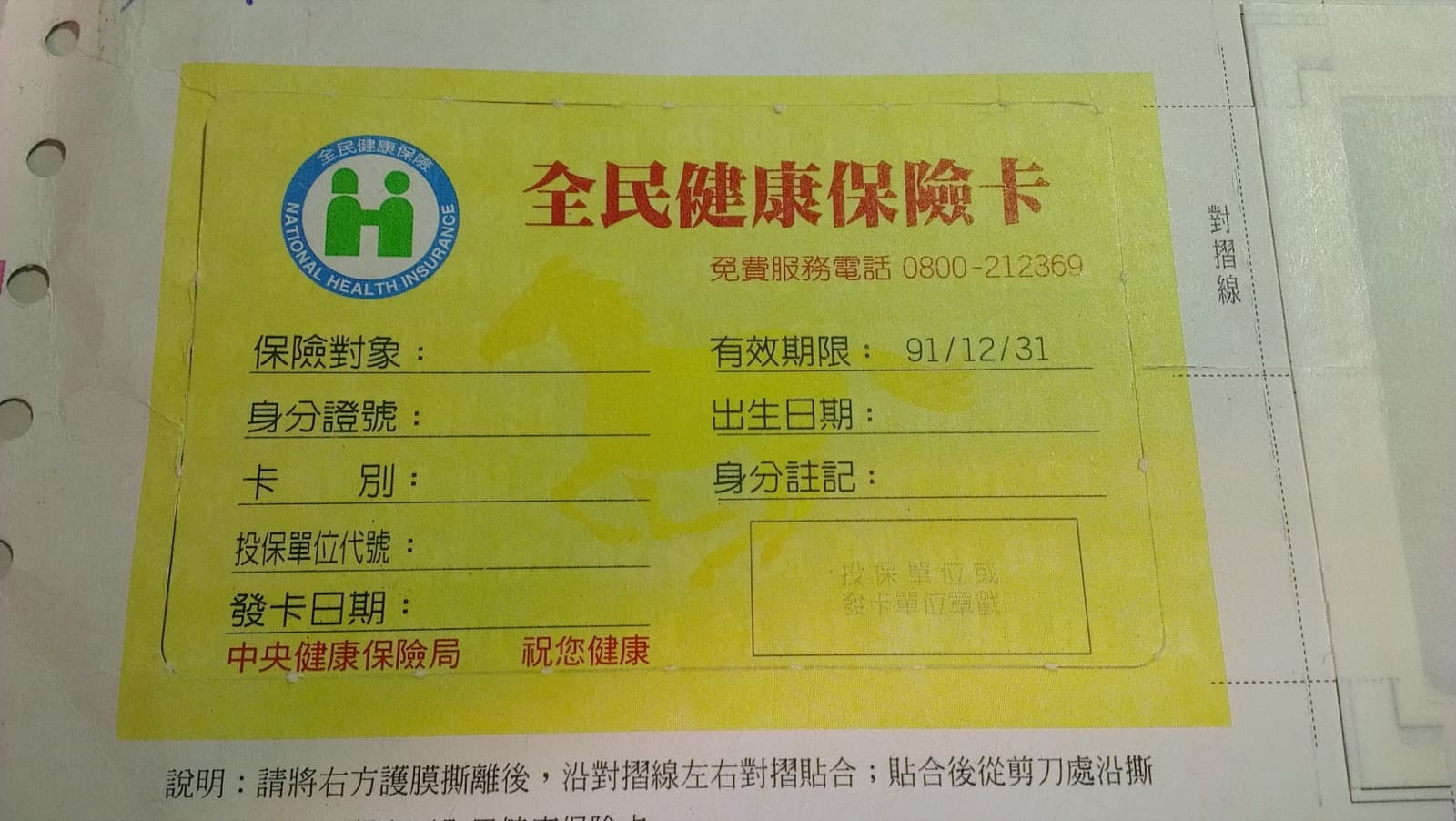
The front of a paper National Health Insurance card issued by the Bureau of National Health Insurance, printed with an expiry date of 31 December 2002. The back held the boxes stamped at each visit.
Bureau of National Health Insurance
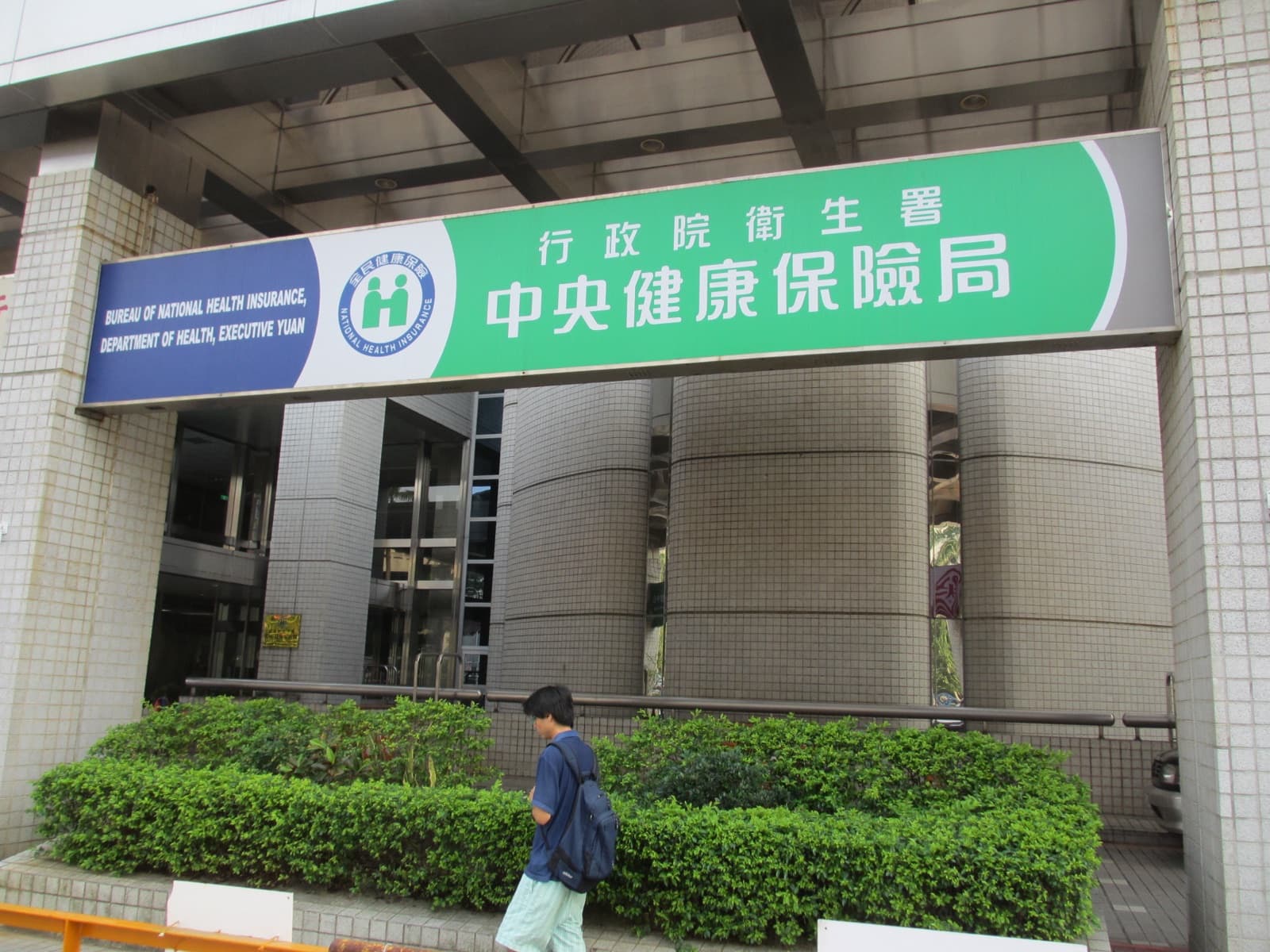
The sign of the Bureau of National Health Insurance headquarters on the former Central Trust civil servants' insurance building in Xinyi, 2012. A year later the bureau was reorganised as the National Health Insurance Administration.
Voice of America, photo by Chang Yung-tai