


The Rover Incident
In the early spring of 1867, the monsoon winds and ocean currents of the Pacific converged upon the southernmost tip of Taiwan. This was a stretch of water that sailors spoke of with dread, thick with hidden reefs and vaguely charted, its coast ringed by ranges of forested mountains upon which the Qing empire had never truly set foot. It was here, in the wild seas off the southern cape near present-day Kenting, that the American merchant bark Rover struck the reefs and was wrecked. As the vessel broke apart in the surf, the surviving crew rowed desperately for shore and struggled onto unfamiliar ground, believing they had escaped death, unaware that they had entered a far more perilous realm.
That shore belonged to the Koalut, a Paiwan community that regarded all intruders on their coast as enemies. To them, the strangers washed up from the sea were not shipwrecked men in need of rescue but invaders to be driven off, and if necessary destroyed. Such hostility was not wholly unprovoked; for years the landing of foreign ships had brought plunder and conflict, and the coastal peoples had learned to guard their homeland by the most uncompromising means. Nearly the entire crew of the Rover was killed there, and only a handful escaped to carry word of the tragedy to the outside world.
When the news spread, the seafaring powers of the world saw it as an intolerable outrage: crewmen of the civilised world slaughtered in what seemed a lawless no man's land. To the Qing, however, it was an embarrassment beyond easy remedy. Officials in Beijing and Taiwan insisted repeatedly that the mountainous south lay beyond the court's 'civilising jurisdiction,' that its communities paid no grain tax and answered to no magistrate, and that the court was therefore unwilling, and by its own account unable, to bear responsibility for what happened there. This evasion laid bare the hollowness of the empire's grip upon the island.
Confronted by the blood of the dead and by international pressure, a United States punitive expedition landed to take re…
Confronted by the blood of the dead and by international pressure, a United States punitive expedition landed to take revenge. Armed sailors pushed into the unfamiliar jungle, only to be fought off, step by step, by Paiwan warriors who knew the dense and impassable terrain intimately, and at last withdrew having achieved nothing. Where gunboats and firepower proved helpless amid these mountains and shores, the outcome made one truth plain to all: force alone could not solve the problem of the southern cape.
What the gunboats could not do, one determined diplomat accomplished. Charles Le Gendre, the American consul at Amoy, travelled repeatedly to the south, venturing into country from which imperial troops had recoiled, and did what no Qing official was willing to do. Bypassing the equivocating local yamen, he sought dialogue directly with the leaders of the land. After considerable effort he met face to face with Tokitok, the paramount chief of the confederation to which the Koalut belonged, and negotiated a direct agreement as between equals, the so-called Treaty of the South Cape, under which sailors wrecked on that coast would thereafter be spared and aided rather than killed.
Though the agreement calmed the immediate dispute, it also unwittingly exposed a far more fateful gap: swathes of Taiwan in fact lay beyond the effective control of any sovereign state. That a foreign consul could bypass the Qing and conclude a treaty with a chief on his own authority was itself a testament to the emptiness of the imperial frontier. From this Le Gendre drew his own conclusion, keeping his first-hand knowledge firmly in mind. A few years later, when he entered the service of Japan, it was precisely his understanding of the realities of southern Taiwan that allowed him to advise its 1874 expedition against the same region.
Thus the wreck of a single ship set in motion a chain of interlocking events. Beginning with an ordinary shipwreck, it unfolded, stage by stage, to draw both a rising Japan and a reluctant Qing ever deeper into the fate of Taiwan. At the moment the Rover foundered on the reefs of the southern cape, no one could have foreseen that the tragedy would become the prelude to decades in which foreign powers eyed the island and the Qing was forced at last to confront the question of sovereignty over its 'aboriginal territory,' quietly rewriting the place of Taiwan on the modern chessboard of East Asia.
The eighteen settlements of Langqiao answered to him, and Koalut was one of them. In March 1867 the American merchant ship Rover struck at Qixing Rock, her crew rowed ashore, and they were killed inside Koalut territory; one sailor from Guangdong escaped. To the people of the settlement this was not killing without cause. Decades earlier the crew of another ship had come ashore and slaughtered Koalut people, and the rule since then had been that outsiders who landed were killed. American marines came in June to take reprisal, a hundred and eighty men going into the forest; their commander was killed and the party withdrew to the ships. What settled the matter was negotiation. Charles Le Gendre came into the hills with an interpreter and met him near Chuhuo. Tokitok's terms were concrete: castaways who flew a red flag to declare their purpose would be given water and food and sent on, and would not be killed; but outsiders were not to enter the settlements' ground. The two sides made a verbal agreement in October 1867 and signed a written one in 1869. The Qing court was not a party to it. The agreement was made directly between a foreign power and the indigenous people of Taiwan.
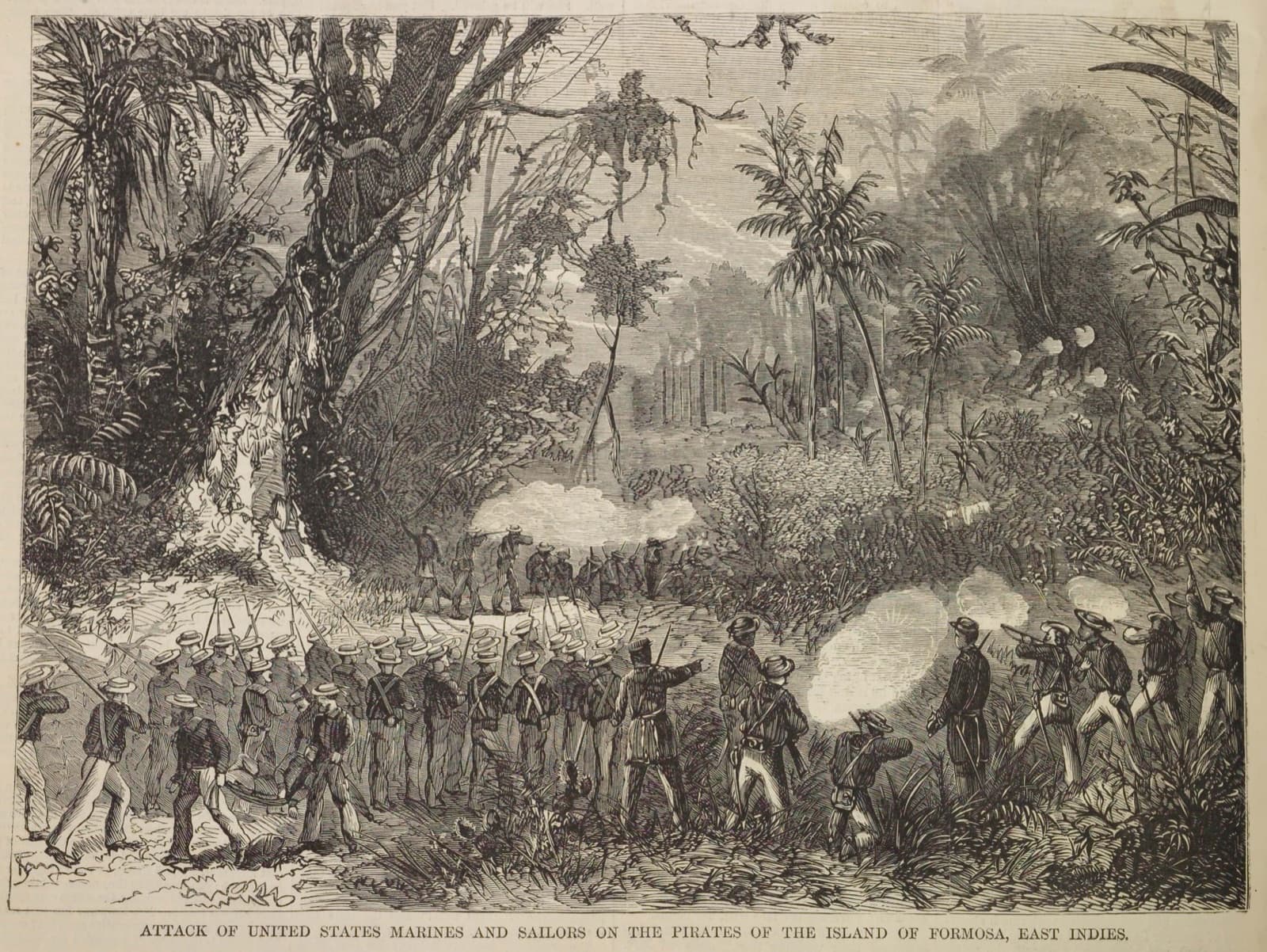
US Marines and sailors landing at the southern cape, engraved for *Harper's Weekly*, 7 September 1867. The *Rover* had struck the Vele Rete rocks and her crew were killed by the Koalut after coming ashore; the punitive landing lasted two hours and cost Lieutenant Commander Mackenzie his life.
*Harper's Weekly*, 7 September 1867
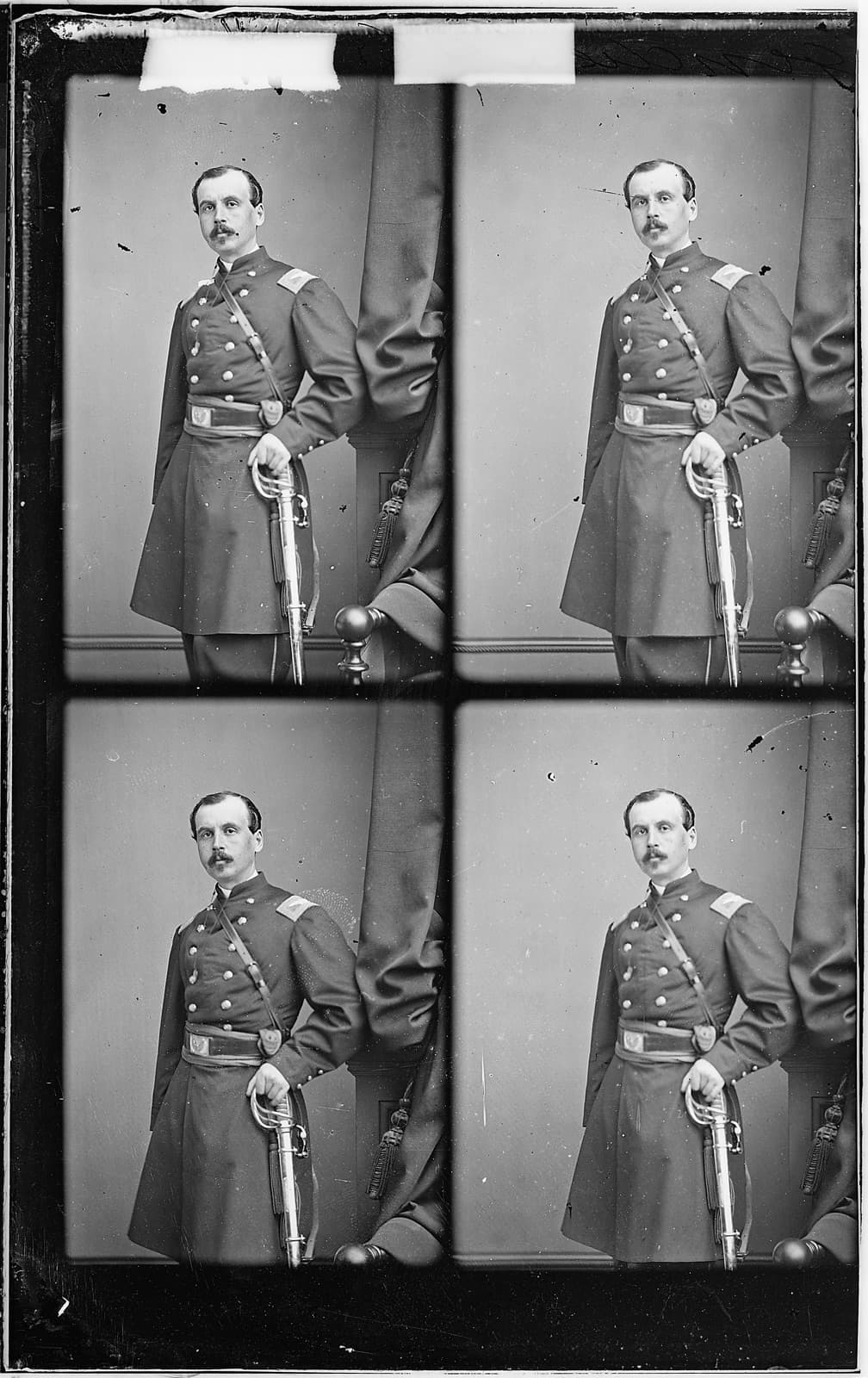
Charles Le Gendre, photographed by Mathew Brady during the Civil War. He lost an eye and took a ball through the nose in the fighting; in 1866 he became consul at Amoy, and the *Rover* affair landed on his desk.
Photograph by Mathew Brady; U.S. National Archives
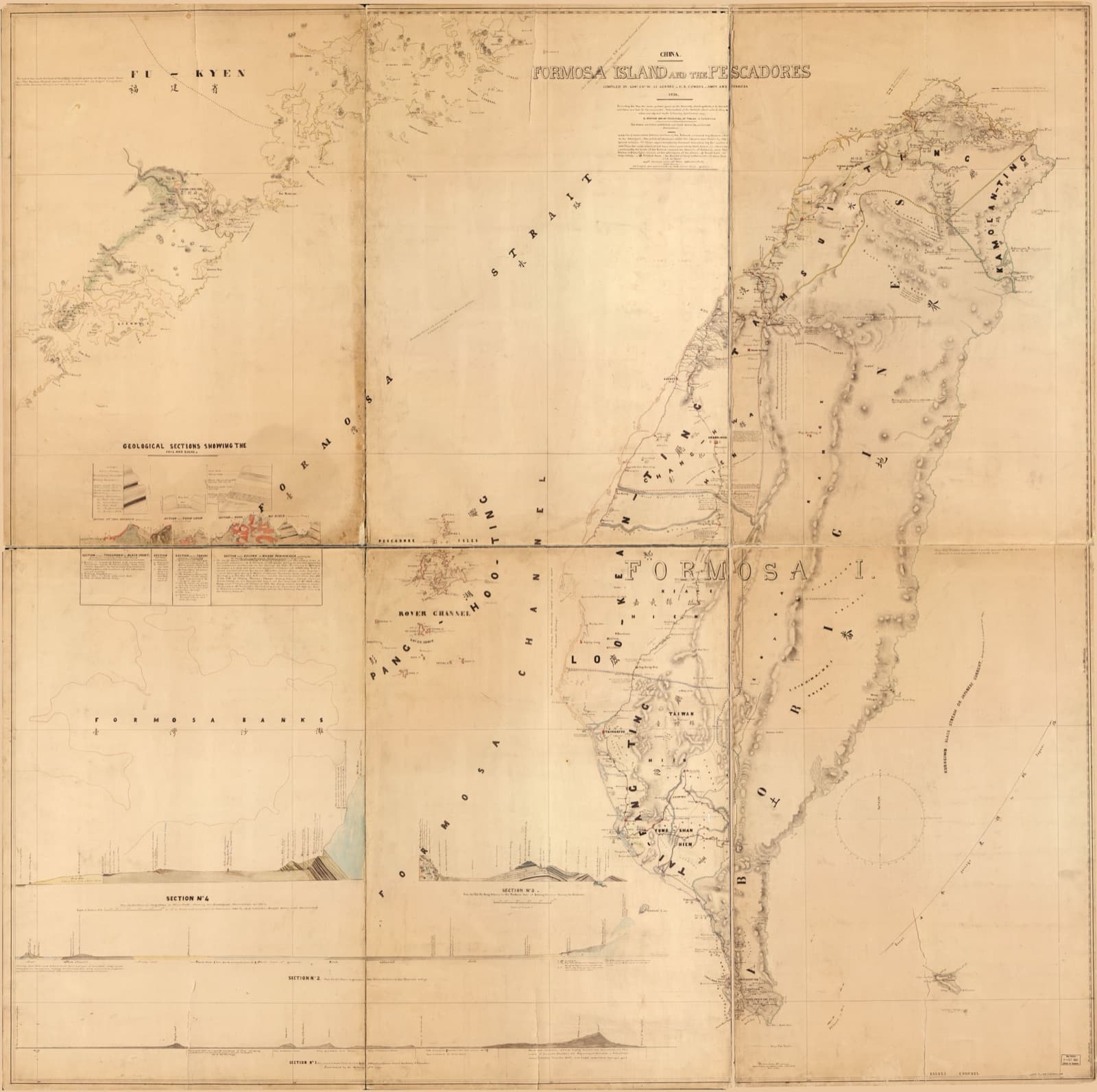
Le Gendre's map of Formosa and the Pescadores, 1870. He came to Taiwan eight times over the shipwreck question, and in 1869 struck an agreement with Tokitok, paramount chief of the eighteen Longkiau villages, to protect castaways.
Drawn by Charles Le Gendre; Library of Congress
Isle of Time