


Sun Moon Lake Hydropower
To remake Taiwan from a farming colony into an industrial base that could produce for the empire, the colonial state craved one thing above all: cheap, abundant electric power. Casting its eye across the island, it found the answer in the ceaseless mountain streams deep in the central ranges. And so a plan took shape, audacious almost to the point of fantasy — to tame the waters of the mountains and channel them into Sun Moon Lake.
The conception was ingenious. A dam would be raised at Wujie on the upper Zhuoshui River, and the water led through a tunnel bored across the ridges into Sun Moon Lake, raising and enlarging that highland lake into a vast natural reservoir; the stored water would then rush down a steep drop of more than three hundred metres to strike the generators of a power station far below. It was a gamble against terrain and river, on a scale unprecedented in the East Asia of its day.
In 1919 the Taiwan Power Company was founded and the great project broke ground. But the ideal soon collided with a wall of reality. Costs climbed relentlessly, funds ran dry, and, compounded by the economic slump after the First World War and the heavy blow that the Great Kanto Earthquake dealt to Japan's home finances, the works stalled for most of the 1920s. Half-finished tunnels and buildings were left to decay, standing as a monument to overreach and, for a time, an object of public ridicule.
The turning point came with a sweeping financial reorganisation. Under the forceful leadership of the Taiwan Power Company's president, Matsuki Kan'ichiro, the company raised huge sums by restructuring and taking on foreign loans, bringing the long-abandoned wreck back to life. Work resumed in the early 1930s, and thousands of labourers again poured into the deep mountains to bore tunnels, build dams and string transmission lines across treacherous, slippery terrain — and no small number lost their lives to injury, illness and accident along the way.
In 1934 the first Sun Moon Lake power station was at last completed and brought online, with an installed capacity of a …
In 1934 the first Sun Moon Lake power station was at last completed and brought online, with an installed capacity of a hundred thousand kilowatts, making it at a stroke one of the largest hydroelectric plants in East Asia. A steady flood of cheap power was sent across the whole island, transforming the very constitution of Taiwan's economy — industry that had once depended on imported fuel or small thermal plants now had powerful and reliable energy to drive it.
Cheap power acted like a magnet, drawing power-hungry heavy industry to settle on the island one after another. Japanese aluminium interests built smelters at Kaohsiung and Hualien, and chemical, metal and munitions-related industries rose through the late 1930s, so that for the first time Taiwan saw modern industrial clusters of real scale. The Sun Moon Lake project thus became the hidden but powerful engine beneath Taiwan's wartime industrialisation.
What this power station set in motion, moreover, was not only an industrial map. To carry the electricity, an island-wide high-voltage grid gradually took shape, and electric light began to reach more towns and villages, quietly changing the daily lives of ordinary people. A vast undertaking born purely for industry and war ended up, almost incidentally, lighting the whole island.
The completion of the project was loudly proclaimed by the colonial government as a great achievement of its rule, and the dam and halls of the Sun Moon Lake station became a symbol of Taiwanese "progress" on postcards and in propaganda photographs. Yet behind this image of modernity lay the toil, and sometimes the deaths, of countless labourers in the deep mountains, and the Indigenous people and villages long settled in the highlands who were forced to move as the dam and the rising waters changed their lives. The price of progress was borne, as so often, in silence by those least heard.
The significance of this power station thus reached far beyond every unit of electricity it generated. It was the crucial hinge on which colonial Taiwan turned toward an industrial society, and the first foundation stone of the vast electrical grid the island would inherit. After the war the system was taken over by the Taiwan Power Company and went on undergirding the island's economic take-off. Beneath the shimmering surface of Sun Moon Lake lies a chapter of modernisation written at immense cost, and by sheer engineering will.
The water rose by close to twenty metres. The lake that remained after the works was not the lake that had been there: once storage began, the surface spread and the paddy fields, settlements and ancestral graves along the shore went under, and the Thao were moved to higher ground around Puji, today's Riyue village. Compensation was reckoned in land and cash, and the administration's record states that resettlement was properly arranged. What they lost was more than farmland. The lake and the forest around it were the range of their fishing, hunting and ritual, and Lalu island is where the ancestral spirits dwell; after the rise only a small part of it stood above water. Tourism grew from the 1930s and Thao song and dance became entertainment for visitors, the pestle music performed several times a day. It was a new source of income and it was how outsiders came to know them. Until they were formally recognized as the tenth people in 2001, official documents long classed the Thao as plains mountain compatriots or as a branch of the Tsou of Alishan. At their fewest they numbered under three hundred.
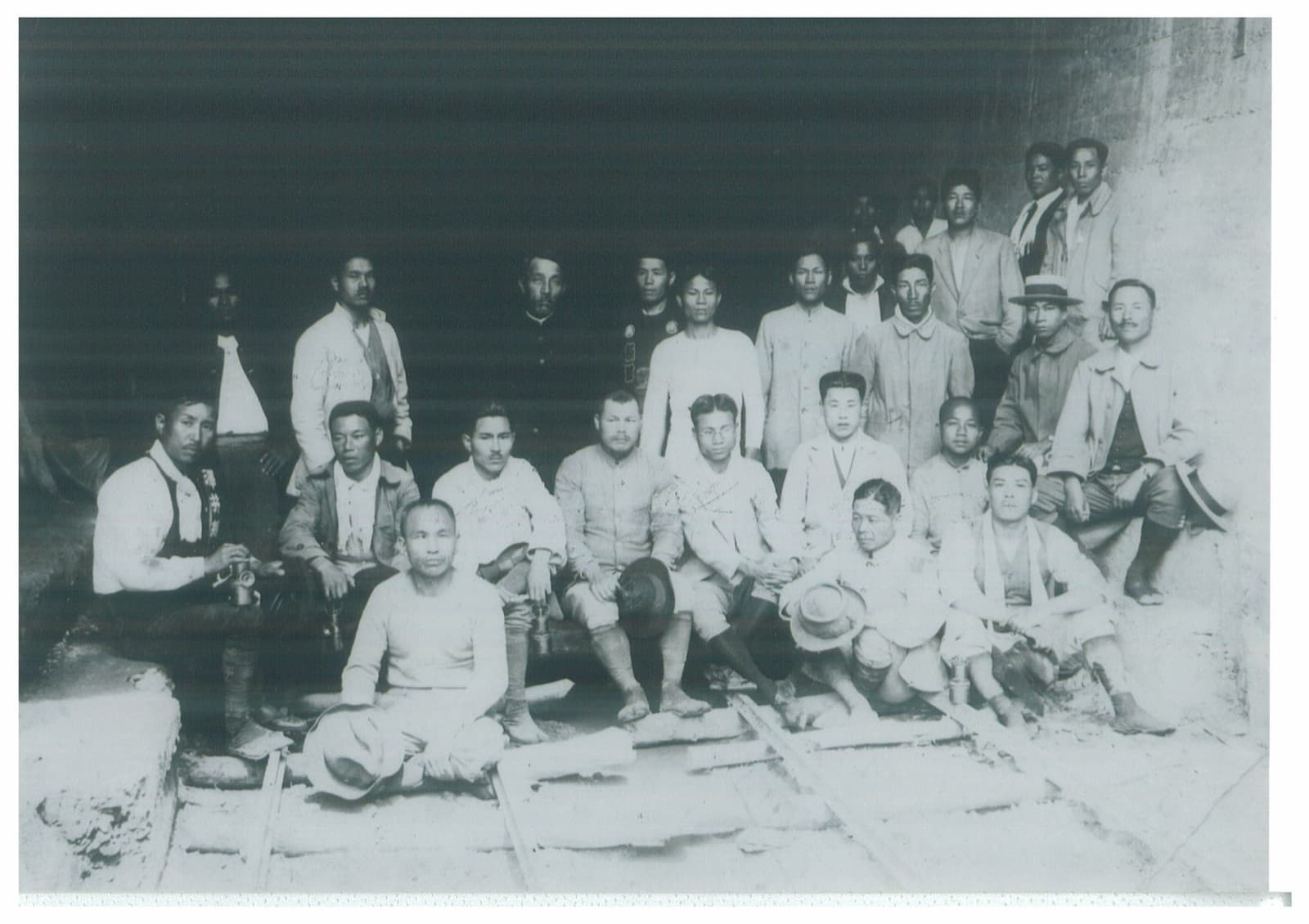
Workers on the Sun Moon Lake hydroelectric scheme. The project stopped and restarted across fifteen years and was finished only on foreign loans; most of those killed and injured were islanders and indigenous labourers.
Public domain; photographer unknown
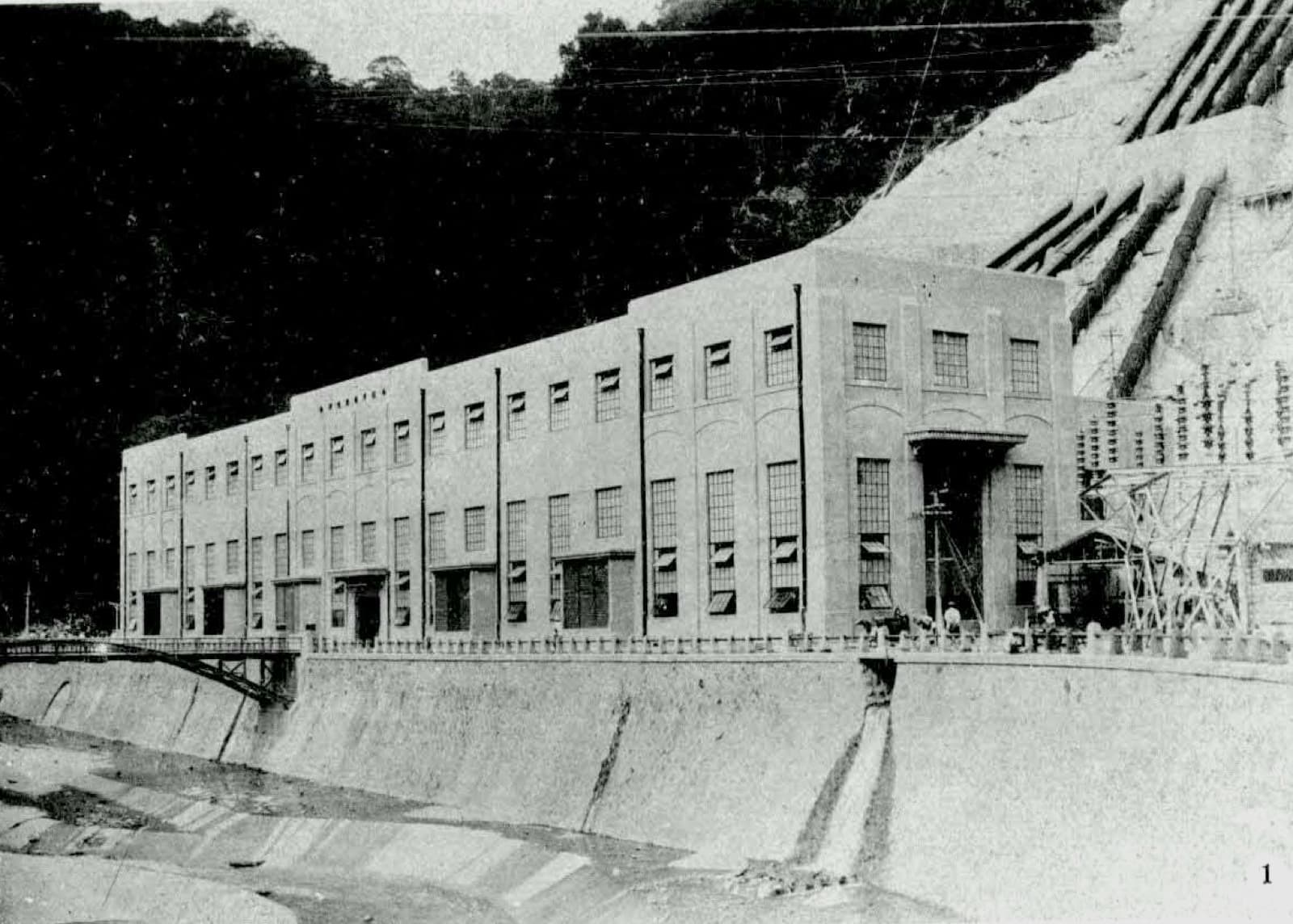
The Sun Moon Lake First Power Station, completed in 1934. Five penstocks run straight down the slope on a head of 320 metres, multiplying the island's generating capacity several times over.
*Bulletin of the Taiwan Electrical Association*, 1934
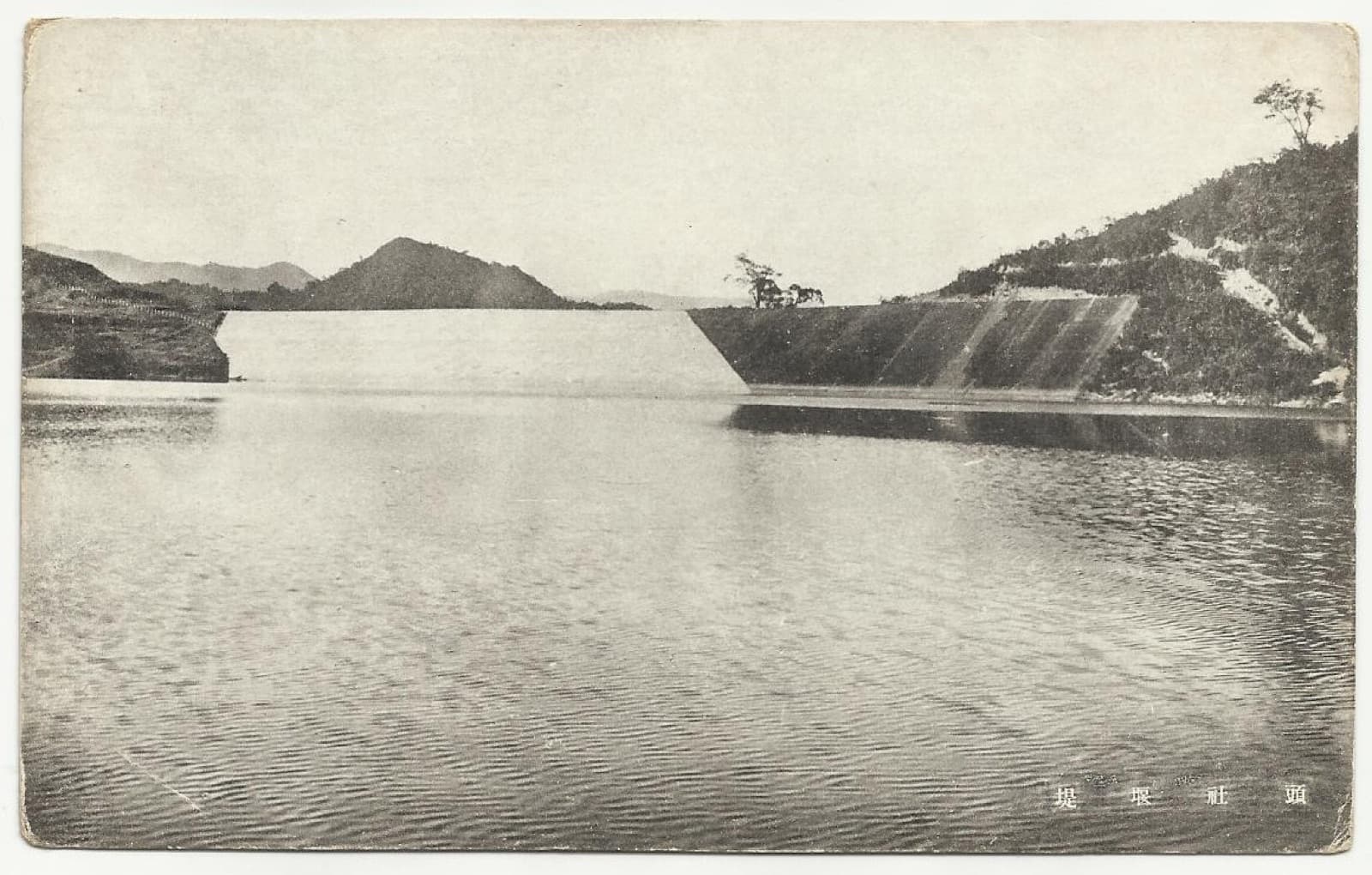
Sun Moon Lake after impoundment. Water diverted from the Zhuoshui River raised the lake by some twenty metres, drowning Thao settlements and farmland along the old shoreline.
Public domain; photographer unknown
Isle of Time