


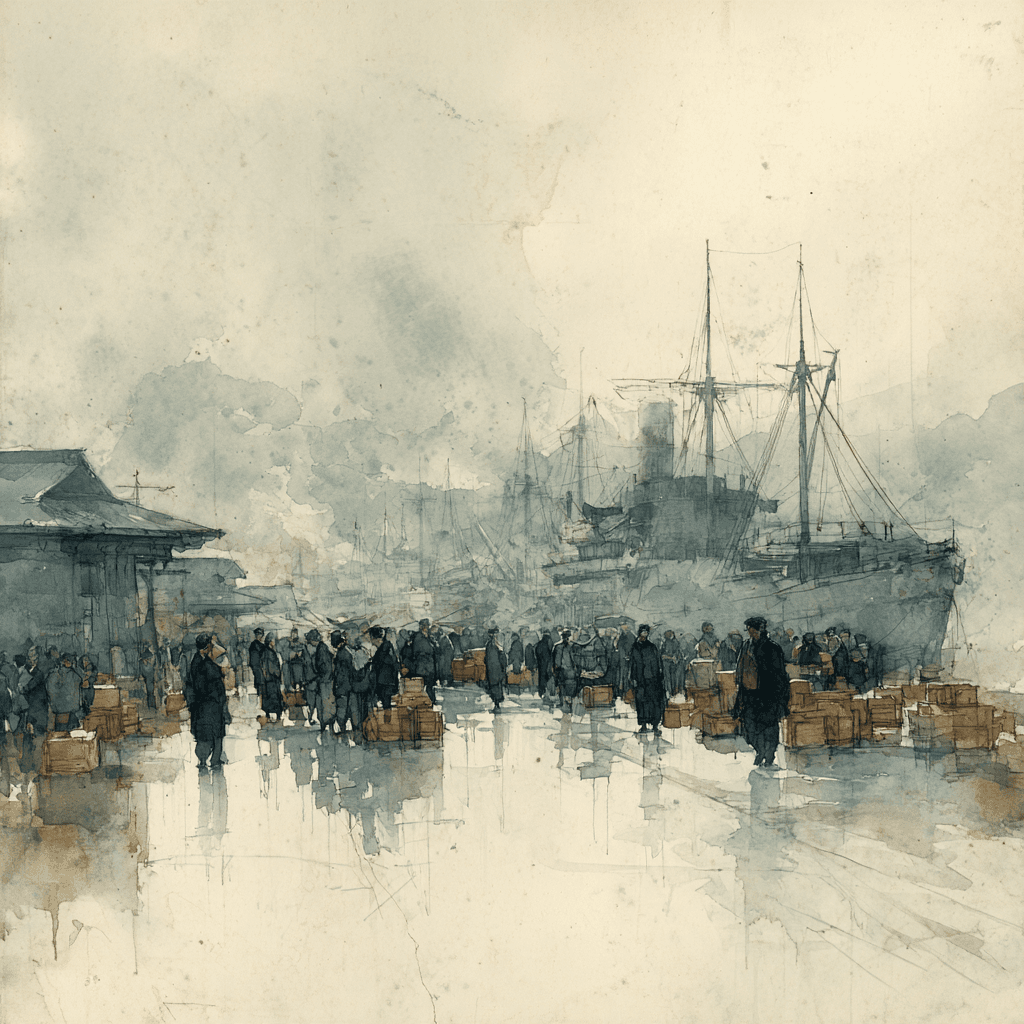
On 27 January 1949, the day before Lunar New Year's Eve, the Taiping sailed from Shanghai for Keelung. At a quarter to midnight, near Baijieshan in the Zhoushan Islands, she struck the Jianyuan, a freighter carrying 2,700 tons of coal and timber, and went down in about forty-five minutes. Nine hundred and thirty-two people died aboard the Taiping and seventy-two aboard the Jianyuan. Around fifty were pulled from the water.
The ships heading for Keelung that winter carried more than people. On 26 December 1948 the first seven hundred-odd crates of artefacts from the Palace Museum and five other institutions were unloaded at Keelung, and by late February the next year three shipments had brought over five thousand crates. The Nationalist government's gold, some 2.7 million taels, and more than fifteen million silver dollars arrived over the same months. On 5 January Chen Cheng took office as chairman of the Taiwan Provincial Government, and in February he was also made Taiwan Garrison Commander.
A little after nine on the evening of 20 March, He Jingyue of the National Taiwan University law school and Li Yuanxun of the Provincial Normal College were riding one bicycle together when Constable Xie Yanchang stopped them for a traffic violation, and both were beaten. For several days students from the two schools protested at the police station and marched through the streets. In the small hours of 6 April, acting on a telegraphed order naming six students, the Garrison Command sent soldiers and police into the dormitories of both schools. From 8 April detainees were released in batches, and nineteen were finally held for trial. The Normal College suspended classes and made every student re-register. Thirty-six were expelled.
On 19 May Chen Cheng, as provincial chairman and garrison commander, signed Proclamation Martial No. 1 of the Taiwan Provincial Government and the Taiwan Garrison Command, placing the whole province under martial law from midnight the following day. Assembly, association, marches, petitions, and strikes by students, workers and shopkeepers each came under their own set of controls. Newspapers, magazines and books came under another.
On 25 June war broke out in Korea.
By then the island's money could no longer hold. The old Taiwan dollar had 5.3 billion in circulation in 1946, and on 14 June 1949 it had 527 billion. Prices stood at more than seven thousand times their 1945 level. On 15 June the provincial government issued the New Taiwan dollar, at forty thousand old dollars to one new one. Total issue was capped at two hundred million, backed by eight hundred thousand taels of the gold that had just come across. In Taiwanese the change was put simply: forty thousand for one.
On 25 October about nine thousand soldiers of the People's Liberation Army landed around Guningtou on Kinmen. The fighting lasted three days. More than 3,900 were captured and most of the rest were killed. The Nationalist army lost 1,267 dead. On 7 December the Executive Yuan decided to move the seat of government to Taipei, and from the ninth its ministries were working there. Between 1945 and 1953 more than a million people came to Taiwan from the mainland, and by the mid-1950s the troops withdrawn to the island numbered about six hundred thousand.
On 5 January 1950 President Truman told a White House press conference that the United States had no predatory designs on Formosa, no intention at this time of establishing military bases there, and would not provide military aid or advice to Chinese forces on the island. On 1 March Chiang Kai-shek announced in Taipei that he was resuming the duties of the presidency.
On 25 June war broke out in Korea. Two days later Truman issued another statement. He ordered the Seventh Fleet to prevent any attack on Formosa and called on the Chinese government there to cease all air and sea operations against the mainland. One sentence read: the determination of the future status of Formosa must await the restoration of security in the Pacific, a peace settlement with Japan, or consideration by the United Nations. Proclamation Martial No. 1, posted that May, stayed in force until midnight on 15 July 1987.
Read through the Garrison Command's files, Taiwan that year was the last piece of the map not yet lost. By the time Chen Cheng arrived in January, the Northeast was gone and the fighting in north China was nearly over. Ship after ship from Shanghai tied up at Keelung, carrying civil servants, soldiers' families, students, and perhaps others too. To this office, a street march in Taipei set off by the beating of two university students belonged on the same map as the student unrest spreading through the mainland's cities. It was the same thing.
The operation on 6 April went by a list. The six students named in the order were Zhou Shenyuan, Zheng Hongxi, Zhuang Zaizhang, Fang Qiming, Zhao Zhiyang and Zhu Shangyi. Two days later releases began in batches, and nineteen were kept back for trial. The martial law of May followed the same reasoning, putting assembly, class boycotts, strikes and the press into its regulations one item at a time. The proclamation carried a single signature, Chen Cheng's. He was at once the island's chief administrator and its chief of security.
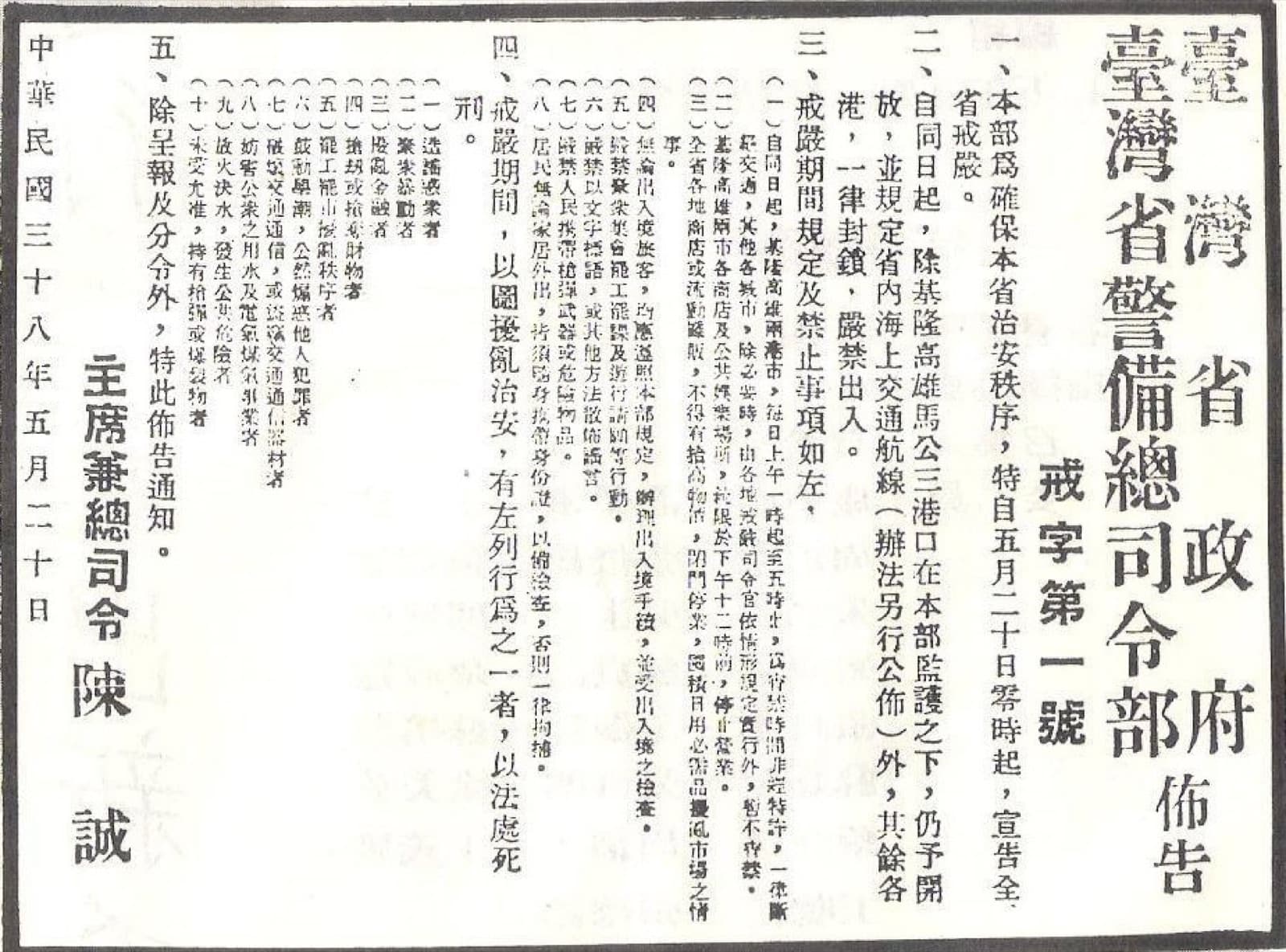
Proclamation Martial No. 1 of the Taiwan Provincial Government and the Taiwan Garrison Command, signed on 19 May 1949 by Chen Cheng as chairman and commander, placing the whole province under martial law from midnight on 20 May.
Taiwan Provincial Government and Taiwan Garrison Command, 1949
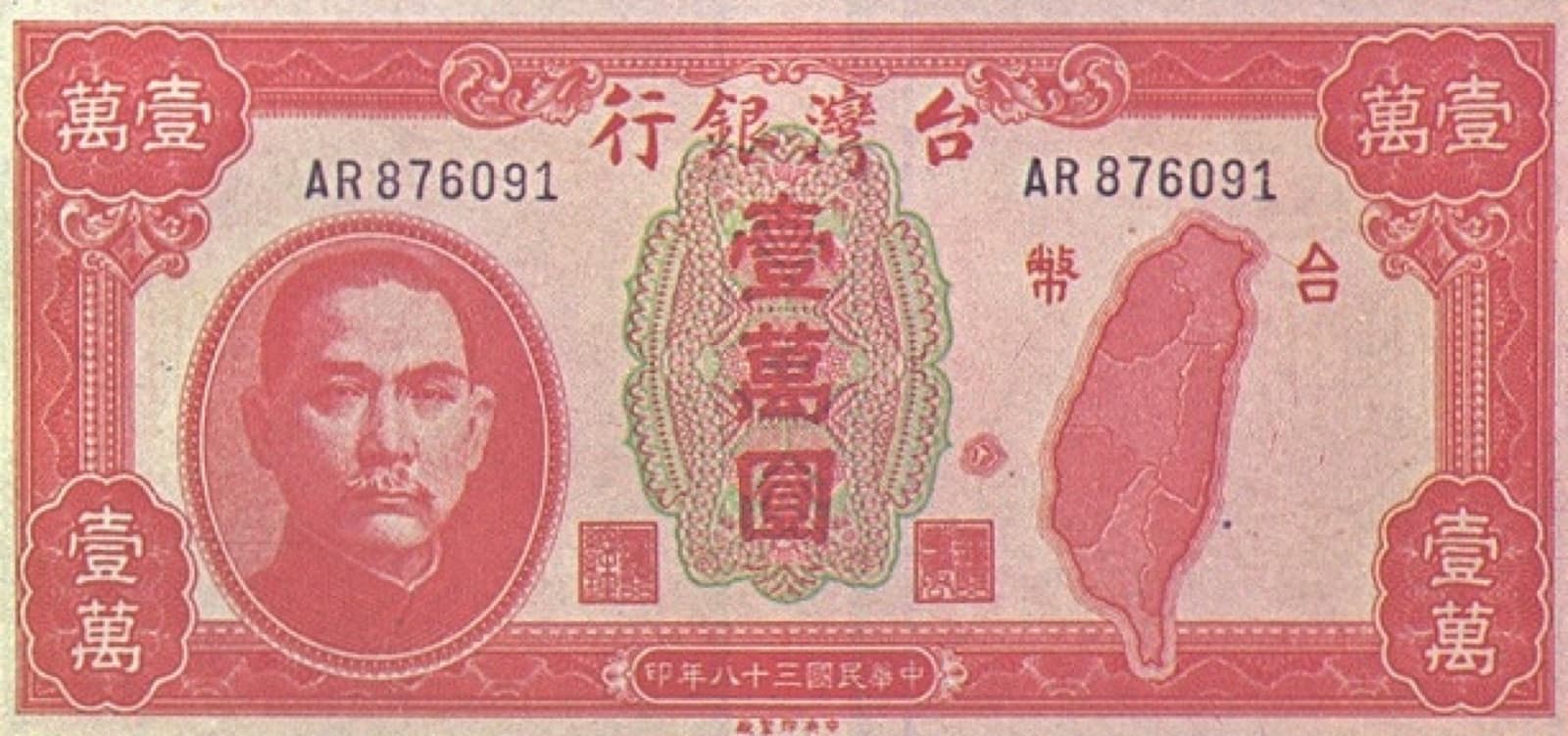
A 10,000-yuan note of the old Taiwan dollar issued by the Bank of Taiwan in 1949. After the currency reform of 15 June, four of these notes bought one New Taiwan dollar.
Bank of Taiwan, 1949