


The Literati of Hsinchu
Among the cultural achievements of Qing-era Taiwan, the literary tradition that flourished in Zhudian — today's Hsinchu — occupies a distinctive position. While most of the island's western plains were still in the early phases of agricultural colonization, Zhudian developed alongside its commercial growth a scholarly gentry culture organized around classical Chinese poetry and the cultivation of Confucian literary values. This was not a transplanted mainland culture maintained by officials on temporary posting; it was a locally rooted intellectual tradition created by people who had been born on the island and thought of Taiwan as their home.
Zheng Yongxi was the central symbol of this achievement. In 1823 he passed the imperial examination at the jinshi level — the highest degree in the Qing educational system — becoming the first person born and raised in Taiwan to achieve this distinction. He was given the sobriquet 'the Pioneer Jinshi of Taiwan,' a title that captured the historical significance of his accomplishment for a community long regarded by the mainland establishment as culturally peripheral. After returning to Taiwan, Zheng devoted himself to local affairs, serving as a mediator between Hokkien and Hakka communities whose competition periodically erupted into large-scale ethnic violence. His reputation for impartiality made him one of the few figures capable of being heard by both sides.
Lin Zhanmei built his cultural legacy through a different medium. Inheriting a substantial commercial fortune, he chose …
Lin Zhanmei built his cultural legacy through a different medium. Inheriting a substantial commercial fortune, he chose not to pursue examination success but instead created the most celebrated private garden in Qing-era northern Taiwan — the Qianzhen Garden — in the heart of Zhudian. The garden became a gathering place for poets and scholars from across the island, hosted regular poetry competitions, and published collections of verse that transformed Zhudian from a commercial town with scholarly pretensions into a genuine cultural center.
Shi Shijie was the last of this tradition. He passed the jinshi examination in 1894, just one year before the Treaty of Shimonoseki transferred Taiwan to Japan, making him the last imperial examination graduate to emerge from the island under Chinese rule. When Japanese administration began, Shi refused to serve the new government and eventually returned to mainland China, where he spent the rest of his life writing poetry about exile and memory. His verse was the final expression of the Zhudian literary tradition — an elegiac summing-up of everything the classical education system had meant to the Taiwanese gentry, written from the vantage point of someone who had watched it end.
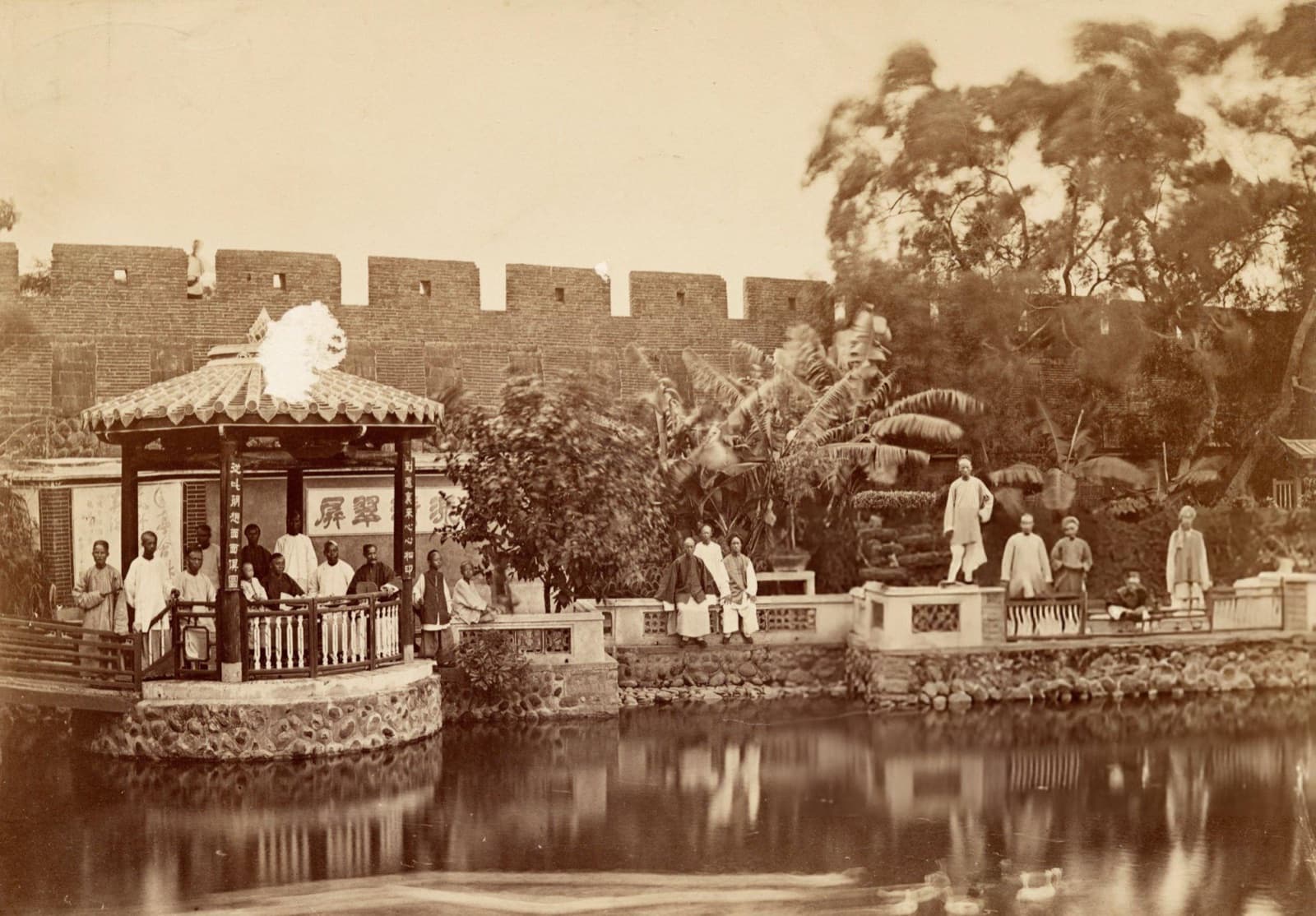
The Beiguo Garden. Zheng Yongxi passed the metropolitan examination in 1837, the first Taiwan-born man to do so; in later life he built this garden outside Zhuqian's north gate and held his poetry society there.
Public domain; photographer unknown
Isle of Time