


The Dilemma of Native Elites
In the early post-war period, native Taiwanese elites faced an agonizing choice: cooperate with the new regime to secure space for reform, or resist unjust rule? Many intellectuals, local gentry, and professionals who had been active during the Japanese era initially chose to collaborate with the Nationalist government, hoping to improve governance through institutional channels.
However, as Chen Yi's administration increasingly deviated from the public will, the space for cooperation gradually van…
However, as Chen Yi's administration increasingly deviated from the public will, the space for cooperation gradually vanished. Some elites turned to criticizing the government, while others were forced into silence. This struggle between collaboration and resistance was not merely an individual moral dilemma but reflected the collective anxiety of Taiwanese society amid regime change.
This volume traces the life trajectories of several native Taiwanese elites to present this history full of contradictions and struggles.
In the autumn of 1945, choosing to cooperate hardly required thought. Lin Hsien-tang had led the petition movement for a Taiwanese parliament for more than twenty years under Japanese rule; now he chaired welcome committees, sat in the provincial assembly, and was put forward as a representative on every kind of board. Tu Tsung-ming in medicine, Chen Hsin in finance, and Lin Mao-sheng in the university took posts in the new order as well. Their reasoning was the same: the Japanese were gone, Taiwanese could at last serve in their own government, and even an incomplete system should be pried open from within. Within two years that road narrowed section by section. Questioning in the assembly changed nothing, the important posts in the Executive Office still went to mainlanders, and economic control left Taiwanese capital nowhere to go. When Chen Hsin organized the Ta Kung enterprise company to pool local capital for reconstruction, it made him an object of official wariness instead; in March 1947 he was taken away on the pretext of negotiations and never seen again. Lin Hsien-tang left for Tokyo in 1949 on the grounds of medical treatment, refused every request to return, and died there in 1956. The lesson the cooperative road finally left was not that cooperation had been wrong, but that cooperation requires the other side to treat it as such.
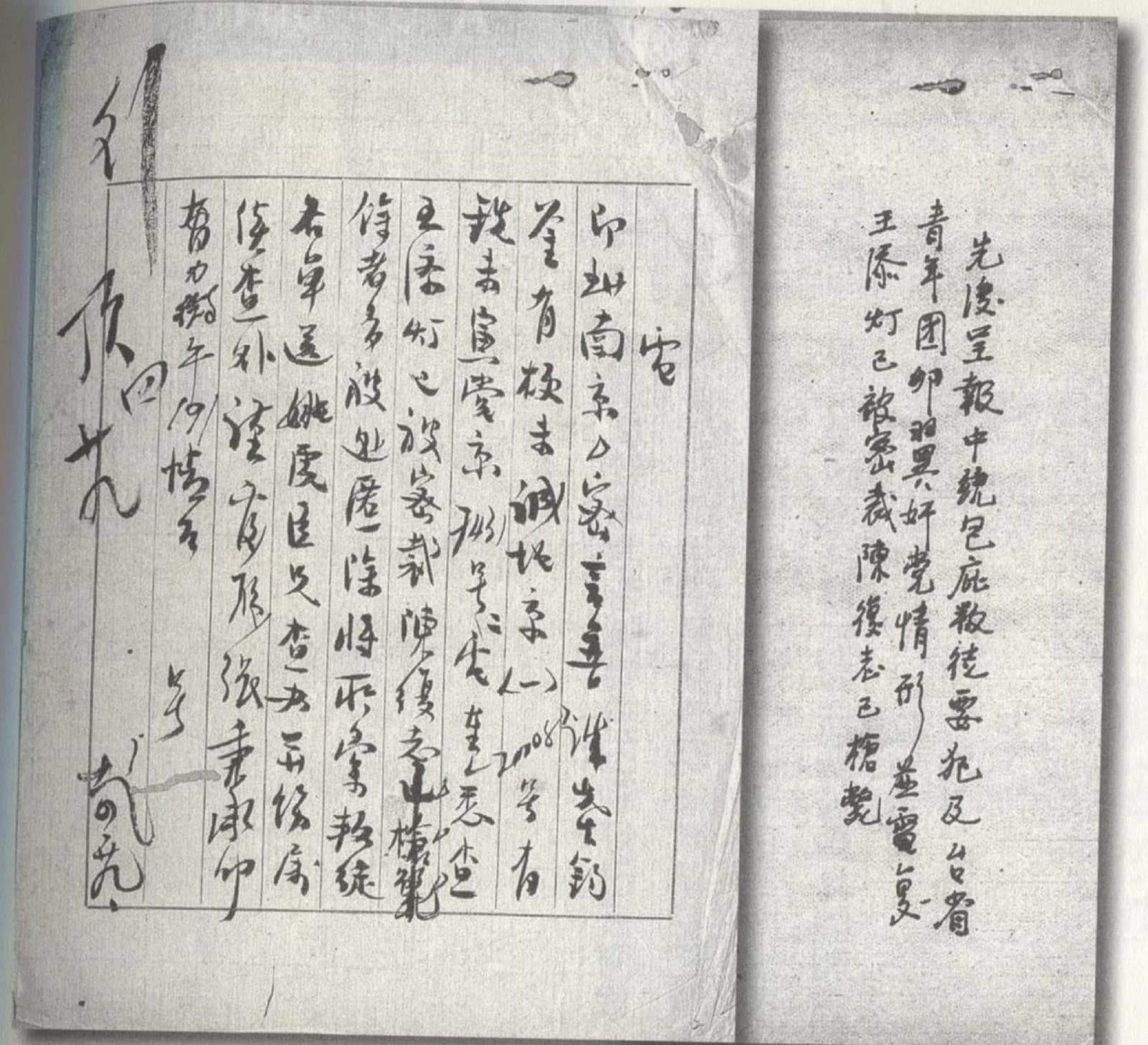
The secret-police report that Wang Tien-teng had been 'quietly disposed of', signed by Lin Ting-li. Wang vanished after presenting the settlement committee's thirty-two demands. This paper is the only official record of his fate.
Bureau of Investigation and Statistics files
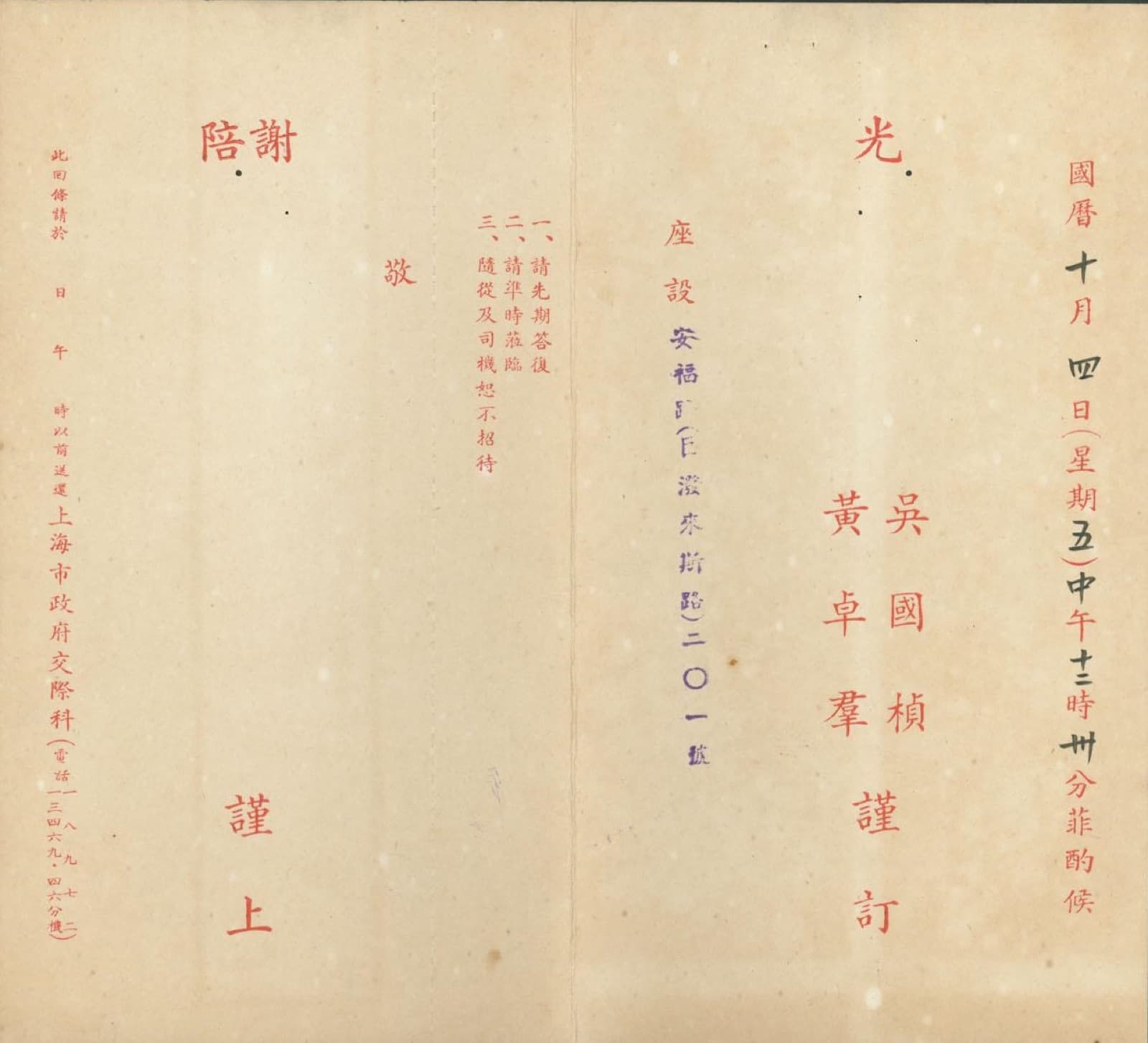
An invitation from K. C. Wu and his wife, 1946. The new government's approach to the island's gentry was to draw them in, and whether to accept was a question people had to weigh.
Academia Sinica Digital Archives
Isle of Time