


In March 1898 Kodama Gentaro became Taiwan's fourth Governor-General, and arriving with him to take charge of civil affairs was Goto Shinpei. For the previous three years the Government-General had relied on military campaigns. Dozens of villages around Yunlin had been burned, resistance had not stopped, and some in Japan were even proposing to sell Taiwan. Goto had trained as a doctor and had headed the Home Ministry's public health bureau, and he looked at the island much as he would look at a patient.
He called his approach the principle of biology, and he used the flatfish as his example. A flatfish has both eyes on one side of its head, and you cannot force them round to either side. Government was the same. You first had to understand the Taiwanese people's existing customs and draw up rules according to them, rather than transplanting Japan's institutions wholesale.
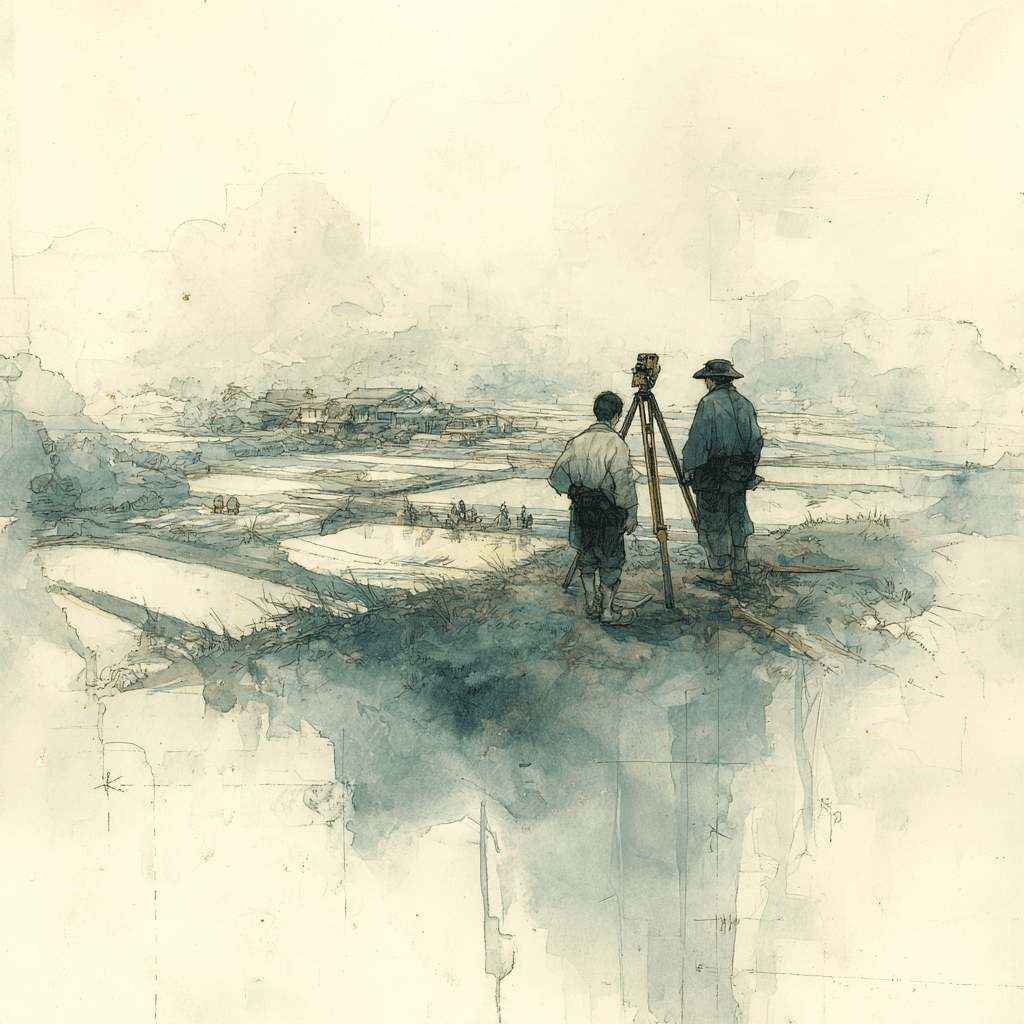
The first step was survey. In 1898 he set up the Provisional Taiwan Land Survey Bureau, with himself as its director, and measured the island's farmland plot by plot. When the survey wound up in 1904, the actual area under cultivation came to 1.7 times what the old records showed, and a great deal of undeclared land had been found. The same year, the Government-General bought out with public bonds the senior landlord rights left over from Qing rule. Land that had carried two tiers of landlords now carried one, and the Government-General itself became Taiwan's largest landowner.
In 1901 he founded the Provisional Commission for the Investigation of Taiwanese Old Customs, with himself as chairman, and sent scholars village by village to record Taiwanese families, land, contracts and customs. In 1905 the Government-General held its first provisional household census and counted 3,039,751 people on the island: 82 percent of Fujianese origin, 13.1 percent of Cantonese origin, and 1.9 percent Japanese from the home islands. It came fifteen years before Japan's own first national census.
The other side of survey was control. In 1898 the Government-General issued the baojia regulations: ten households made a jia and ten jia made a bao, and if one household offended, the whole jia was held responsible. The same year it issued the Bandit Punishment Ordinance, under which anyone who gathered with arms could be put to death whether or not they had acted. By the Government-General's own count, about eleven thousand Taiwanese died under these measures between 1898 and 1902.
The money came from monopolies. Opium became a government monopoly on 1 April 1897, salt on 15 May 1899, camphor on 5 August the same year, and tobacco on 1 April 1905. A Monopoly Bureau was set up in 1901 to run them all, and monopoly revenue later made up forty percent of the Government-General's income. From 1904 Taiwan no longer needed subsidies from the central government in Tokyo.
Roads and harbours spread across these years too. The island gained 5,500 kilometres of roads, work began on enlarging Keelung harbour, and the north-south trunk railway opened along its full length in 1908, two years ahead of schedule.
In November 1906 Goto Shinpei left Taiwan to become the first president of the South Manchuria Railway Company. He had spent eight and a half years on the island. What he left behind was a complete set of figures about it: how much land, how many people, how much salt and opium, and, in the 1905 census, the fact that 56.9 percent of women had bound feet.
Goto Shinpei looked first at what Taiwan was costing Japan. When he arrived in 1898 the colony could run only on subsidies from the centre, and there were voices in the Diet calling it a burden. His answer was to find out first what was there: how much land, how many people, what customs, and then to tax, set up monopolies and build roads accordingly.
What he believed in was numbers and institutions. The land survey found 1.7 times the farmland on record, the senior landlord rights were bought out with bonds, and opium, salt, camphor and tobacco were brought one by one under monopoly. In 1904 Taiwan's finances stopped needing subsidies. The baojia system and the Bandit Punishment Ordinance belonged to the same calculation. Order came before taxes.
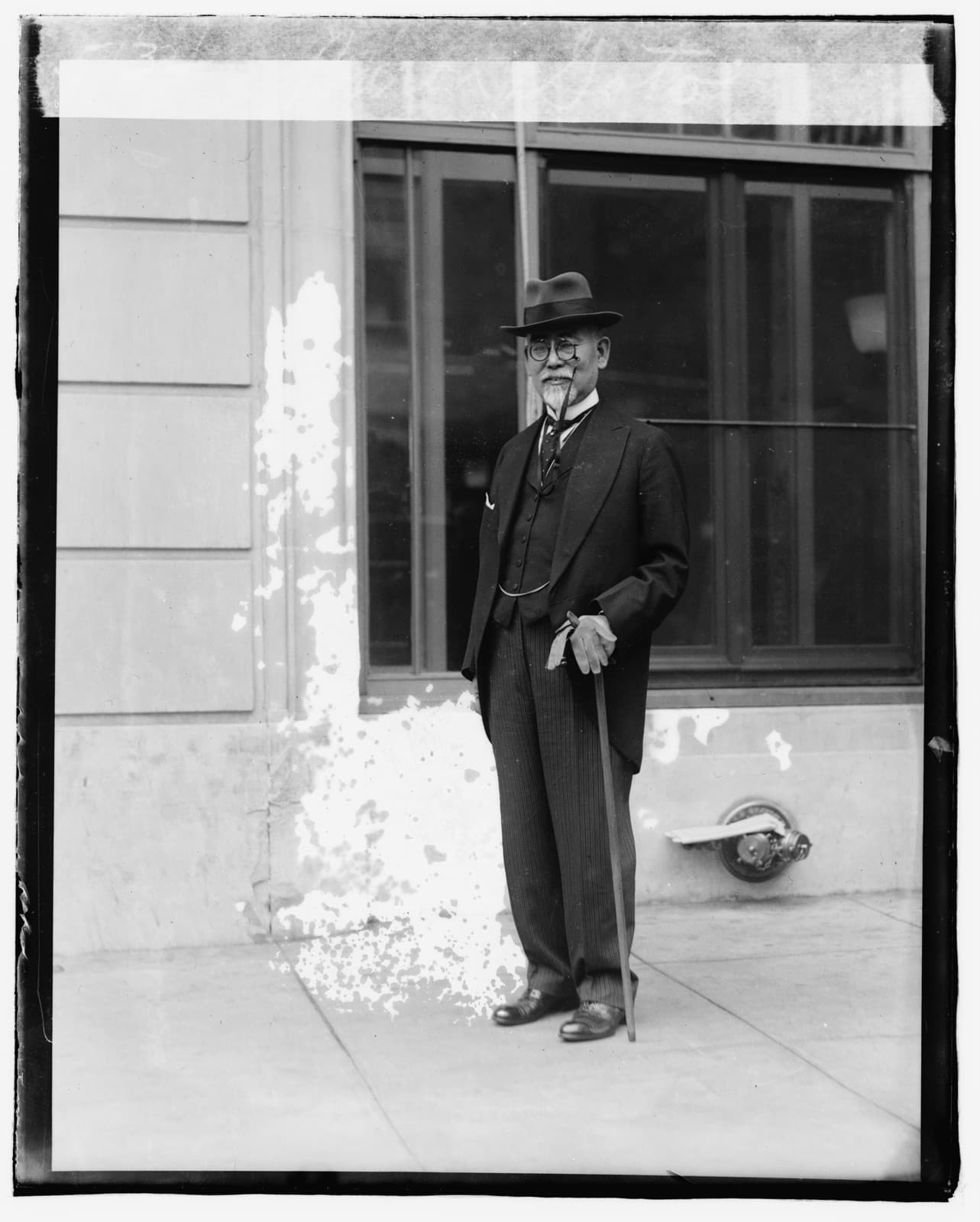
Gotō Shinpei, photographed in the United States around 1919. He had left Taiwan thirteen years earlier and had since served as president of the South Manchuria Railway, communications minister and foreign minister.
Library of Congress, National Photo Company Collection
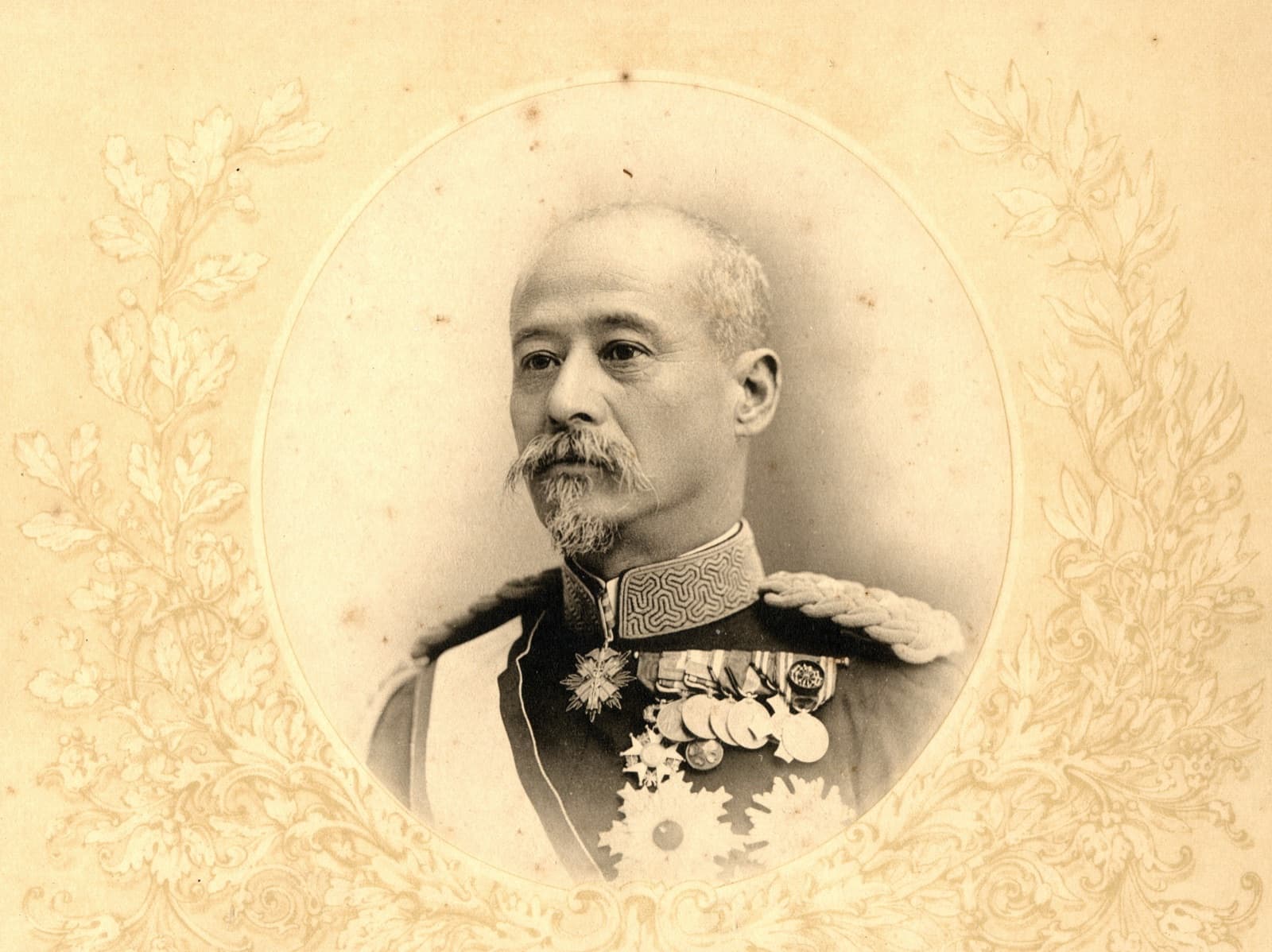
Kodama Gentarō, fourth Governor-General of Taiwan. The photograph opens the commemorative album of the Provisional Taiwan Land Survey Bureau, published in 1904, the year the survey wound up.
Commemorative Album of the Provisional Taiwan Land Survey Bureau, 1904
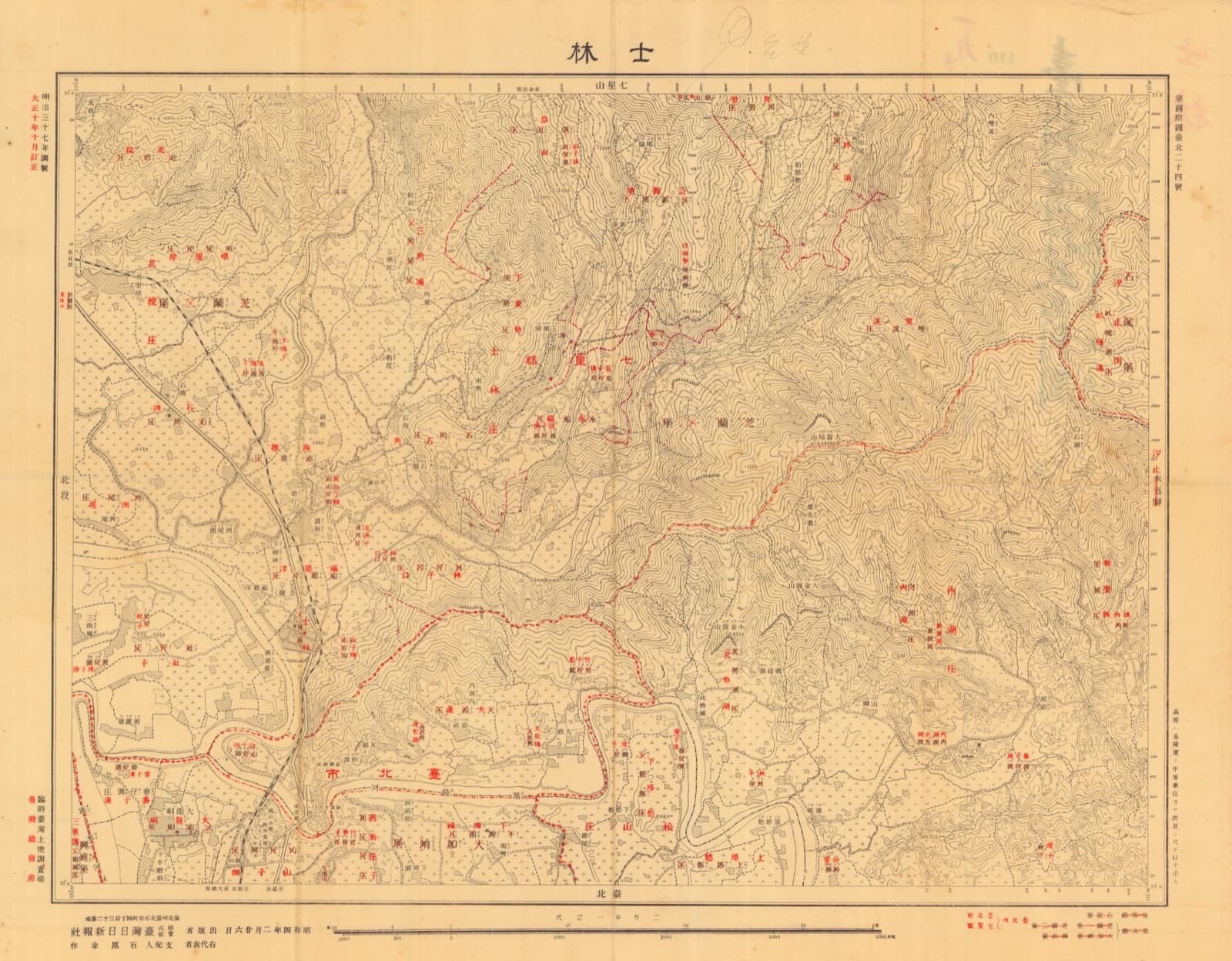
The Shilin sheet of the Taiwan Hōzu. This 1:20,000 map series was a product of the land survey, with every field, canal and village drawn in. This sheet is a later revised edition.
Provisional Taiwan Land Survey Bureau and Government-General of Taiwan, Taiwan Hōzu