

The Staff With the Silver Head
On 20 February 1636 the Dutch called the first assembly of villages at Sinkan. Each headman who attended received three things: the tricolour of the Netherlands, a black velvet gown, and a rattan staff with a silver head. The staff was not ornament but warrant. From that day the man holding it was the village head the Company recognised, and the man the Company would come looking for when something went wrong.
Until then these villages raided one another, and who led a village, and on what basis, was the village's own affair. The assembly moved that question outside: who was head would be named by the governor at Tayouan, in front of everyone.
On 11 April 1641 the gathering was formally named the landdag and held at Saccam. Governor Paulus Traudenius attended with thirty officials, and the indigenous representatives numbered forty-two men from fourteen villages — twenty-two from six villages in the north, twenty from eight in the south. From 1644 to 1659 it was held every year.
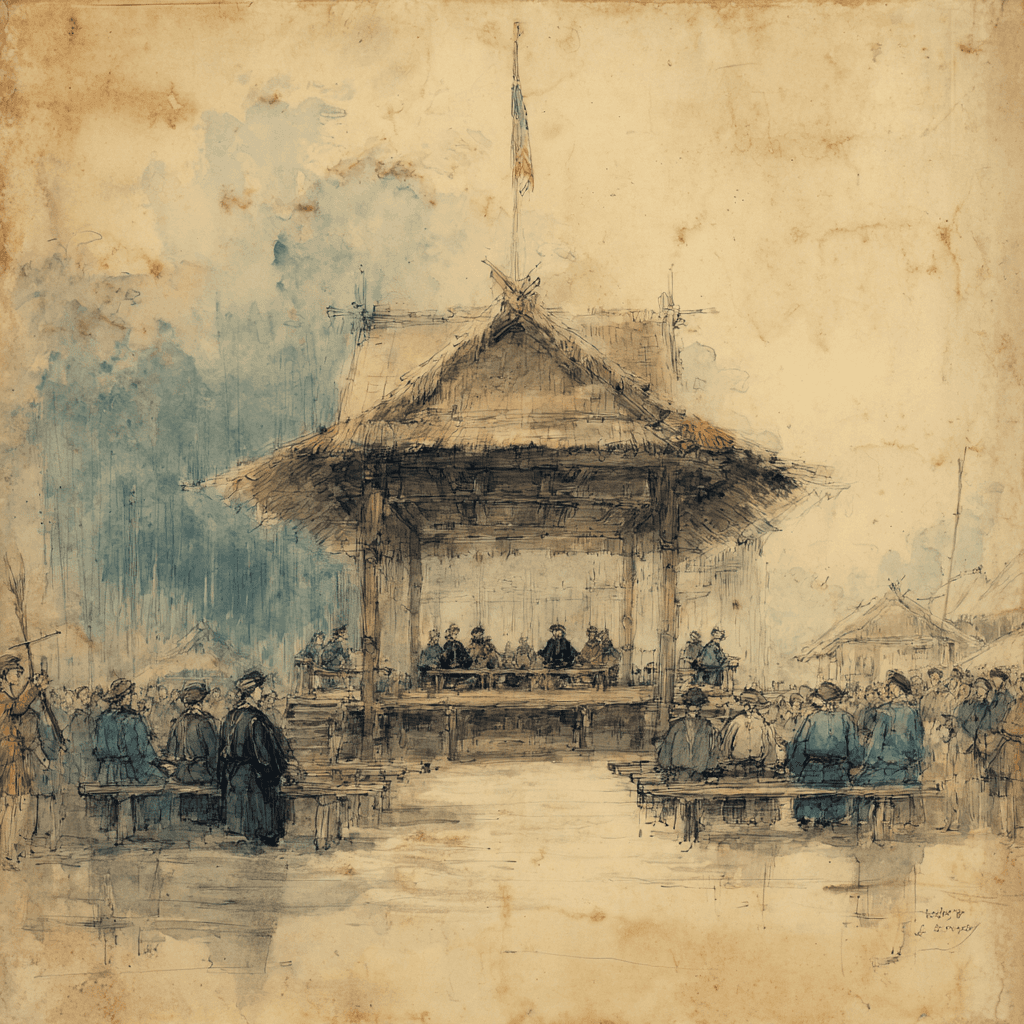
The arrangement of the ground was itself the message. Dutch troops fired salutes with cannon and musket, the governor an…
The arrangement of the ground was itself the message. Dutch troops fired salutes with cannon and musket, the governor and his councillors sat in a raised pavilion, and the indigenous representatives sat at lower tables. Relative height needs no interpreter, and everyone present could read it.
The Company later divided the island into four assembly districts: north, south, Tamsui and Puyuma. Villages that had governed themselves and taken each other's heads were enrolled as united villages under one sovereignty. It was the first attempt by anyone to link the villages of the whole island through a single institution.
The price was in the staff. A headman's authority now had two sources, recognition inside his village and conferral by the Company, and where the two came into conflict the staff stood with the Company. A head who would not comply could be replaced at next year's assembly.
The system broke off in 1662 when the Company left, but what it had demonstrated remained. To govern a great many villages with no writing and no common overlord, the efficient course is not to conquer each one, but to appoint who the headman is and have them come once a year, leaving with gifts and with a staff that can be taken back.
The rolls record village names and head counts, and occasionally that someone had been replaced. No record states directly what a headman made of the staff itself. What is certain is the practical side: with the staff in hand, dealing with Company men went more smoothly, and in a dispute inside the village it was an external warrant. The other certainty is that the staff was not inherited. A name on last year's roll might not be on the next one. This account stops here, because to go further would be to invent what they were thinking.
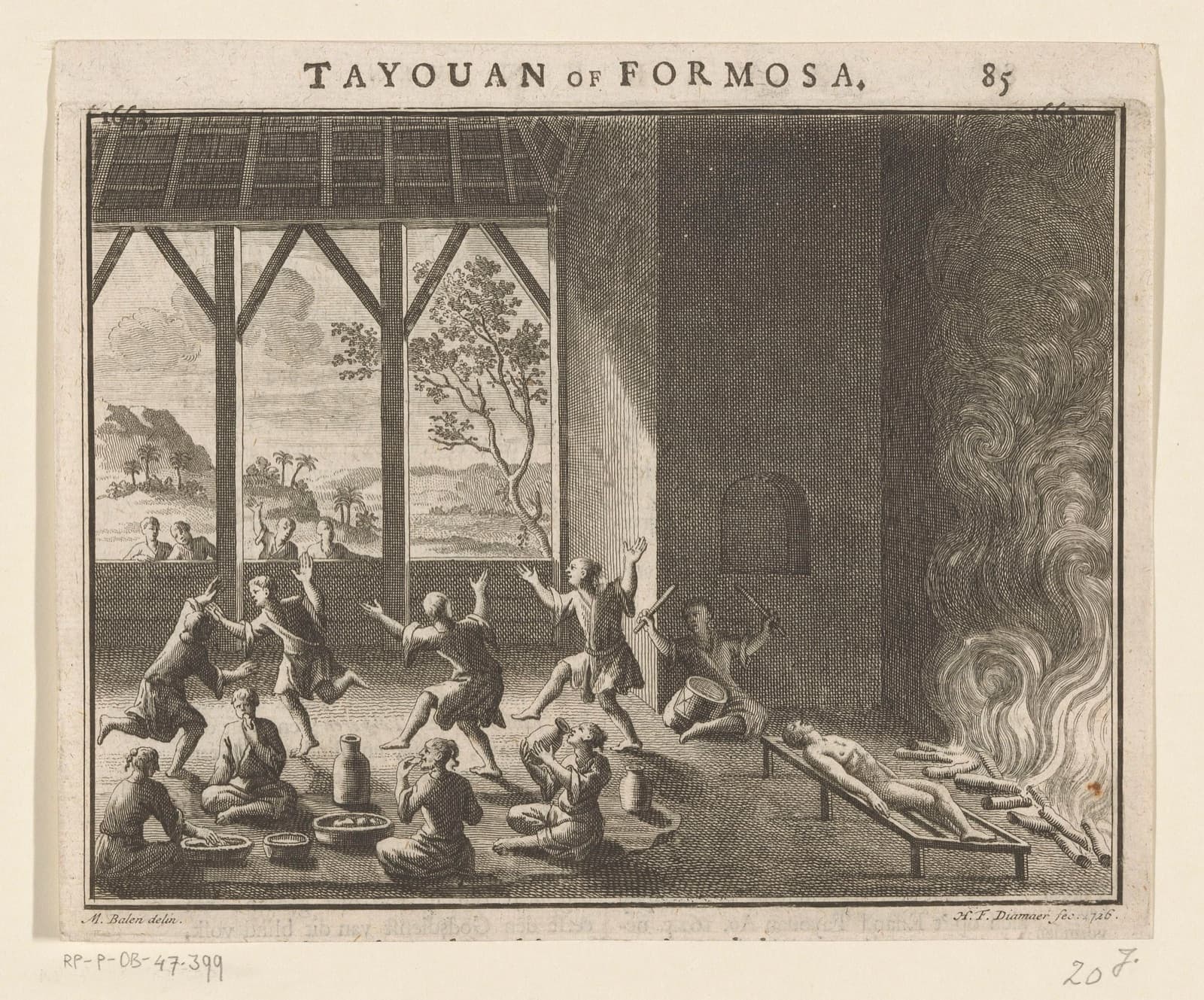
Dutch engraving of customs on the island of Formosa, 1726. No image survives of a landdag in session; prints of this kind are the only contemporary visual material.
Rijksmuseum, RP-P-OB-47.399 (CC0)
Isle of Time