


The Battle of Wuniulan
By March 14, 1947, the sky over Taichung had already changed. The 21st Division, which had landed at Keelung on March 8, was driving south, and wherever its machine guns and bayonets reached, blood ran in the streets. The 27 Brigade, which had held the city for barely ten days, could no longer stand against a regular army on the open plain. Hsieh Hsueh-hung and the officers of the operational headquarters made a decision that was heavy yet clear-eyed: to abandon Taichung and withdraw to the mountain town of Puli. This was no rout but a planned redeployment — to draw the fighting away from the crowded city, to spare its innocent residents the ruin of street combat, and, leaning on the barrier of the Central Mountain Range, to preserve the last strength of this young force. That night, trucks and marching fighters wound their way east along the mountain roads, their headlamps forming a thin thread of fire in the darkness, carrying rifles and ammunition — and the last desperate gamble of an entire generation of the island's youth.
Reaching Puli, the brigade set its command post in the Butoku-den and deployed along the contours of the Ailan plateau. Ailan was a red-earth tableland rising above the valley, and its only external link was the Wuniulan suspension bridge spanning the Mei River — narrow, flimsy, wide enough for only a few men at a time. For a force short of ammunition and thin in numbers, such terrain was a godsend of a defensive line: hold the bridgehead and the high ground at the plateau's edge, and an advancing army could not rush across all at once, but had to be fed up the narrow path in small batches. In command of this line was Huang Chin-tao, barely past twenty. Once conscripted as a Taiwanese soldier in the Japanese army, he had seen a real battlefield in the jungles of the South Seas, and among these student soldiers — most of them not yet twenty — he was one of the few who truly understood how to fight. He split his men into groups to hold the heights and thickets on both sides of the bridge, telling them to keep calm, to let the enemy come close before firing, to save every round for the moment that mattered most.
At dawn on March 16, government troops advanced on Puli in several columns, and the vanguard set foot on the Wuniulan br…
At dawn on March 16, government troops advanced on Puli in several columns, and the vanguard set foot on the Wuniulan bridge. Huang held his fire until most of the enemy had crowded onto the span, jammed together on the narrow deck with no room to advance or retreat — and only then gave the order. The rifles on the high ground cracked as one; the column on the bridge dissolved into chaos, men and animals tumbling into the ravine, the vanguard shattered, and for a time the whole assault ground to a halt. These boys, averaging under twenty and yesterday still at their school desks, had, with the terrain and an unbending will, actually held back a well-armed regular division. All morning the gunfire echoed through the valley; again and again the troops pressed forward, and again and again they were pinned down on the far side of the bridge. It was the finest and most tragic engagement of organized Taiwanese armed resistance in the entire February 28 period — for a few short hours, the island seemed truly to be in their own hands.
But courage in the end could not fill the gulf of strength. By afternoon the troops turned to mortars and flanking maneuvers, finding gaps to slip in behind the plateau; the defenders' rounds ran out one by one, their supplies long since severed, relief nowhere in sight. Huang Chin-tao watched his comrades fall one after another and his magazines empty one after another, and knew this line could no longer be held. As the light faded and the gunfire thinned, the final order came from headquarters: disband. It was the only decision Hsieh Hsueh-hung and the officers could make in that hopeless place — better to let these boys, who had scarcely begun to live, scatter into the night and vanish under new names than to die for nothing; and better, too, than to see the people of Puli who had sheltered them punished later for harboring "rebels." That night the fighters shed their mud- and blood-stained clothes, hid their weapons in the mountain gullies, and slipped away in twos and threes into the dark hill paths. A force that had once shaken the authorities took its quiet final bow among the peaks.
The fighting was over, but the long ordeal had only begun. The purge lists soon reached Puli; most who had fought at Wuniulan were hunted down — some seized on the spot, others hiding under false names for years, yet few escaping prison in the end. Huang Chin-tao was eventually captured and sentenced to a heavy term, spending more than twenty years behind bars, much of it worn away among the reefs and sea winds of Green Island; only in his later years, released at last, did he devote the rest of his life to testimony and oral history, becoming one of the few living witnesses to preserve a first-hand memory of the Battle of Wuniulan, until his death in 2014. And Hsieh Hsueh-hung, who had orchestrated it all, after the disbanding made her way through Hong Kong into exile on the mainland, only to end her life humiliated in the political storms of a foreign land. This volume does not recount the whole arc of the uprising; it draws the lens close to that single daylight in the valley on March 16, 1947 — recording how a band of boys, before one suspension bridge, with their last rounds and a courage utterly out of proportion, wrote for postwar Taiwan the most sorrowful and most unyielding page of its armed resistance.
The commander told us to keep calm, to let them come close before we fired. I lay on the red-earth slope at the bridgehead, my palms soaked with sweat, counting the enemy as they stepped onto the suspension bridge one by one. They surely never imagined that the far side was held by a pack of students who hadn't even grown proper beards. When the whole bridge was packed with them, the commander gave the word, and I squeezed the trigger — the first time in my life I ever fired at a man. The instant the shots burst out, the bridge dissolved into chaos; men fell into the river, their screams mixing with the roar of the water. We really did hold them off, a whole morning long. But our rounds grew fewer and fewer, and by afternoon shells began falling from the flank, and one by one the classmates beside me stopped moving. When darkness came, the order reached us: disband. I buried my rifle in a gully, took one last look at that bridge, and turned to slip into the pitch-black mountain path. I lived. But many did not.
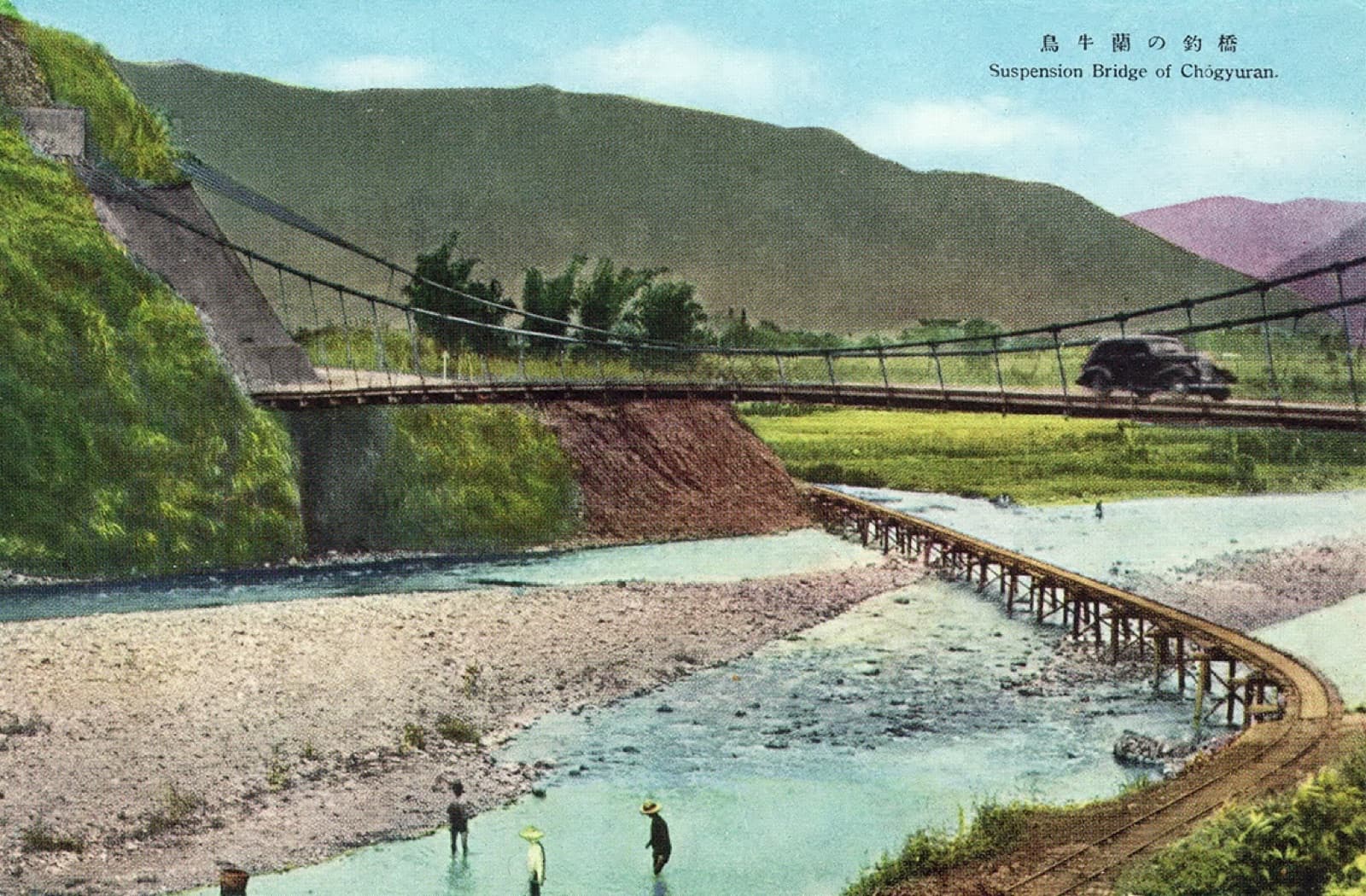
The Ugyulan suspension bridge. On 16 March 1947 the 27th Brigade fought the 21st Division at this crossing, held for a day, and then dissolved. It was the last organised resistance of the February 28 Incident.
Taiwan Memory Expedition archive
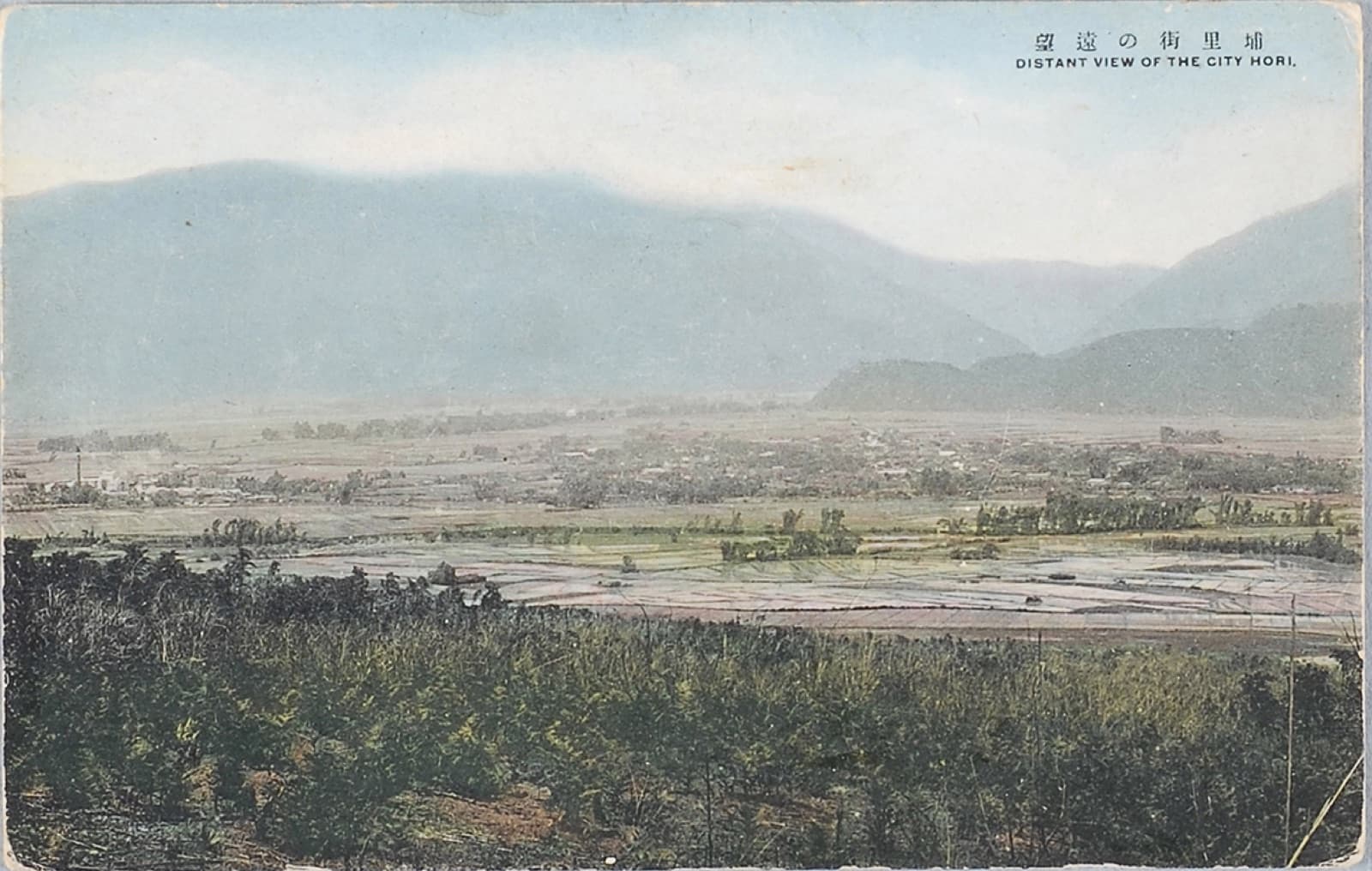
A street in Puli around 1945. The 27th Brigade fell back here from Taichung and chose not to fight inside the town, taking position at the bridge outside it instead.
Puli local image archive
Isle of Time