


The 27 Brigade
The gunfire of February 28, 1947, spread outward from Taipei, and the fury raced south along the trunk railway; within two days it had reached Taichung. On March 2, residents and students poured into the streets, and the city council convened an emergency citizens' assembly. Onto the platform stepped a woman of forty-six — Hsieh Hsueh-hung. Born into a poor family in Changhua and sold as a child bride, she had taught herself to read and made her way to Shanghai and to the Communist University of the Toilers of the East in Moscow. In 1928 she had helped found the Taiwanese Communist Party, and she had endured repeated imprisonment under the Japanese colonial authorities. In that moment, no one else on the island understood better how to forge a scattered crowd into a force.
At her call, the resistance in Taichung rose swiftly from petition to takeover. On March 3, the crowds occupied the city hall, the police station, and the radio station, collecting weapons and keeping order — for a time the streets were calmer than in ordinary days. Hsieh understood that an angry crowd alone could not hold out for long. She convened a mass meeting at the Taichung Theater, established a "People's Assembly" and an operational headquarters, and set about organizing a local self-governing body that might replace the discredited regime — for this was never mere rioting, but an earnest attempt at self-rule: she argued that Taiwanese should govern Taiwan themselves, that arms were only the means to force concessions, and that the true aim was the remaking of the system. In an age when women were all but excluded from every public decision, that a poor-born woman twice imprisoned should become the highest decision-maker of a city's uprising was itself something unheard of. She organized the incoming youth, demobilized veterans, and students from every school, assigning them to supply, medical care, and sentry duty, so that within a few short days the chaotic streets ran in good order. On March 6 the force was formally named the "27 Brigade," after the February 27 cigarette-seizure incident that had ignited the uprising. Chung I-jen, a former officer in the Japanese army, served as its commander, while Hsieh presided as its spiritual leader and highest decision-maker. Its core came from the students of Taichung Normal School and the Taichung School of Agriculture, joined by aboriginal youth from Puli and a company of Taiwanese men who had fought as Japanese soldiers in the South Seas and only lately returned home. Most were no more than eighteen or nineteen, holding rifles received from the police depots and armories, and for a few short days — the first and only time — they felt as though the island were truly in their own hands.
But the deception at the negotiating table was soon laid bare. On March 8, the 21st Division, dispatched by Chiang Kai-s…
But the deception at the negotiating table was soon laid bare. On March 8, the 21st Division, dispatched by Chiang Kai-shek from the mainland, landed at Keelung and split southward, strafing with machine guns and arresting at will, drowning one city after another in blood. Facing a well-armed regular army that vastly outnumbered them, the 27 Brigade knew it could not hold the city, and made a decisive choice: to abandon Taichung and withdraw to the mountain town of Puli, sparing the citizenry the ruin of street fighting while leaning on the mountains to preserve its strength and fight on. On March 16, this student-led force fought, near the Wuniulan suspension bridge on the outskirts of Puli, the last and fiercest engagement of the entire February 28 period — the hour-by-hour course of that day in the valley is told in a separate volume of this book. After a daylong battle, its ammunition and relief exhausted, its leaders resolved that night to disband, letting the young fighters scatter and vanish into anonymity. A force that had once shaken the authorities dissolved quietly into the mountains.
Only after the brigade disbanded did the true catastrophe descend. Soldiers and secret police launched an island-wide village purge, going door to door to hunt down by name all who had joined the resistance, preferring to kill the innocent rather than let a suspect slip away. Most members of the 27 Brigade were pursued; Chung I-jen was captured, sentenced to death, and then reprieved to a long imprisonment, spending seventeen years behind bars, while countless nameless student soldiers simply disappeared — some shot where they stood, some sunk in the irrigation canals, some fleeing far away never to look back — becoming a void their families could never speak aloud. That fear did not dissolve when the gunfire ceased; it seeped instead into the daily life of the decades that followed, as people learned not to speak of politics, not to ask about the past, and to bury memory deep. After the disbanding, Hsieh Hsueh-hung made her way through Hong Kong and fled to mainland China, where she founded the Taiwan Democratic Self-Government League and went on striving for Taiwan's future — only to be branded a rightist in the Anti-Rightist Campaign and the Cultural Revolution that followed, denounced and her home ransacked. She died in Beijing in 1970, in bleak circumstances: a woman who had fought the Japanese colonizers in her youth and the Nationalist government in her middle years, only to be humiliated in the end by the very regime she had turned to — caught between two powers, and failed by both.
The 27 Brigade existed for barely two weeks, yet it left an indelible mark on history. It was the most organized and the most resolute armed force of the entire February 28 period, and — rare in modern Taiwanese history — an army built and led by the hand of a woman. While the Settlement Committee in Taipei still sought reform through institutional channels at the negotiating table, hoping to exchange peace for political promises, Taichung had already proven through action that the people of this island were willing to pay the heaviest price for self-rule and dignity. This volume returns to that brief, searing spring of March 1947, recording how Hsieh Hsueh-hung and the 27 Brigade rose up in desperation and took their final bow among the mountains. Their defeat — together with those young faces that never came home — is one of the starting points for understanding why postwar Taiwan fell silent for so long, and why it never gave up its search for freedom.
We did not choose the gun; the gun was forced into our hands. When the soldiers fired on unarmed crowds in Taipei, we in Taichung understood that petitions would no longer save us. Commander Hsieh told us plainly: hold the city, protect the people, and if we must fall back, fall back fighting. We were teachers and students, not soldiers — yet for ten days we governed ourselves, and for one march to Puli we were an army.
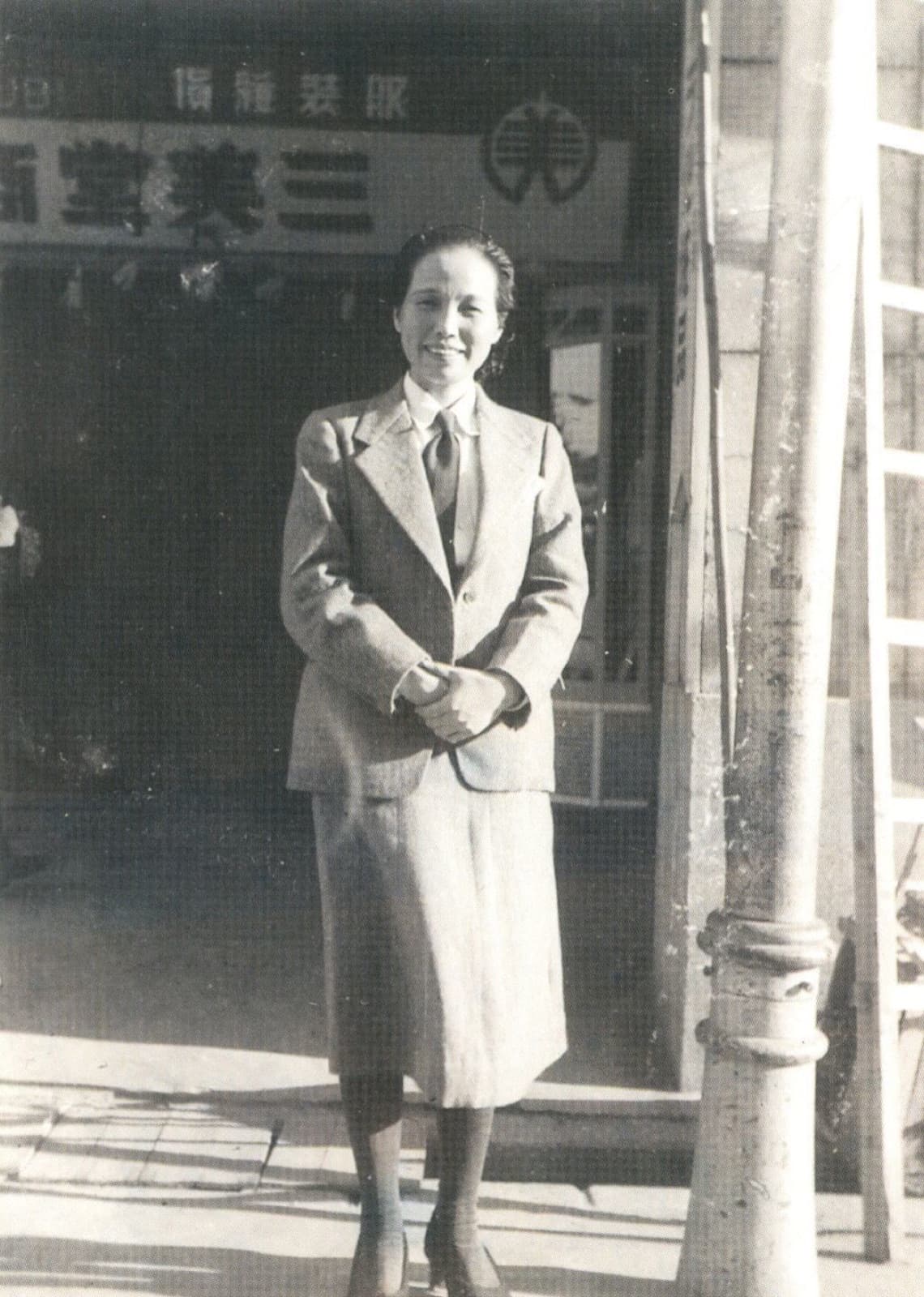
Hsieh Hsueh-hung, a founder of the Taiwanese Communist Party. In the February 28 Incident she formed the 27th Brigade in Taichung — one of the few named leaders of that resistance, and the only woman.
Taiwan Cultural Memory Bank
Isle of Time