


Zheng Jing's Reforms
Zheng Jing inherited the Kingdom of Tungning in the summer of 1662 amid circumstances that should have ended it. He was in Xiamen when word of his father's death arrived, and a faction in Taiwan had already proclaimed his uncle Zheng Xi regent. It took a brief but resolute expedition across the strait to reassert the succession before Zheng Jing could finally turn to the work of governing an island still raw from conquest. What followed was a near-two-decade reign (1662–1681) that, quietly and without the father's mythic stature, became the true founding era of an organized Taiwanese polity.
At the center of the reform program stood Chen Yonghua, a Fujianese scholar-official whose quiet competence reshaped the kingdom. On his advice, Zheng Jing built Taiwan's first Confucian temple at Tainan in 1665, paired it with the Mingluntang academy, and instituted civil examinations for local appointment — laying the institutional scaffolding for Han literate culture on the island for the first time. Military colonies were expanded deeper into the Chianan plain; salt flats, sugar mills, and refined drainage works multiplied the tax base. Chen's careful supervision of granaries and grain reserves enabled the kingdom to weather famines that would have broken a less-organized state.
Beyond land reform, Zheng Jing leveraged his inherited Zheng-family merchant network into one of the most formidable mar…
Beyond land reform, Zheng Jing leveraged his inherited Zheng-family merchant network into one of the most formidable maritime commercial operations of seventeenth-century East Asia. Tungning fleets called regularly at Nagasaki and Manila, and through intermediaries reached Batavia, Siam, and the Ryukyus. English East India Company factors established a trading lodge at Anping in 1672, exchanging woolens and firearms for deerskin, sugar, and Japanese silver. This was no isolated "bandit kingdom" as Qing propaganda styled it, but a genuine maritime polity with its own revenues, standing army, and diplomatic correspondence. Zheng Jing himself twice led invasions of the Fujian coast during the Revolt of the Three Feudatories (1674–1680), at one point holding Zhangzhou, Quanzhou, and Xiamen before being forced to withdraw.
This volume examines the reforms that transformed Koxinga's hasty conquest into a durable state. Through Confucian-temple inscriptions, examination rolls, trade ledgers with English and Japanese merchants, and the administrative archives of Chen Yonghua's chancellery, it documents how a twenty-year island regime organized itself as a kingdom, educated a generation of scholar-officials, and imagined a sovereign Han-Chinese future independent of continental dynasty.
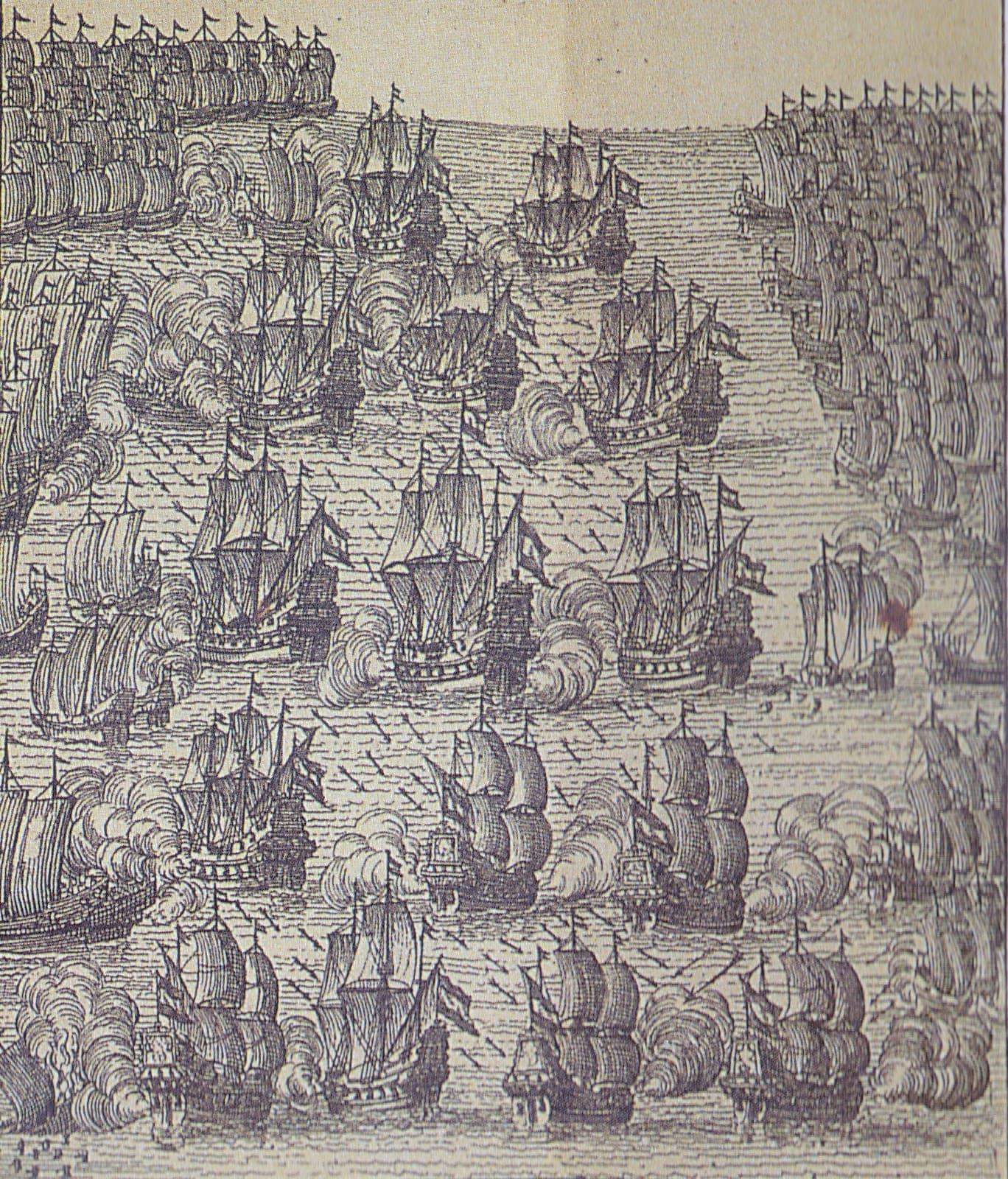
The sea battle off Quemoy, 1663. The Qing and the Dutch East India Company attacked together; the Zheng fleet broke and Quemoy and Xiamen fell. Zheng Jing never recovered a foothold on the mainland coast.
Matthijs Cramer, *Borts Voyagie naer de kuste van China en Formosa*
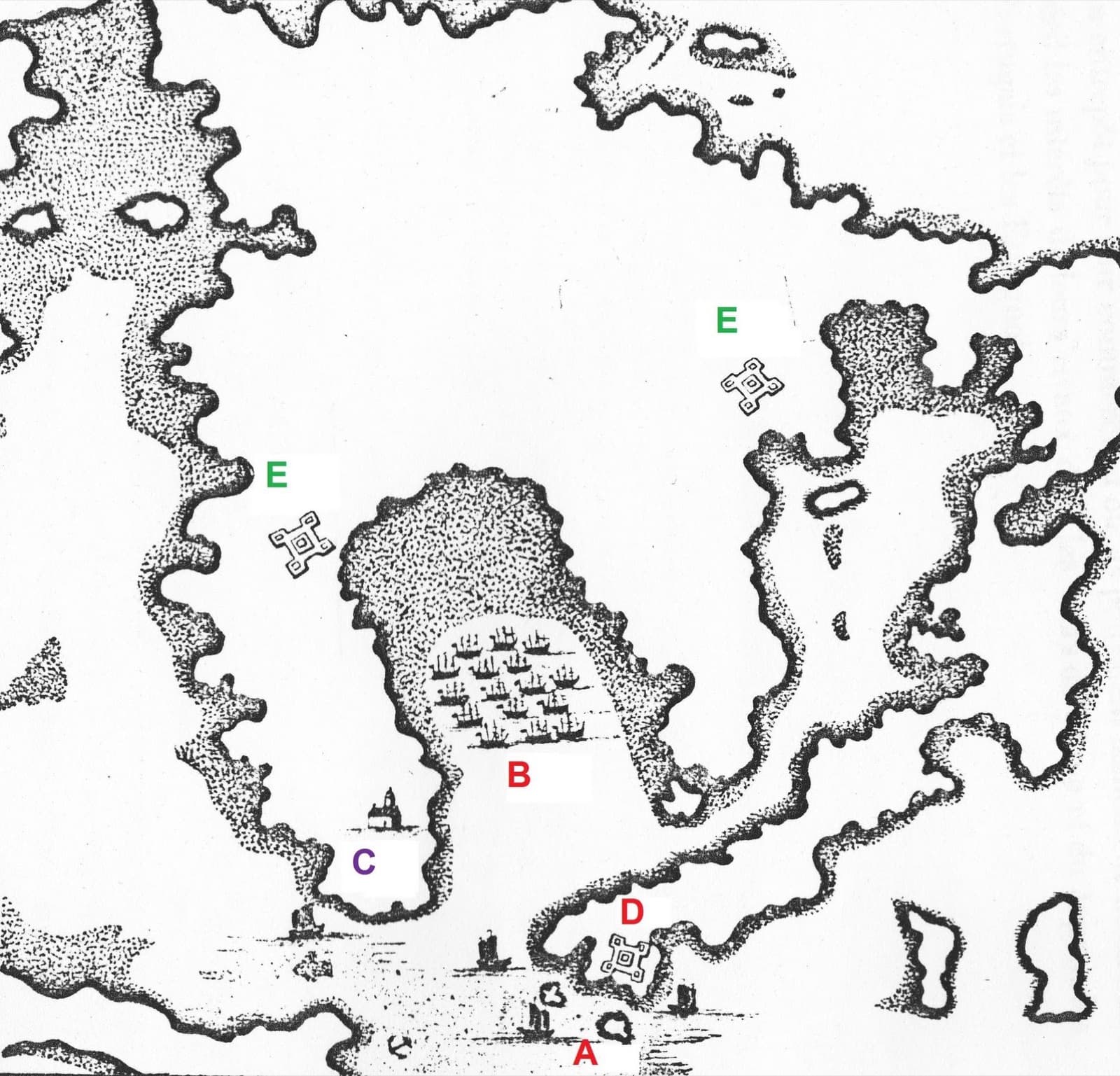
A 1664 chart of the Pescadores marking the Dutch fleet's anchorages and channels. The islands were the doorway to Taiwan; nineteen years later Shi Lang came through them.
Matthijs Cramer, *Borts Voyagie naer de kuste van China en Formosa*
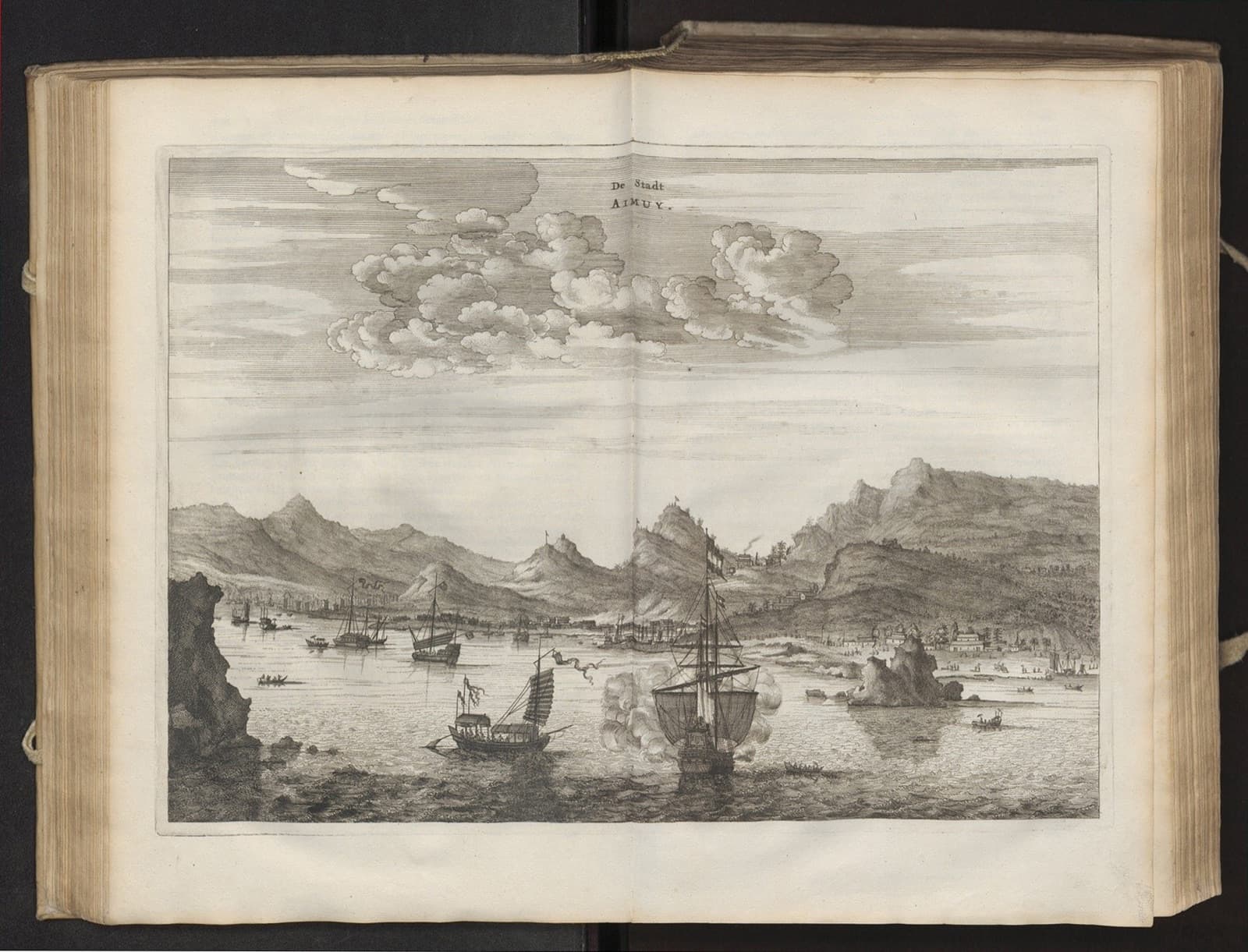
A harbour on the China coast, from Olfert Dapper's 1670 account of the Dutch embassies to China. By the time it was printed the Dutch had lost Taiwan and were still trying to get back into these waters.
Olfert Dapper, 1670; Radboud University Library, Nijmegen
Isle of Time