


Dai Chaochun came from Sizhangli village in Changhua County. His forebears came from Longxi in Zhangzhou, and for generations the family had served as clerks to the Northern Route garrison. In 1861 an officer named Xia Ruxian demanded a bribe from him, he refused, and he lost the post. Years earlier his elder brother Dai Wangui had formed an Earth God society, and later, with Zhang Shui, gathered the district's wealthy households into the Eight Trigrams Society, pledged to come to one another's aid when trouble came.
At first the authorities leaned on the society. The Taiping rebellion across the strait was still unsuppressed, the rotating garrison troops sent over from the mainland could not fight, and Changhua was thick with bandits. So Dai trained militia and caught robbers for the government under the banner of joint village protection. Local officials treated him as a useful right hand, and more people joined to protect themselves. By the first year of the Tongzhi reign, the incense register of the Heaven and Earth Society listed more than ten thousand members.
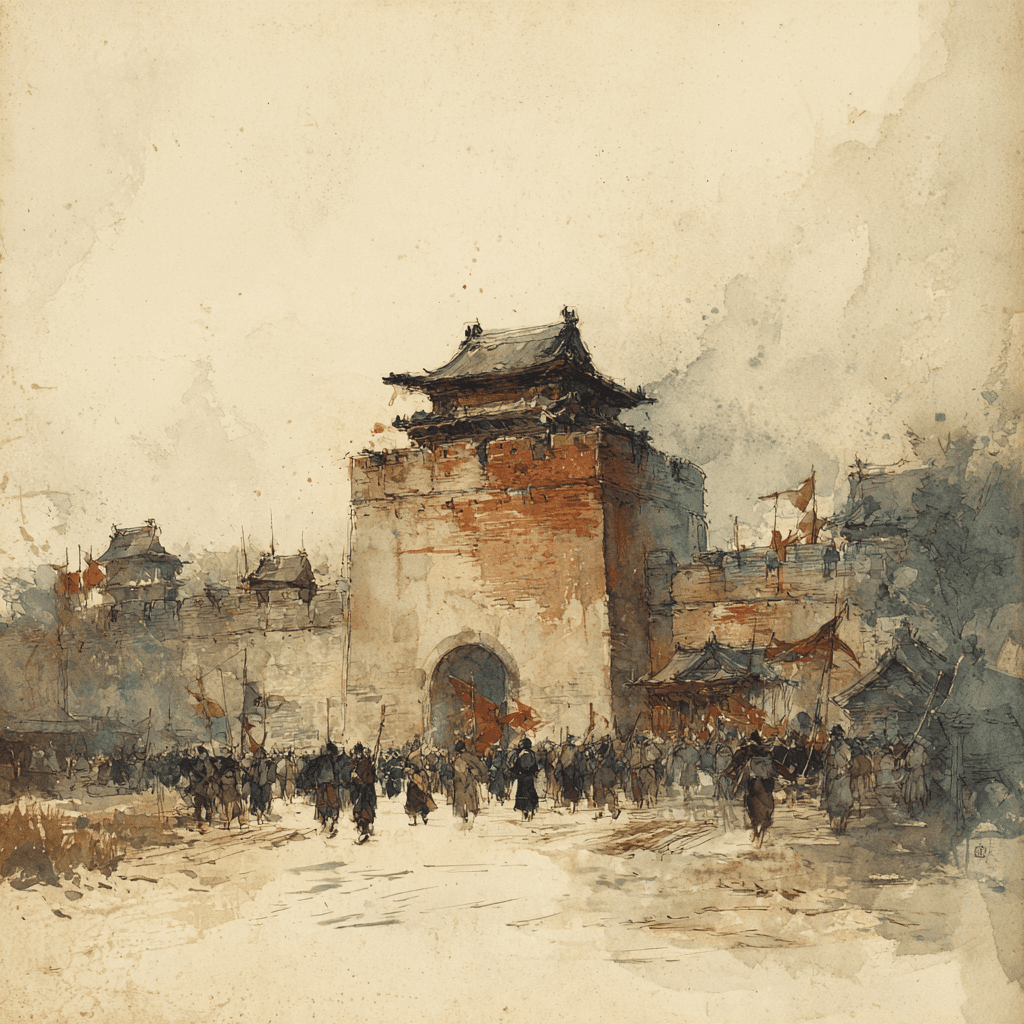
In the spring of 1862 the Taiwan Circuit Intendant, Kong Zhaoci, made his customary spring tour with six hundred troops and stopped at Changhua to break up the societies, killing a local headman named Hong inside the city. Chen Nong of Datuliao village raised his banner first. At dawn on the twentieth day of the third month of Tongzhi 1, Changhua fell. Kong refused to surrender and took poison. Dai proclaimed himself the Eastern King and named Lin Richeng, Chen Nong and Hong Cong the Southern, Western and Northern Kings. The rising flew red flags. The government troops and the local militias flew white.
Which side a village took often had little to do with the government. Lin Richeng of Sikuaicuo besieged Wufeng and cut off its water to avenge his kinsman Lin Masheng. The Wufeng Lin family answered with cannon and held for three days. That summer the walled town of Dajia was besieged and its water cut. The townspeople asked Lin Chunniang, a widow of many years, to pray for rain, and the records say rain fell that day. The rebels attacked Lukang in the fourth month and Douliumen in the eighth. In October the Taiwan Brigade General, Lin Xiangrong, trapped at Douliu, killed himself before it fell. Chiayi was besieged twice, the second time from the ninth month into the second month of the following year.
The government lacked both soldiers and money. The Taiwan Circuit Intendant Hong Yuchen borrowed from the British firm Tait & Co. and set up a defence bureau. In August 1863 the new intendant, Ding Yuejian, landed at Zhuqian and joined the village militia of Lin Zhanmei to march south. In November the Fujian Provincial Army Commander, Lin Wencha, came ashore at Anping.
Early in 1864 Dai Chaochun was taken, and Ding Yuejian had his subordinate Chen Jieyuan behead him. Lin Richeng set off gunpowder at Sikuaicuo and killed himself. It ended only in January 1865, when government troops took Beishinan: more than three years, the longest uprising of Qing rule in Taiwan.
The rising was put down by local force. Lukang's merchant gentry, Lin Zhanmei at Zhuqian and the Hakka villages of Liudui each sent men. Lin Wencha's service lifted the Wufeng Lins from a local strongman clan to one of the island's leading families. In 1864 he was sent back to the mainland to fight the Taiping and died near Zhangzhou. The family's affairs passed to his younger brother, Lin Wenming.
On 17 April 1870 Lin Wenming was beheaded in open court at the Changhua county yamen by the commissioner Ling Dingguo, charged with seizing others' property and leading clansmen into the court to make trouble. His mother, Dai Congniang, appealed to Beijing four times. The verdict stood each time. In 1885 Governor Liu Mingchuan backed one more appeal. It failed too.
Many who joined the Eight Trigrams Society did so at first to protect themselves. Robbery and murder were common around Changhua, the garrison troops could not be relied on, and the government had itself handed the keeping of order to the society. Once in it, one village could count on the next, and the names in the incense register grew year by year until by Tongzhi 1 there were more than ten thousand. To them the society was something the authorities tolerated, right up until the Taiwan Circuit Intendant marched troops into Changhua.
When Kong Zhaoci killed the society's headman Hong inside the city, the whole society suddenly had no way back. After the city fell on the twentieth of the third month, those raising red flags included men who truly meant to rebel and village heads who had been swept along. Three years later Dai Chaochun was beheaded early in 1864, Lin Richeng lit his gunpowder, and Beishinan finally fell in January 1865. Most members' names were not kept. What was kept were the government's registers of the land it confiscated afterwards.
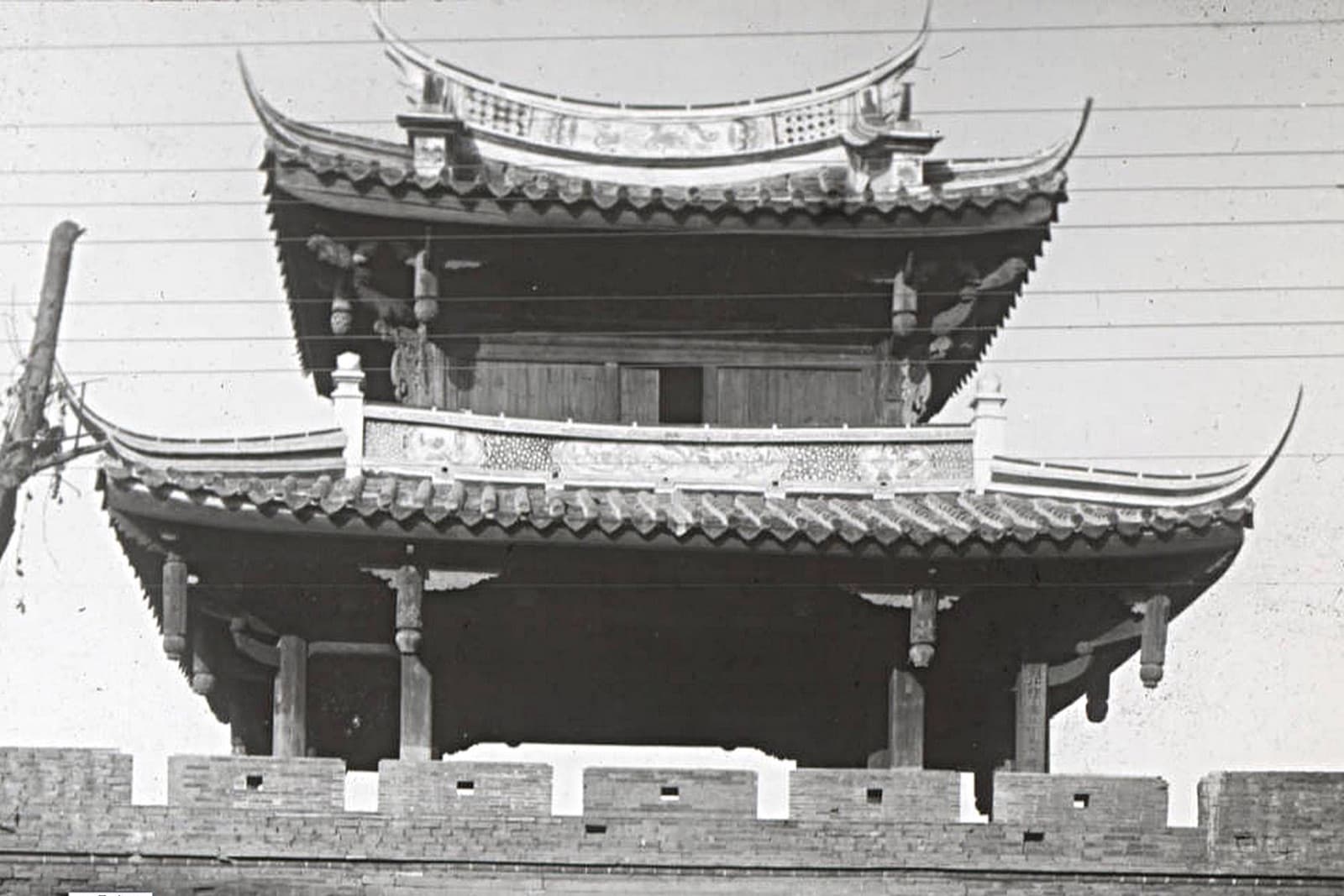
The Legeng Gate tower of the Changhua county town, photographed around 1895 by the American journalist James W. Davidson. This was the city Dai Chaochun's followers broke into in 1862.
James W. Davidson; University of Calgary Library Digital Collections
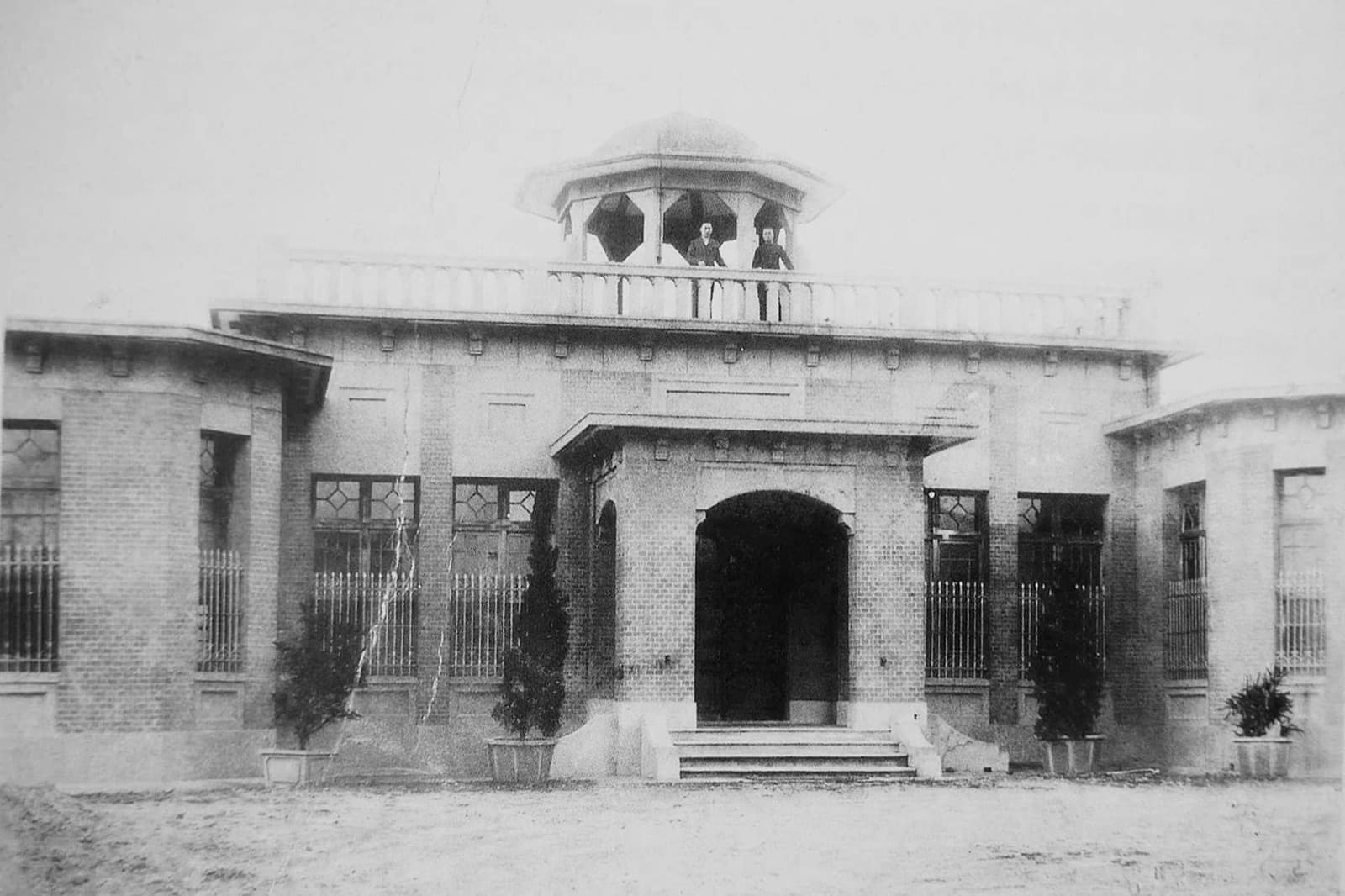
The octagonal pavilion in Lin Lie-tang's garden at the Wufeng Lin family estate, in the Japanese era. After the Dai Chaochun rising the Lins became one of the leading families of central Taiwan, and later generations built these houses and gardens.
Public domain, photographer unknown