


Observers at the Edge of Empire
The opening of Taiwan to foreign residence following the Treaty of Tientsin in 1858 coincided with the high period of the Victorian collecting expedition, when natural history museums across Europe and North America were actively soliciting specimens and observations from the frontiers of empire. Taiwan's combination of geographic accessibility, biological diversity, and indigenous communities largely untouched by Western contact made it unusually attractive to the naturalists, adventurers, and cultural observers who began arriving in the port towns of Danshui and Dagou in the 1860s and 1870s.
Robert Swinhoe, a British consular officer who first arrived in Taiwan in 1856 — before the formal opening of the treaty ports — was the pioneer of this wave of observation. A trained ornithologist with wide-ranging interests in natural history, Swinhoe documented Taiwan's fauna with methodical thoroughness, describing more than fifty species previously unknown to Western science. The species he described continue to bear his name in their scientific taxonomy: Swinhoe's buttonquail, Swinhoe's pheasant, Swinhoe's tree lizard. He also produced some of the earliest Western accounts of Taiwanese indigenous peoples, writing with genuine anthropological interest about social structures and ceremonies that most consular colleagues preferred to avoid.
Joseph Steere, an American zoologist from the University of Michigan who visited Taiwan in the 1870s, pushed deeper into…
Joseph Steere, an American zoologist from the University of Michigan who visited Taiwan in the 1870s, pushed deeper into indigenous territory than most Western visitors of his era. His fieldwork brought him into contact with communities that had seen few outsiders, and his field notes filled gaps in Western understanding of both the island's natural history and its human populations.
William Pickering arrived in Taiwan in 1863 and, thanks to his fluency in Hokkien, gained access to communities and conversations closed to most contemporaries. His later memoir, Pioneering in Formosa, remains one of the most readable first-hand accounts of frontier Taiwan in the English language.
John Thomson, a Scottish photographer who visited Taiwan in 1871, contributed something qualitatively different: photographs. He moved through Taiwan's treaty-port settlements and selected indigenous villages with a large-format camera, producing a series of images that constitute the earliest systematic visual record of the island. His photographs of Tainan's streets, the harbor at Dagou, and the faces of indigenous men and women he encountered captured details of material culture and everyday life that no written account could fully convey. Distributed in published albums in Europe, they shaped Western visual understanding of Taiwan for decades.
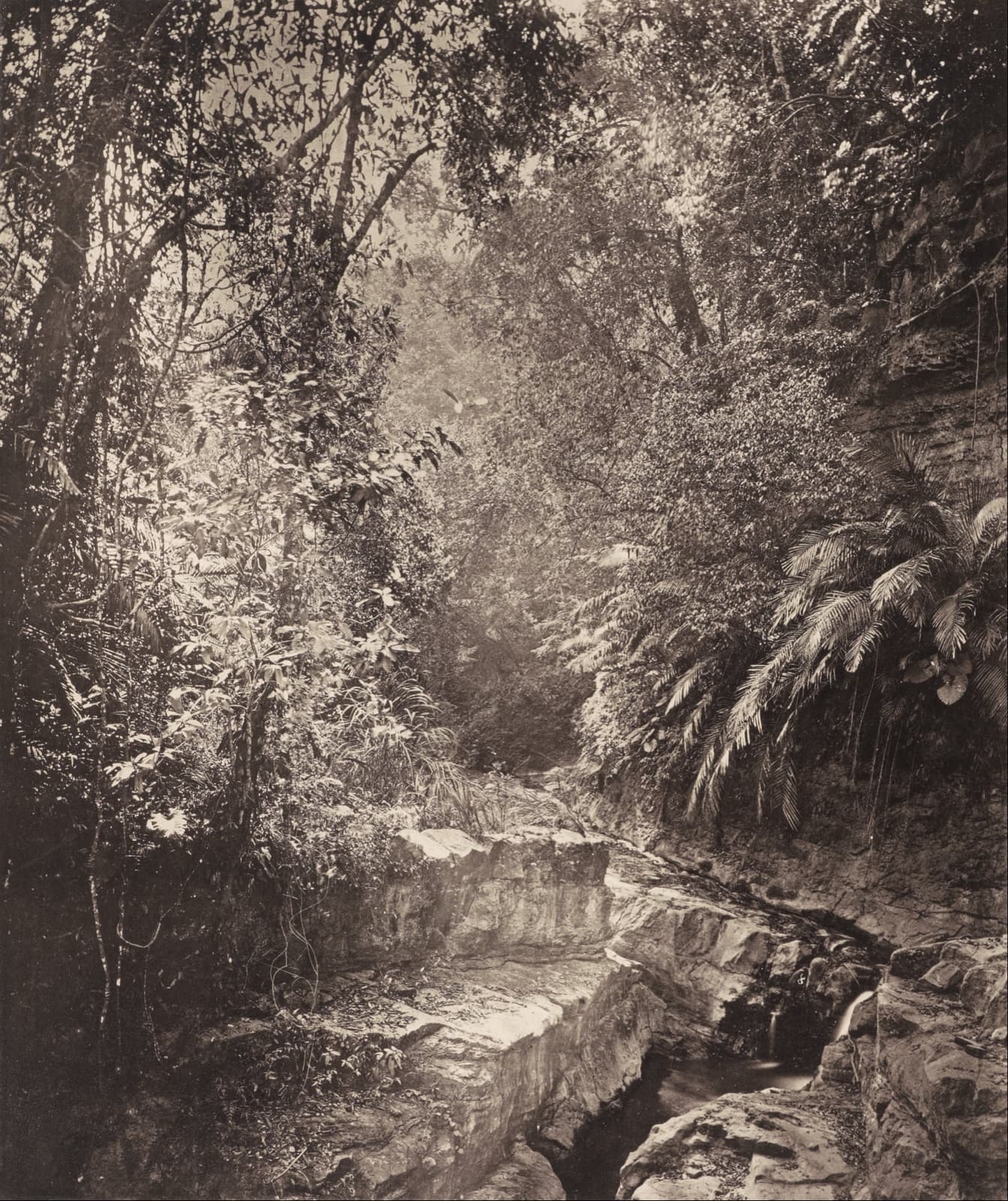
A mountain pass in southern Formosa by John Thomson, published in 1873. He had landed at Takow in 1871 and gone inland towards Baksa and Liugui with James Maxwell as his guide; the glass negatives he carried out are among the earliest photographs of Taiwan.
Photograph by John Thomson
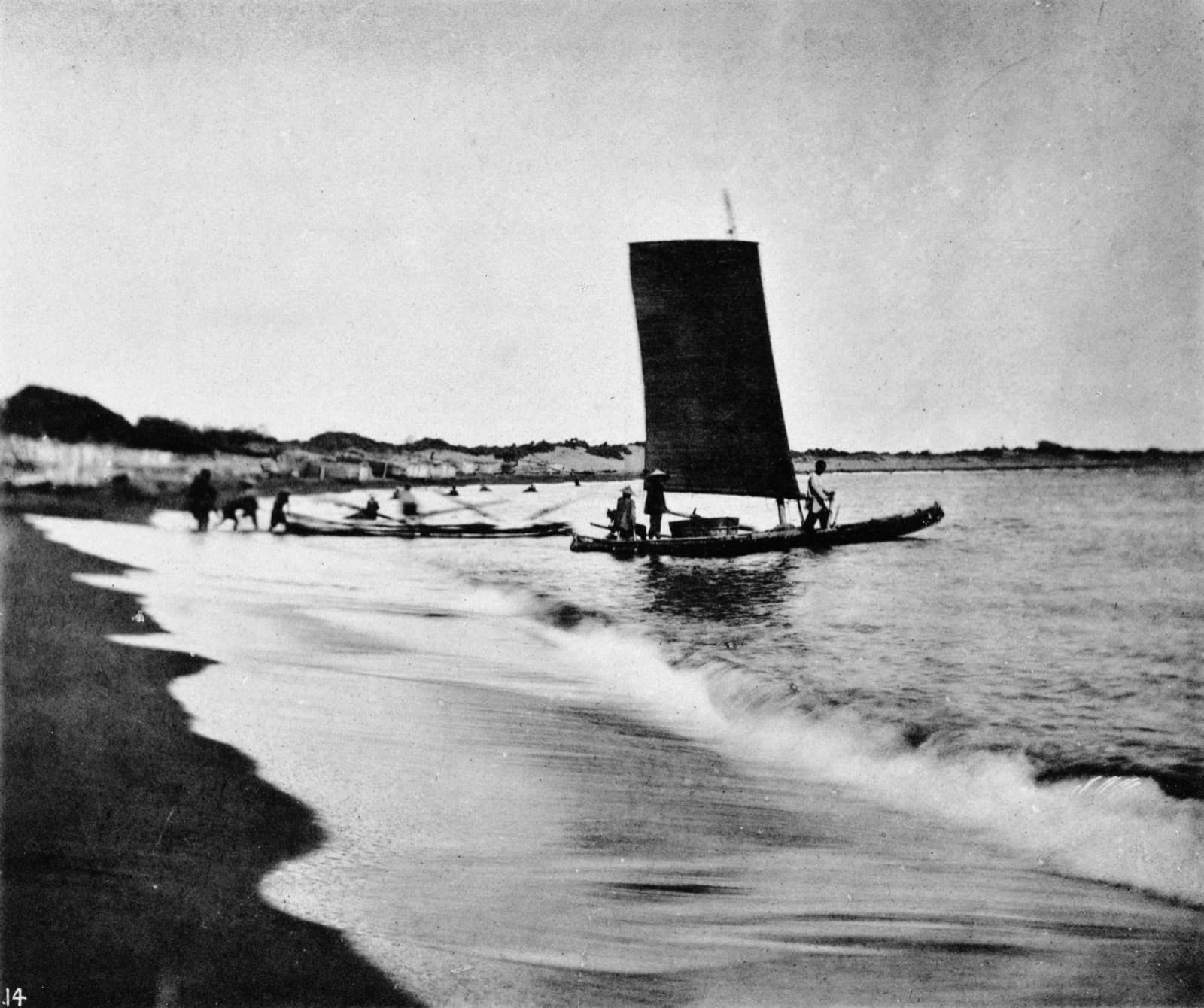
A bamboo raft photographed by Thomson. The west coast had no deep-water harbour, and cargo moved between ship and shore on shallow craft like this.
Photograph by John Thomson; Beinecke Rare Book & Manuscript Library, Yale University
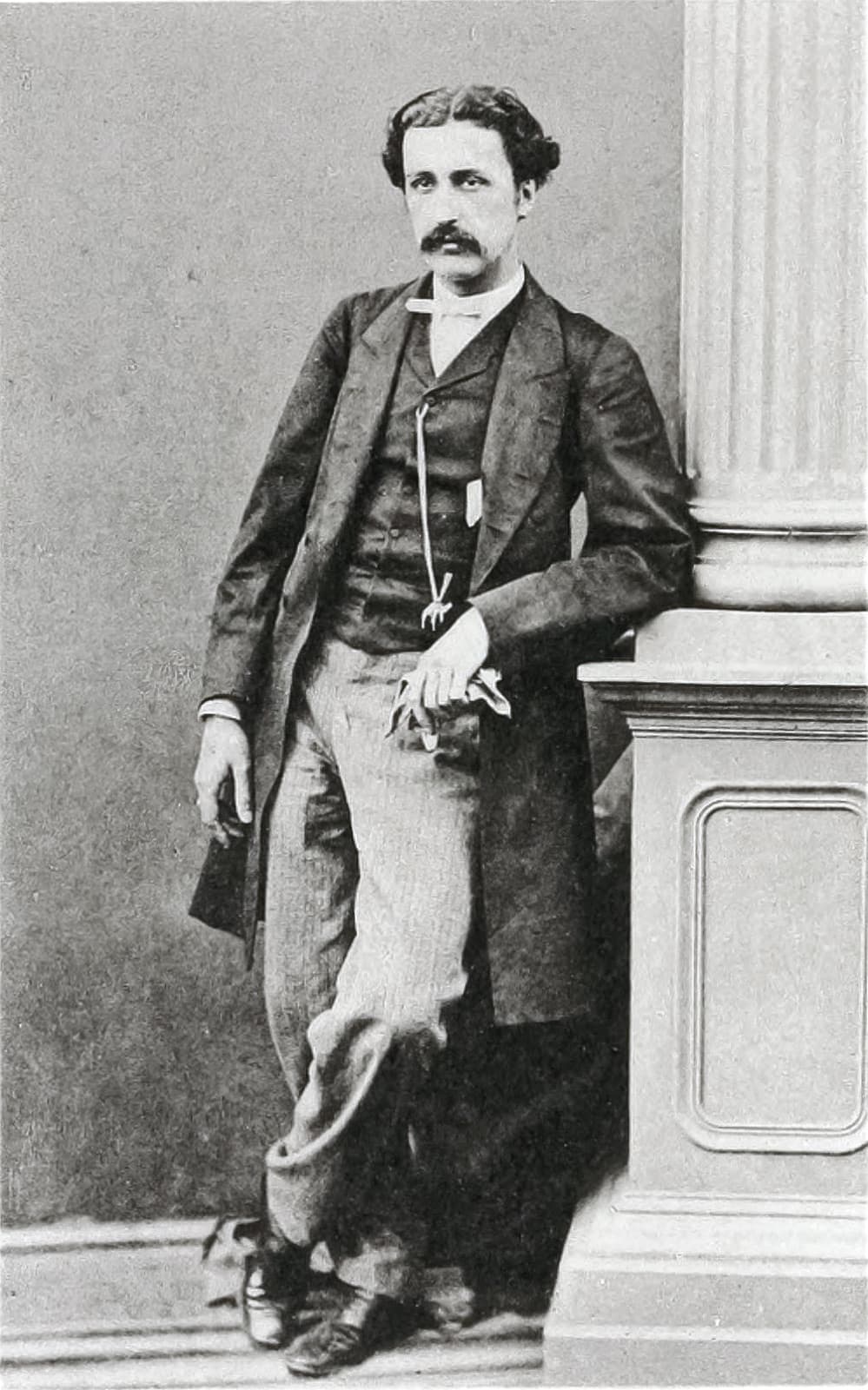
Robert Swinhoe, appointed vice-consul in Taiwan in 1860. He recorded more than two hundred bird species on the island; the Taiwan blue magpie and Swinhoe's pheasant were both described by him.
*The Ibis*, 1909
Isle of Time