


The New Literature Movement
The Taiwan of the 1920s was living through a double awakening, political and cultural. As the parliament petitions and the lectures of the Cultural Association stirred the island's political consciousness, a parallel revolution quietly caught fire on the page. Inspired at once by China's May Fourth vernacular movement and by modern Japanese literature, a younger generation of Taiwanese intellectuals began to ask in earnest: in what language, and for whom, should literature be written?
For generations the Taiwanese literary world had been dominated by the old literati, men steeped in ornate classical Chinese and the trading of composed verses. Their themes rarely strayed beyond wind, flowers, snow and moon, remote from the real lives of the toiling majority. Such a literature could neither carry the ideas of a new age nor shed light on the suffering at the base of colonial society.
In 1924 the young writer Chang Wo-chun, then living in Beijing, threw a bombshell. In a series of fiercely worded essays — "A Letter to Taiwan's Youth," "The Wretched State of Taiwanese Letters" — he denounced the stagnation of the old literature and called for renewal through the vernacular. The "old-versus-new literature debate" that followed, with its sharp exchanges, sounded the first gong for the arrival of a new writing.
The man who gave the ideal flesh and blood was the Changhua physician Lai He. In a plain vernacular full of sympathy he wrote of cane farmers exploited by the sugar companies, commoners bullied by officials, and voiceless women; stories such as A Steelyard, The Festival and Trouble distilled the everyday injustices of colonial life into unforgettable art. Lai He not only wrote himself but, as editor of the literary pages of the Taiwan Minpao, opened those pages to a whole generation and mentored younger writers, earning the lasting title "father of Taiwanese new literature."
As the movement deepened, a debate arrived over the very language of writing. Around 1930 Huang Shih-hui and others argu…
As the movement deepened, a debate arrived over the very language of writing. Around 1930 Huang Shih-hui and others argued for a written Taiwanese vernacular that could depict the native soil and speak for the toiling masses, igniting the "nativist literature and written-Taiwanese debate." It pushed the relationship of literature to the land and the common people to the centre of everyone's thought, and deepened the consciousness of why, and for whom, one wrote.
Into the 1930s the venues for publication flourished. The magazine Nan-yin appeared, and Taiwanese students in Tokyo formed an arts research society and issued Formosa, kindling the flame of new literature on the island and in Tokyo at once. In 1934 writers from across the island gathered to found the Taiwan Literary Federation and publish Taiwan Literature, and the movement swelled into a mighty current.
It was in that same year that Yang Kui's story The Newspaper Carrier was selected by Tokyo's Literary Review, a milestone as the first work by a Taiwanese writer to break into Japan's central literary press. Yang Kui later founded New Taiwan Literature, giving the leftist and realist voices a fresh stage. At the same time Lu Heruo with The Oxcart, Lung Ying-tsung with The Small Town with Papaya Trees, and Chang Wen-huan with his nativist writing together carried Taiwanese new literature to an artistic peak.
Beyond fiction, new poetry and criticism flourished too. The Salt Belt poets led by Wu Hsin-jung wrote plain verse steeped in the smell of the land, amid the salt pans and farming villages of the south; and Wang Pai-yuan, in his Japanese-language poetry collection The Thorny Road, gave voice to the anguish and searching of the colonial intellectual. These diverse voices meant new literature was no longer the stage of novelists alone but the shared spiritual map of a whole generation.
The movement nurtured a whole generation of gifted writers who, with their individual pens, together portrayed the face and inner voice of colonial Taiwan, proving that the island's own people, language and land were every bit as worthy of first-rate literature. Yet the wheel of the age soon rolled over them: when war with China broke out in 1937 and the Governor-General pushed the assimilation campaign and abolished the Chinese-language sections of newspapers, harsh wartime censorship forced many writers to lay down their pens or fall silent. Though interrupted by the fires of war, the New Literature Movement had already given the island its first modern literary voice — a precious inheritance that later generations would go on rediscovering, carrying forward and honouring long after the war.
The pieces he sent back from Peking in 1924 grew less polite by the month. A Letter to the Youth of Taiwan called the island's literary world a heap of chaff, and The Wretched State of Taiwanese Letters named the poetry societies with their bell-and-bowl contests outright, saying they had made literature an instrument of social obligation. His argument was plain: write in the vernacular, write the speech living people use, write what is happening on this island. The quarrel was fierce and the old poets accused him of turning his back on his ancestors. In 1925 he published Love in a City of Chaos, the first collection of vernacular verse in Taiwan, a record of his own love affair in Peking written in plain speech without allusion. He later settled in Peking, taught, compiled dictionaries and translated from Japanese, and died in Taipei in 1955. His son Chang Kwang-chih became an archaeologist. Looking back, what he did in those three years amounts to one thing: he turned the question of which language literature should be written in into a question that had to be answered.
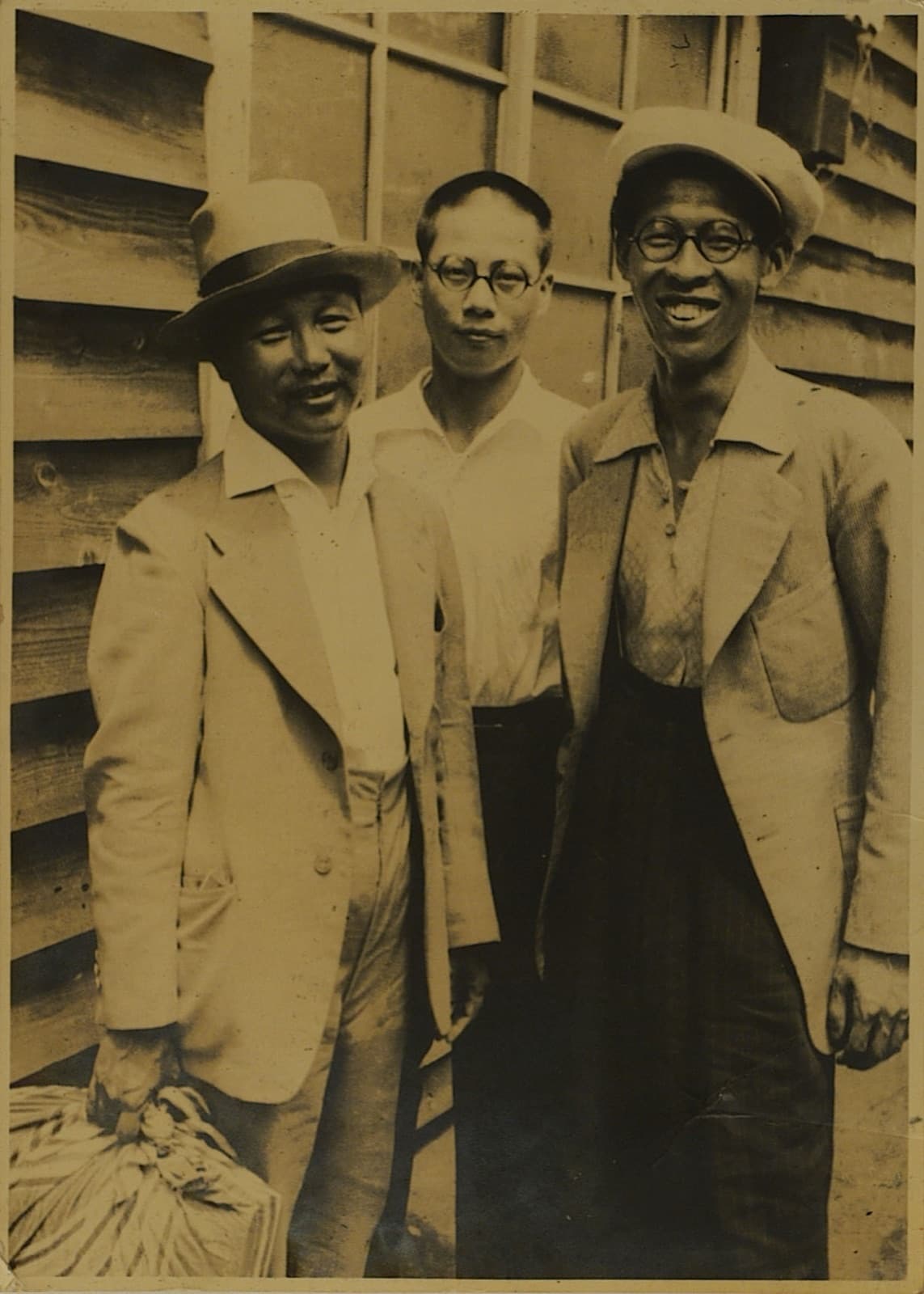
Lai Ho with friends. He kept a clinic in Changhua by day and wrote fiction and poetry by night; his contemporaries called him the father of Taiwan's new literature.
Lai Ho Memorial Museum
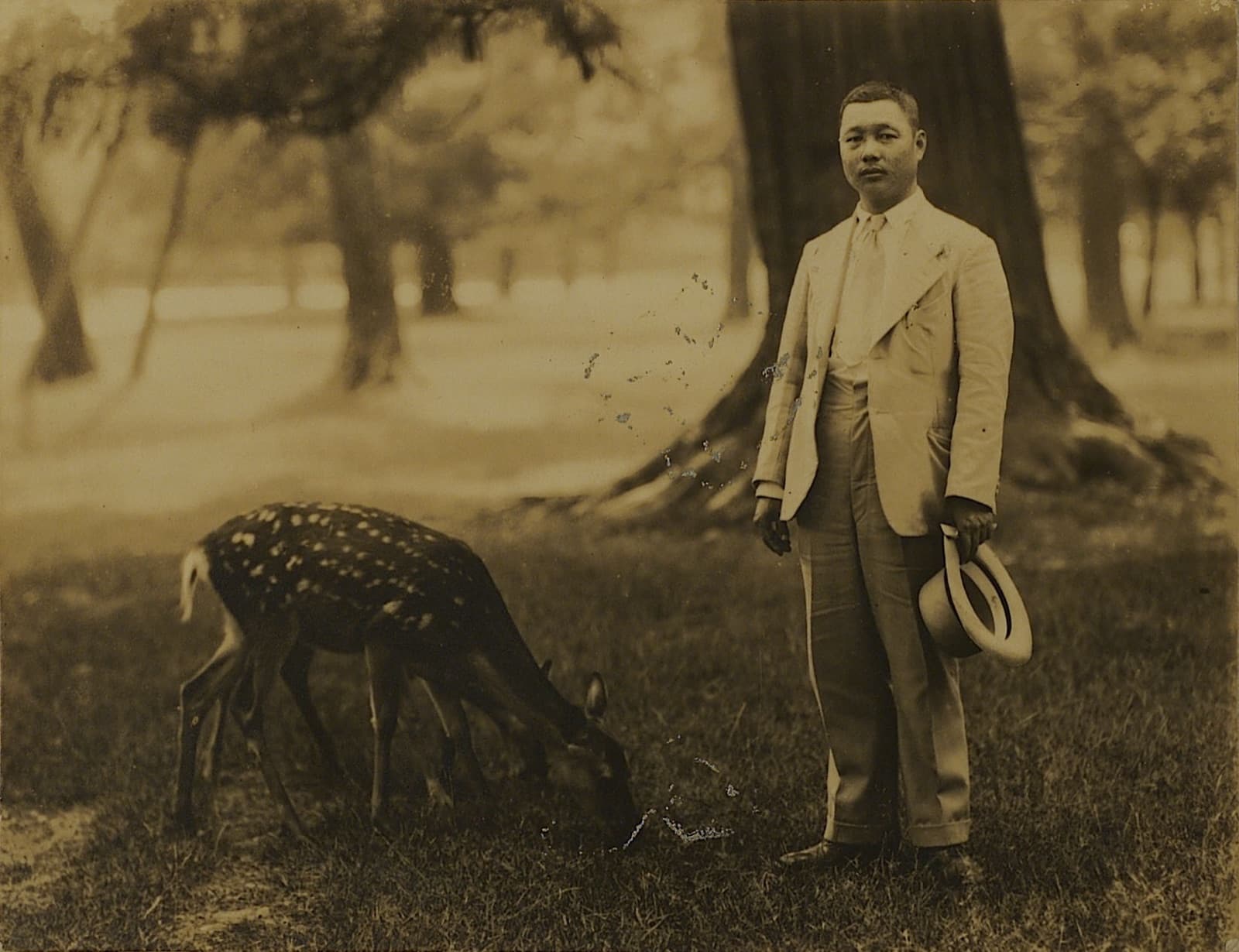
Lai Ho photographed in Nara, 1941. He had already been jailed twice; he was detained again the following year and died a year after his release.
Lai Ho Memorial Museum
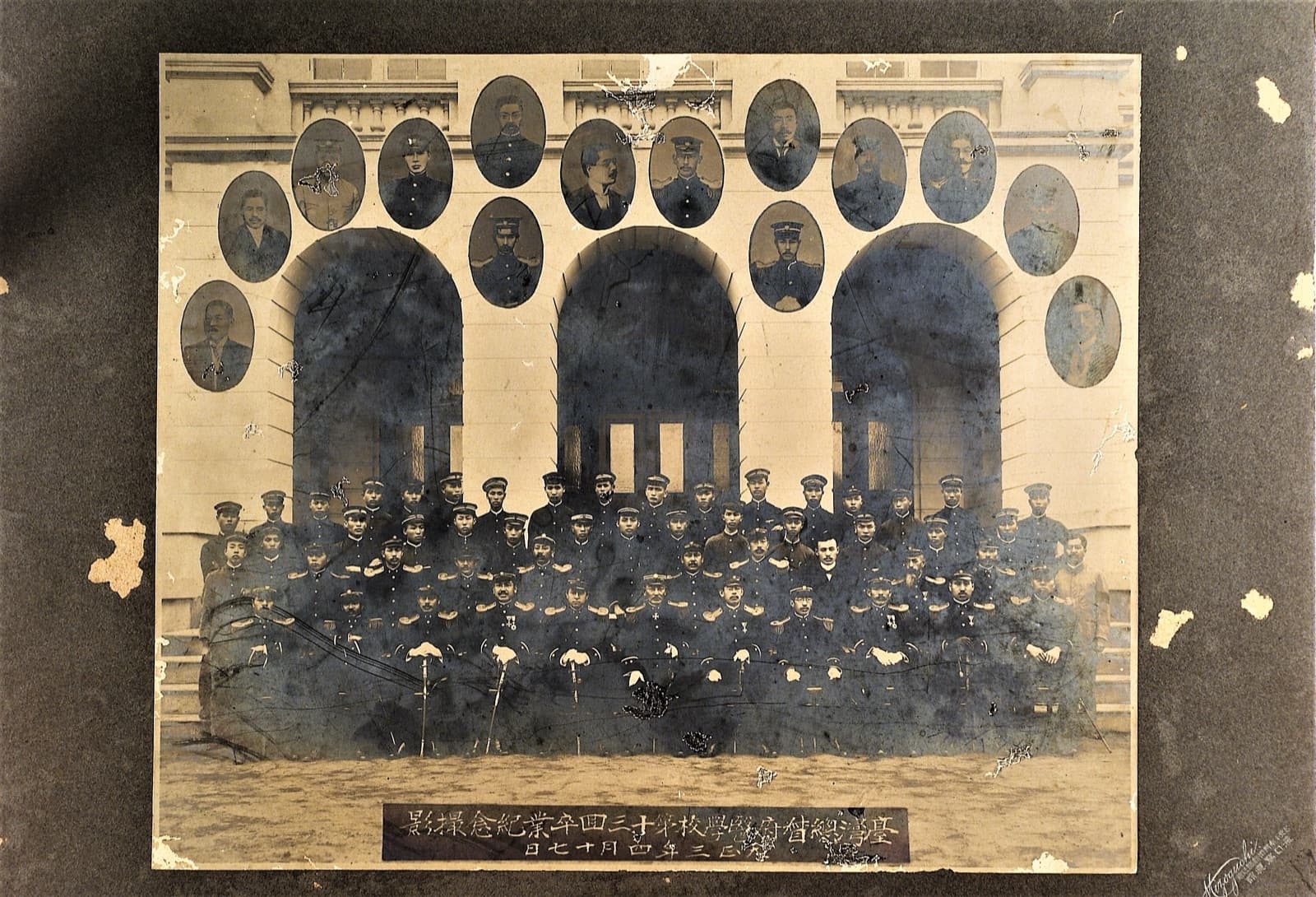
The thirteenth graduating class of the Government-General Medical School, 1914, with Lai Ho among them. Medicine was one of the few higher paths open to Taiwanese, and this class produced a number of later activists.
Lai Ho Memorial Museum
Isle of Time