


The Taiten Exhibition
In 1927 the history of art in Taiwan turned a new page. That year the colonial education authorities founded the Taiwan Fine Arts Exhibition — the Taiten — giving the island for the first time a grand and public stage on which painters could compete for recognition before every eye. Held annually and later continued as the Governor-General's exhibition, the Futen, it ran until 1943 and became the beating heart of Taiwan's first true art world.
The very first Taiten dropped a bombshell. In the Eastern-painting section, prized for its meticulous brushwork, three unknown young Taiwanese — Chen Chin, Lin Yu-shan and Kuo Hsueh-hu — were all selected, while many long-established Japanese painters were passed over. Amid the public uproar the press dubbed the three startling newcomers "the three youths of the Taiten," a name written into the island's art history ever since.
Among the three, Chen Chin shone especially bright. She was the only woman, born into a well-to-do Hsinchu family, who travelled to the Women's Fine Arts School in Tokyo to master the refined, meticulous gouache technique of Eastern painting. Her portraits of elegant women and Buddhist figures were repeatedly selected for the Taiten and Japan's Imperial Exhibition, and she became the first professional female painter Taiwan had ever known, breaking open a door in a field long closed to women. Kuo Hsueh-hu's Near Yuanshan and Lin Yu-shan's Lotus Pond, too, became classics of Taiwanese gouache through their rich colour and close observation.
The Taiten was divided into Eastern-painting and Western-painting sections, each with its own strengths. On the Western side, Chen Cheng-po, Liao Chi-chun, Li Mei-shu, Li Shih-chiao and Yen Shui-long studied in Tokyo and returned to render Taiwan's streets, landscapes and people in oils; Chen Cheng-po in particular entered Japan's Imperial Exhibition with works such as Outside Chiayi Street, coming to represent the Taiwanese oil painters who made their name in the central art world.
Behind the Taiten's stage stood a group of important guides. The watercolourist Ishikawa Kinichiro taught for years in T…
Behind the Taiten's stage stood a group of important guides. The watercolourist Ishikawa Kinichiro taught for years in Taiwan, and through his gentle style and ardent teaching nurtured a generation of Western-style painters such as Chen Cheng-po; while Japanese painters resident on the island — Shiotsuki Toho, Gobara Koto, Kinoshita Seigai — deeply shaped the exhibition's taste and direction as judges and creators.
It was on this stage, too, that "Taiwan" first became the true subject of the canvas. Painters no longer merely copied the ancients or chased exotic effects but turned their eyes to the ground beneath their feet — the fierce southern sun, the water buffalo in the paddies, the bustle of the temple courtyard, women in traditional dress. This conscious pursuit of "local colour" meant the land and life of Taiwan were, for the first time, seriously seen and recorded in the form of art.
The Taiten's success also stirred energy beyond officialdom. In 1934 a group of Taiwanese and Japanese painters resident on the island founded the Tai-yang Art Association and held the Tai-yang Exhibition, standing as a counterpart to the official Taiten and making the island's artistic life richer and more diverse. It is worth noting that Taiwanese had begun their ascent even earlier — the sculptor Huang Tu-shui was selected for Japan's Imperial Exhibition as early as 1920, lighting a lamp for the painters who followed.
In these works one can clearly see how Taiwanese painters felt their way toward a path of their own, between the academic training of Japan and their own feeling for the native soil. Chen Chin rendered women playing instruments with a gentle brush, Kuo Hsueh-hu filled his canvases with the milling crowds of temple fairs, and Lin Yu-shan's beasts, birds and flowers brimmed with life — inheriting the deep traditions of East Asian painting while holding the light and mood that belonged to this island alone, so that "Taiwanese art" was no longer a vague notion but a concrete and moving presence.
The years of the Taiten and Futen proved that Taiwan could bring forth art of the first rank. They trained technique and opened a stage for exhibition, but they also quietly nourished a cultural confidence and sense of identity — a belief that Taiwan was worth painting, and worth being seen. The tradition these painters laid down, and the bright, tender island under their brushes, still shape to this day how Taiwan looks upon and imagines itself.
In the Eastern painting section of the first Taiwan Fine Arts Exhibition in 1927, only three Taiwanese were selected: Chen Chin at nineteen, Kuo Hsueh-hu at nineteen, and Lin Yu-shan at twenty, none of them known. Several established Japanese painters in the same section were rejected. The newspapers the next day called them the three youths of the Taiten, and the name stayed with them for life. Their paths were not alike. Chen Chin came from a comfortable family at Niupu in Hsinchu and studied gouache at the Women's Art School in Tokyo, one of the few women of that generation whose family supported her going to Japan to paint. Kuo Hsueh-hu never studied abroad, working from self-instruction and copying; his Festival on South Street of 1930 shows Dihua Street in Dadaocheng during the Ghost Festival. Lin Yu-shan began as an apprentice in a Chiayi mounting shop and later went to Kyoto. In the year they were selected, Taiwan had no art school at all. To learn to paint you had the drawing class at a public school, a private studio, or your own way out.
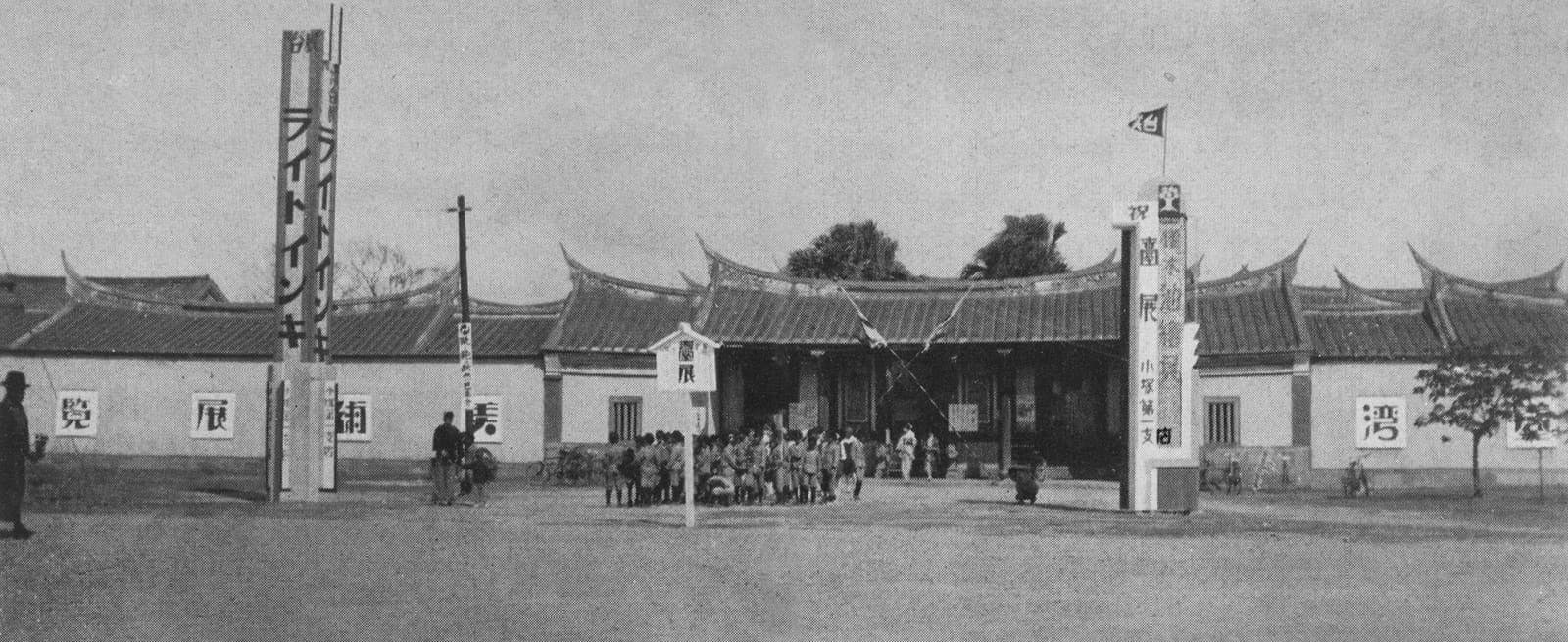
The Taiwan Fine Arts Exhibition, 1930. Held annually, it gave painters on the island their first public stage on which to compete for recognition.
Public domain; photographer unknown
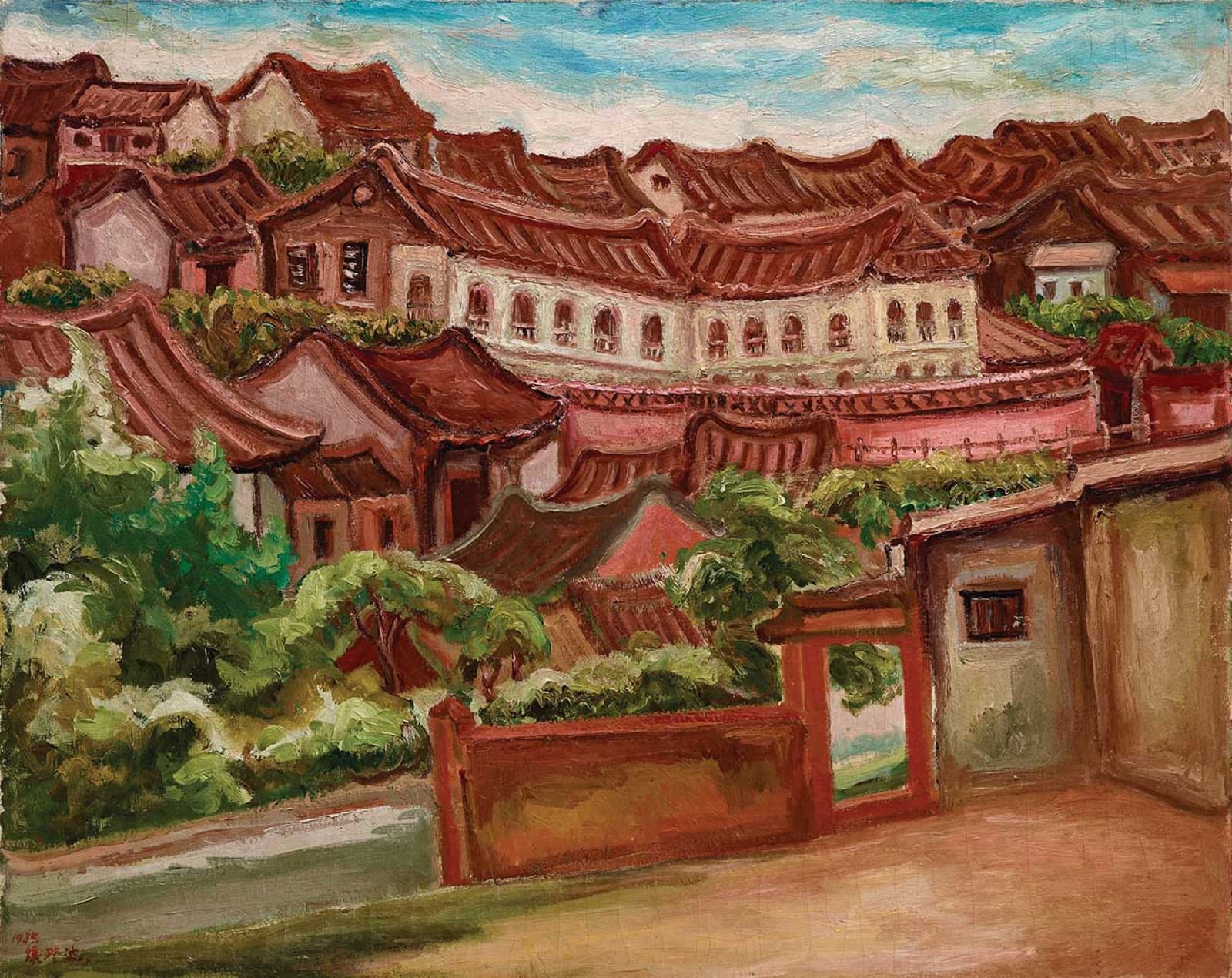
Chen Cheng-po, *Tamsui Landscape*, 1935. The first Taiwanese to have an oil painting selected for Japan's Imperial Exhibition; here the red-tiled roofs stack down to the river.
Chen Cheng-po
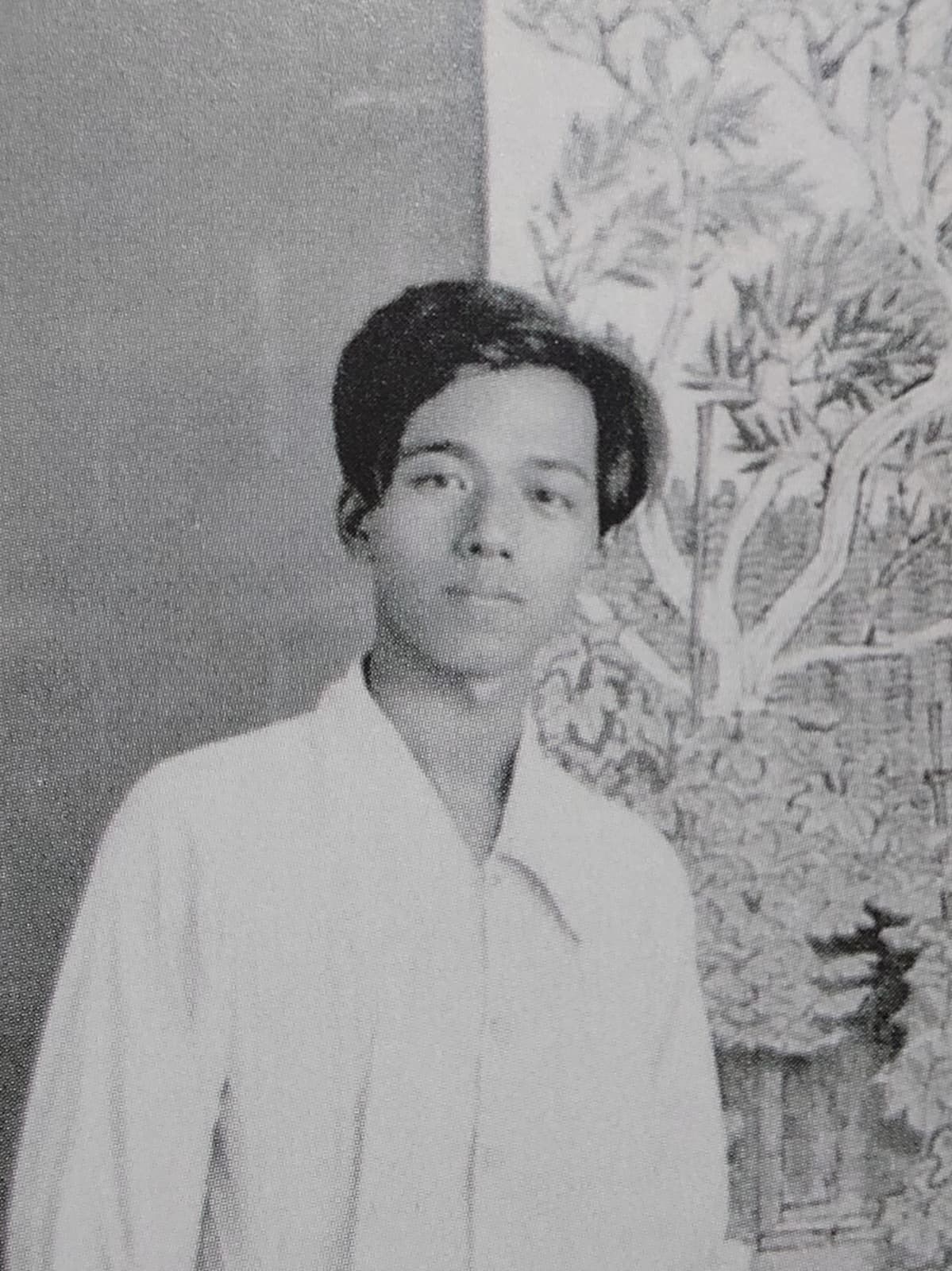
Kuo Hsueh-hu, 1936. At twenty he was selected for the first Taiten with *Pines and Falls*; with Lin Yu-shan and Chen Chin he was known as one of the exhibition's three young masters.
Public domain; photographer unknown
Isle of Time