


Seediq Bale
After the fires of the Yiwei War died out in 1895, the Rising Sun flag was planted across the plains and harbors of Taiwan. Yet deep in the Central Mountain Range — those forests forever wreathed in mist, revered by the Seediq as the sacred domain of their ancestral spirits — the empire's rule could never truly conquer the human heart. Thirty-five years later, a rage of blood and tears, long suppressed, would erupt upon the hunting grounds of Wushe.
More than a thousand meters above sea level in Nantou, Wushe was the Government-General's proudest showcase of its "indigenous pacification policy." Here stood a post office, a police station, a clinic, even the Wushe Public School for indigenous children. But beneath this veneer of song and prosperity, the six Tgdaya tribes of the Seediq who had lived here for generations endured unimaginable oppression. The Japanese police ruled the mountains like petty emperors: they forced the warriors to haul heavy timber to build dormitories and Shinto shrines without pay, banned the traditional facial tattoo and the hunt, and even courted and then abandoned the women of the tribes through "political marriages." To a people whose entire faith rested on the Rainbow Bridge and the dignity of the hunting ground, bodily exhaustion could be endured — but the trampling of the soul had left no room for retreat.
This rage finally crystallized into a storm of vengeance in the heart of Mona Rudao (c. 1882–1930), chief of the Mahebo tribe. Powerfully built and eagle-eyed, he had in his youth been a legendary hunter whose name struck terror into his enemies, and he had once been taken by the Japanese government to tour the home islands, where he saw with his own eyes the empire's suffocating aircraft, cannons, and warships. He understood, better than anyone, that to resist Japan was to hurl an egg against a stone.
What lit the powder keg was an ordinary tribal wedding feast. Mona Rudao's eldest son, Tado Mona (1901–1930), clashed physically with a Japanese constable named Yoshimura while offering a toast; the police threatened severe punishment, plunging the whole family into fear of reprisal. Looking upon the young warriors seething around him, Mona Rudao knew this would be a war destined to annihilate his people. Yet he understood something greater: that if they did not resist, the Seediq soul would forever be reduced to a faceless slave, unable in death to cross the Rainbow Bridge to the land of the ancestors. So in the depths of the midnight forest he swore a blood pact uniting the six tribes around Wushe, resolved to launch one final "hunt" against the Empire of Japan in the season of harvest.
At dawn on October 27, 1930, the Wushe Public School was holding its annual joint athletic meet. As the whole assembly stood at attention singing the Kimigayo, a bone-chilling war cry suddenly erupted from the surrounding slopes. Mona Rudao led over three hundred warriors armed with hunting blades and matchlocks, sweeping down from the forest like black lightning; Tado Mona was the spearhead of the fighting, leading his people to cut the telephone lines and storm the police outposts. In under two hours, thirty-five years of accumulated grievance became the flash of blades across the schoolyard, and one hundred thirty-four Japanese lay dead. News of this "Wushe Incident" shook Taipei and reached all the way to the cabinet in Tokyo.
And yet, not every Seediq could raise the blade with an untroubled heart. In that blood-red dawn of the uprising, two mo…
And yet, not every Seediq could raise the blade with an untroubled heart. In that blood-red dawn of the uprising, two model figures deliberately cultivated by colonial assimilation were torn apart by the deepest crisis of identity. Hanaoka Ichiro (born Dakis Nomin, 1908–1930) and Hanaoka Jiro (born Dakis Nawi, 1908–1930) were both Seediq youths from the Paran tribe, educated in Japanese schools and serving as policemen. They shared the surname "Hanaoka" yet were of no blood relation — a pair of model brothers the Government-General paraded to boast of its "pacification" success. When the uprising broke out, they could neither betray the people who had raised them nor turn against the system they served; in the end they hanged themselves alongside their families in the mountains, in the Japanese manner. Ichiro left behind a note bearing the words "we had no choice" — the most sorrowful distillation of a soul forcibly severed by civilization.
Reeling from shock and humiliation, the Government-General unleashed one of the most lopsided sieges in Taiwan's history. Taiwan Army Commander Kamada Yahiko (1879–1948) was ordered to direct the suppression, mobilizing over three thousand troops and police equipped with mountain artillery and machine guns, and even deploying aircraft, bearing down in a black tide upon the primeval forests of Wushe. Against Seediq guerrillas who knew the terrain and struck like ghosts, the Japanese army was held back and suffered heavy losses. Deadlocked, Kamada gave the order to deploy blister-agent gas bombs in violation of international norms, dropping them by aircraft into the valleys where the tribespeople hid. As the yellow-green gas seeped through the sacred forest, the trees withered and countless women and children died in agony.
In the final hour, with ammunition and hope alike exhausted, the Seediq wrote one of the most uncompromising epics of dignity in human history. So as not to burden the husbands and sons at the front, and so as not to fall into enemy hands to be defiled, the women of the tribes took their children and hanged themselves together beneath the towering great trees. Tado Mona led the remnants in a retreat to the cliffs and rock caves of Mahebo, fighting to the last before taking his own life. And Mona Rudao, unwilling to let his corpse become a trophy for the Japanese to parade, walked alone into a lightless natural cave deep in the mountains and shot himself late that year; his remains dried into a mummy, not to be found by hunters until four years later.
The catastrophe did not end there. The following year, the Japanese induced rival tribes to launch the "Second Wushe Incident," all but exterminating the six insurgent tribes — of more than twelve hundred people, only some two hundred elderly, women, and children remained. Mona Rudao's daughter, Mahung Mona (1908–1973), survived this annihilation of her family and her people, yet carried the crushing grief of losing her father, her brothers, and most of her kin. Forcibly resettled with the survivors at Kawanakajima (today's Qingliu in Nantou) under close watch, she lived on through the war's end as a survivor, preserving her lived memory in oral testimony — becoming a vital witness for later generations seeking the truth of the Wushe Incident.
"A true person must walk across the Rainbow Bridge." This is Gaya, the ancestral law of the Seediq — and it is the very weight carried in the phrase Seediq Bale, the "true person." This lament from the depths of the mist, though forcibly erased by the empire's iron and gas, laid bare the utter bankruptcy of Japan's "pacification policy." The fatal final hunt of Mona Rudao and his son, the impossible dilemma of the Hanaoka brothers, and the surviving memory of Mahung Mona together drove, into the very ground of Taiwan's history, an iron pillar of a soul that longs for freedom and dignity — and can never be tamed.
The reasons were not one thing but many years of things: no wages for hauling the great timbers that built the shrine and the police quarters, what the officers did with the women, the ban on facial tattoos and on taking heads, hunting grounds that shrank year by year. At a wedding feast at Mahebo on 7 October 1930, Mona Rudao's eldest son offered a cup of wine to the constable Yoshimura, who thought his hands unclean and struck him with a stick. The apologies that followed came to nothing. The 27th of October was the joint athletics meet at the Musha public school. Before dawn some three hundred people from the six Tgdaya settlements moved out in parties, attacked the police posts, and entered the sports ground. Afterwards they withdrew to the caves and cliffs above the Mahebo stream, and the Japanese brought in more than two thousand troops and police, aircraft, and shells filled with a blistering agent. So as not to burden the fighting men, the women hanged themselves together in the trees. Mona Rudao took his own life in December; his body was found in a cave four years later. Of some twelve hundred people in the six settlements, about five hundred were alive at the end.
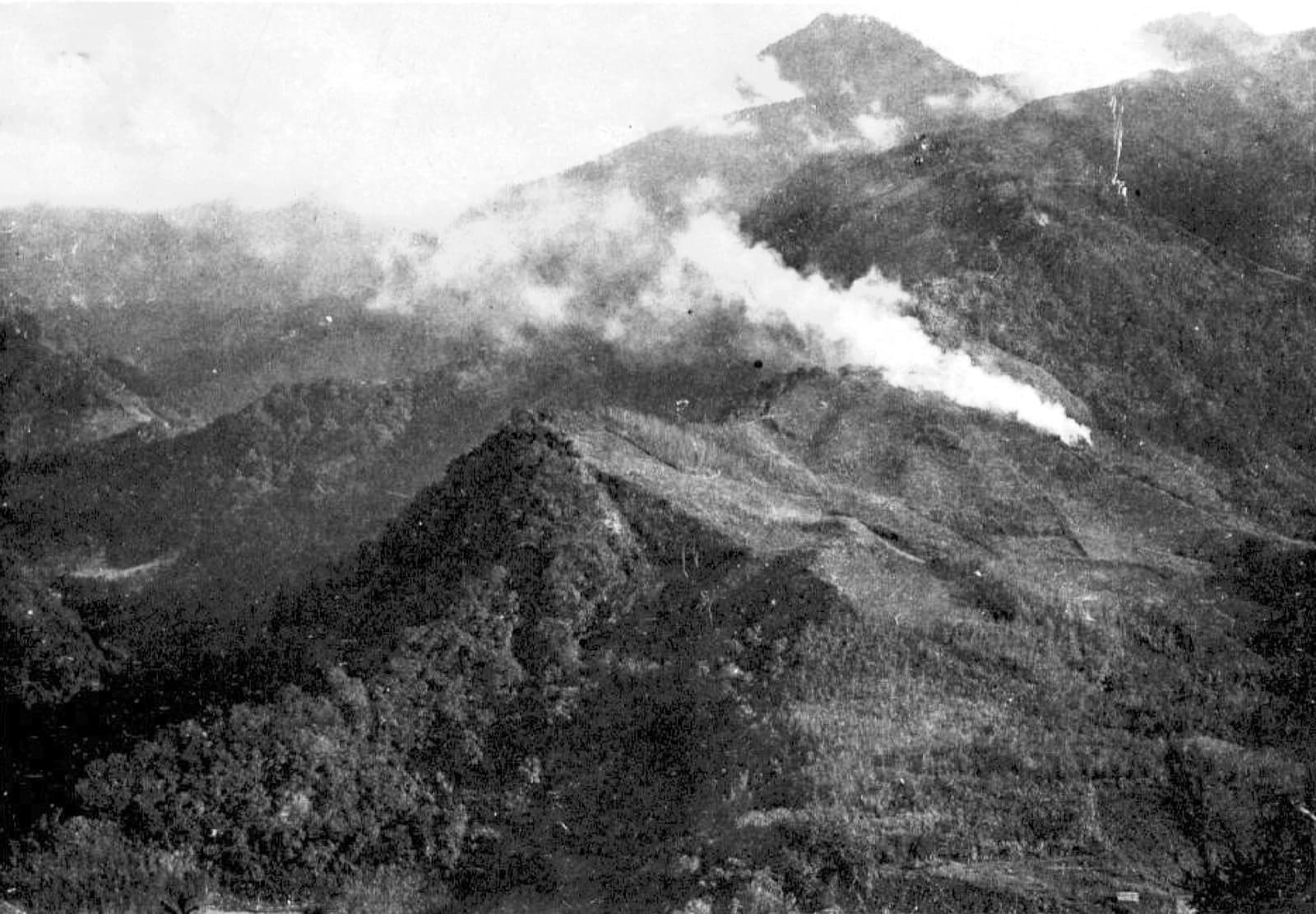
Smoke rising over Truwan during the Musha Incident. The Japanese brought in troops, aircraft and gas; within two months the six villages that had risen were all but destroyed.
*Photographic Album of the Musha Subjugation*, ed. Ebihara Kō, Taipei, 1931
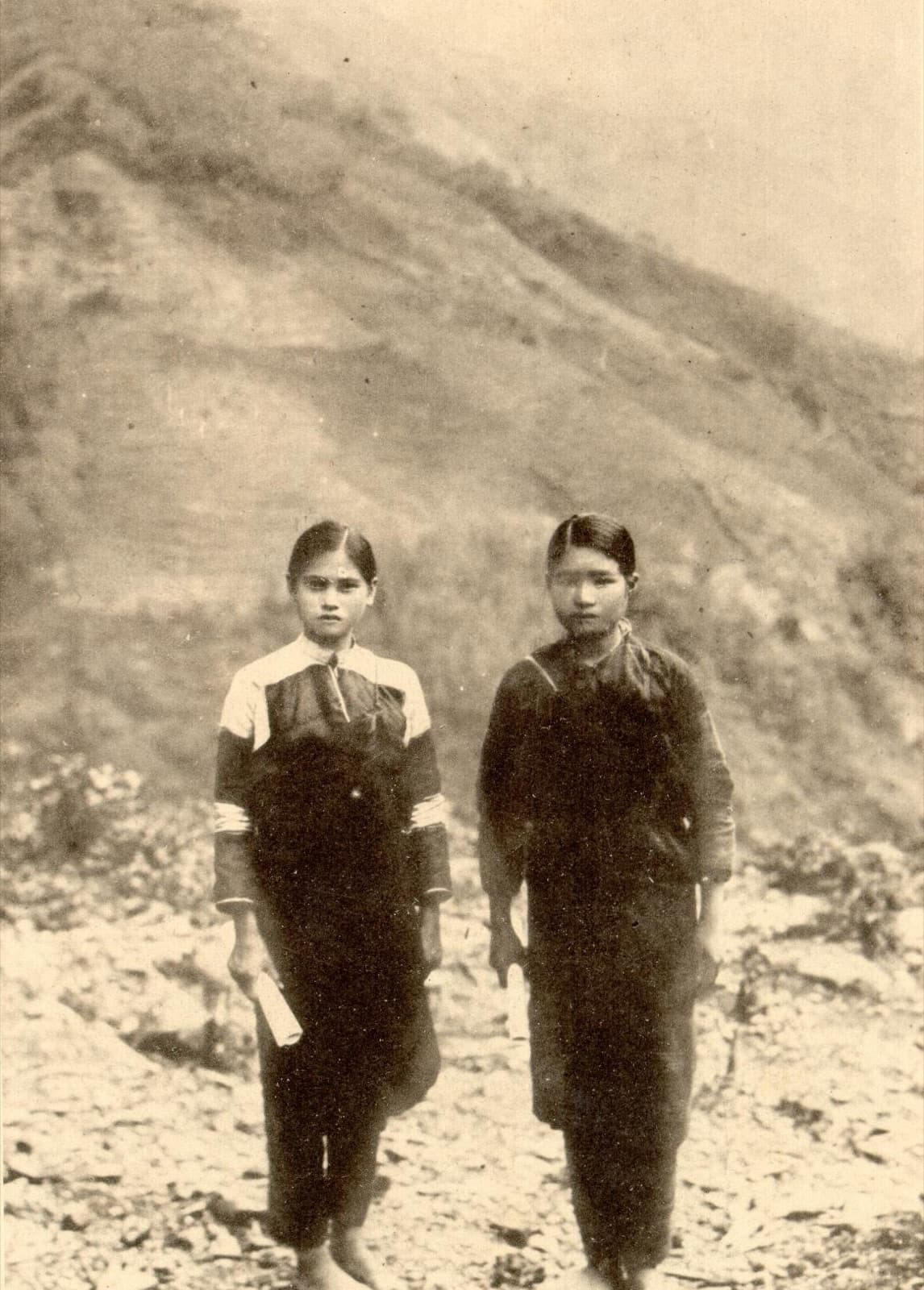
Indigenous women who led Japanese children to safety during the Musha Incident, holding certificates of appreciation from the authorities. In the same weeks, their own people were being hunted down.
*Record of the First and Second Musha Incidents*, ed. Sato Masazo, Taichung, 1931
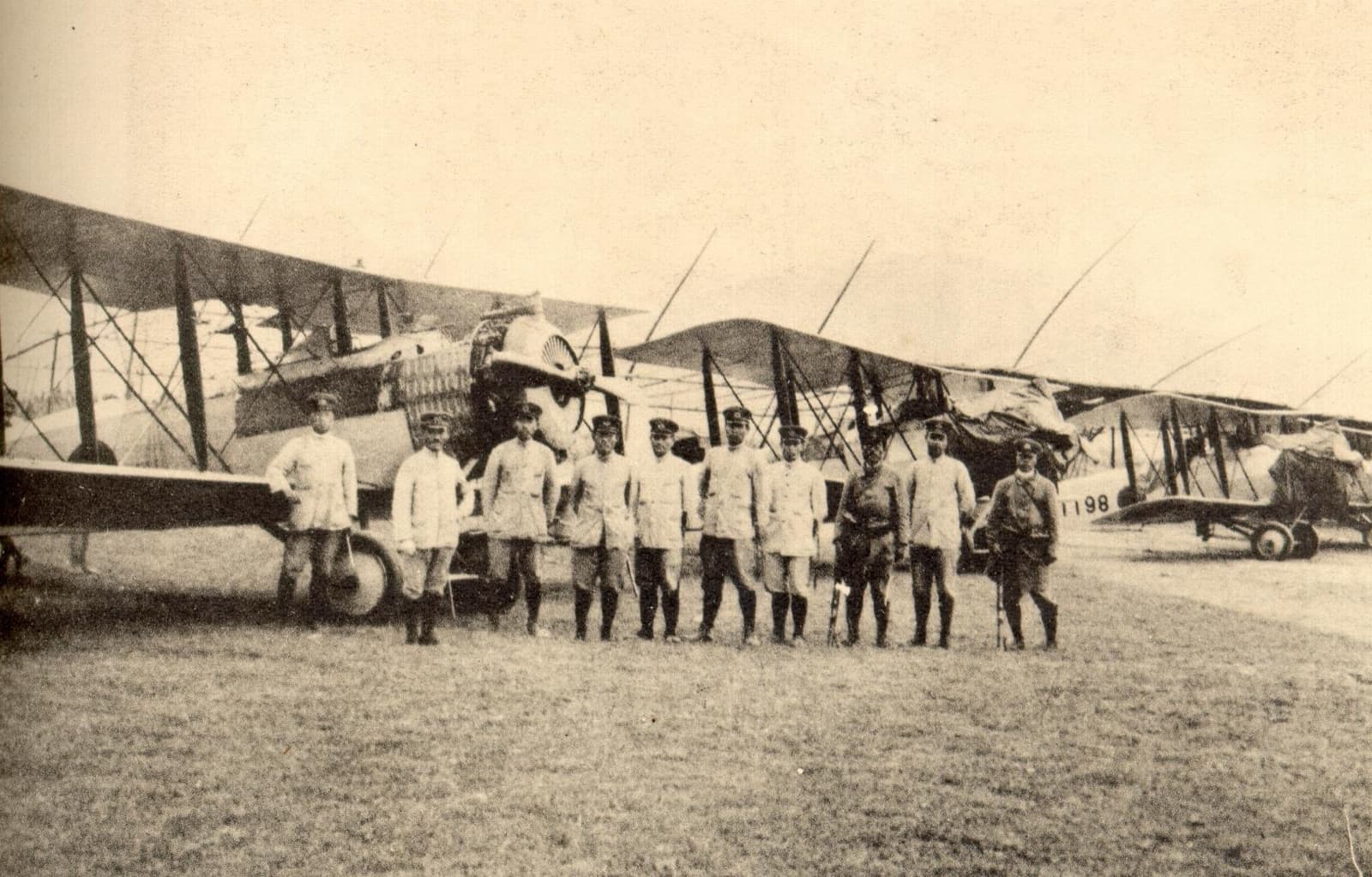
The army's 8th Air Squadron sent to Puli on reconnaissance. Musha was the first time aircraft were used to put down a rising in Taiwan; blister gas followed.
*Record of the First and Second Musha Incidents*, ed. Sato Masazo, Taichung, 1931
Isle of Time