


The Eastern Conquest
In the early summer of 1662, as the founding king, Zheng Koxinga, drew his last breath amidst frantic, agonizing cries inside Fort Zeelandia, the political climate across both sides of the Taiwan Strait plummeted to absolute freezing point. The sudden demise of the warlord did not merely leave behind an unsolidified overseas regime; it unleashed a devastating moral deadlock born from his own final, draconian decree of "honor-killing" his own family.
At this critical juncture, the civil officials and military generals marooned in Anping were thrust into an unprecedented crisis of legitimacy. In their eyes, the eldest son, Zheng Jing—who remained behind to guard Xiamen—was not only a sinner carrying the permanent moral stain of an illicit affair with his brother's nursemaid, but a condemned man whom the late king had explicitly ordered to be executed. To preserve the survival of the regime and protect their own interests, powerful generals in Taiwan, including Huang Zhao and Xiao Gongchen, swiftly joined forces.
They thrust Koxinga’s younger brother, Zheng Xi, into power as the "Acting Governor." This declaration, masked as a move to stabilize the state, was in truth a meticulously calculated coup d’état, violently fracturing the fledgling regime into two warring factions: Taiwan and Xiamen.
Stranded across the sea in Xiamen, the young Zheng Jing found himself backed into an absolute dead end. His father’s sudden death had stripped him of both his greatest shield and his most terrifying oppressor, while the news of the mutiny in Taiwan pinned him to the wall. If he chose compromise, he would permanently forfeit his birthright and face eventual liquidation by the faction in Taiwan; if he chose to fight, he would bear the heavy infamy of inciting a bloody civil war, leading an army to attack the very sanctuary his father had died to conquer.
Yet, the blood of pirates and ruthless warlords coursed through Zheng Jing's veins, and in this hour of peril, he displayed a calculated decisiveness and ferocity far beyond his twenty years. Backed by the unwavering support of the elder statesman Chen Yonghua and the brilliant admiral Zhou Quanbin, Zheng Jing held a massive rally in Xiamen, swearing allegiance to the orthodox Ming lineage and officially claiming his succession as the Prince of Yanping.
He understood profoundly that political legitimacy is never granted through moral charity—it is seized through raw, uncompromising power. To reclaim his empire, he mobilized every elite warship in Xiamen’s naval fleet, embarking on a do-and-die "Eastern Conquest" across the perilous black waters of the strait.
It was a fateful, bloody crusade across the treacherous Taiwan Strait. In the deep autumn of 1662, Zheng Jing’s armada s…
It was a fateful, bloody crusade across the treacherous Taiwan Strait. In the deep autumn of 1662, Zheng Jing’s armada successfully punched through the roiling surf, forcing a landing at Luermen. By then, the plains of Anping and Chengtian Prefecture were heavily fortified by the defensive lines of Huang Zhao and Zheng Xi. The two sides clashed in a brutal war of attrition across the Tainan plains and along the muddy coastlines—comrades who had stood shoulder-to-shoulder just months prior to drive out the Dutch were now slaughtering one another for the crown.
At the height of the engagement, the Taiwanese faction utilized superior positioning to push Zheng Jing's lines to the brink of collapse. Refusing to retreat, Zheng Jing personally landed on the shores to command the front, while his elite commander, Zhou Quanbin, led a fierce suicide squad to carve a path of blood through Chikan. As twilight fell, a sudden, blinding fog rolled in and swallowed the battlefield. In the chaotic, misty crossfire, the rebel commander Huang Zhao was struck by a stray bullet and killed instantly.
The sudden death of their general broke the morale of the Taiwanese garrison, causing lines of soldiers to drop their weapons in mass surrender. Zheng Jing’s forces swept through the defenses, capturing Fort Zeelandia and dragging his uncle, Zheng Xi, out of the royal palace in chains, bringing a swift and absolute end to this bitter family war.
Standing inside the grand, shadow-filled halls of Fort Zeelandia—the very fortress where his father had spent his final, maddening days—the twenty-year-old prince unleashed an iron-fisted political purge. He ordered the immediate public execution of the coup's ringleaders, including Xiao Gongchen, to strike absolute terror into the hearts of any remaining dissidents.
Yet, when dealing with the figurehead of the rebellion, his uncle Zheng Xi, Zheng Jing demonstrated a surprisingly mature, calculating political tact. Instead of executing him, he spared his life but stripped him of all political influence, placing him under permanent house arrest and sending him back to the Chinese mainland under armed guard. Soon after, Zheng Jing officially renamed the island realm "Eastern Ning" (Tungning) and proclaimed himself its sovereign ruler.
This Taiwanese version of the "Xuanwu Gate Incident," though drenched in the blood of fratricide and political betrayal, effectively prevented the realm from fracturing into self-destructive warlord states at its very inception. Zheng Jing had consolidated his reign with absolute ruthlessness, and under the brilliant guidance of Chen Yonghua, he prepared to transform Taiwan from a volatile military base into a sophisticated, independent maritime kingdom.
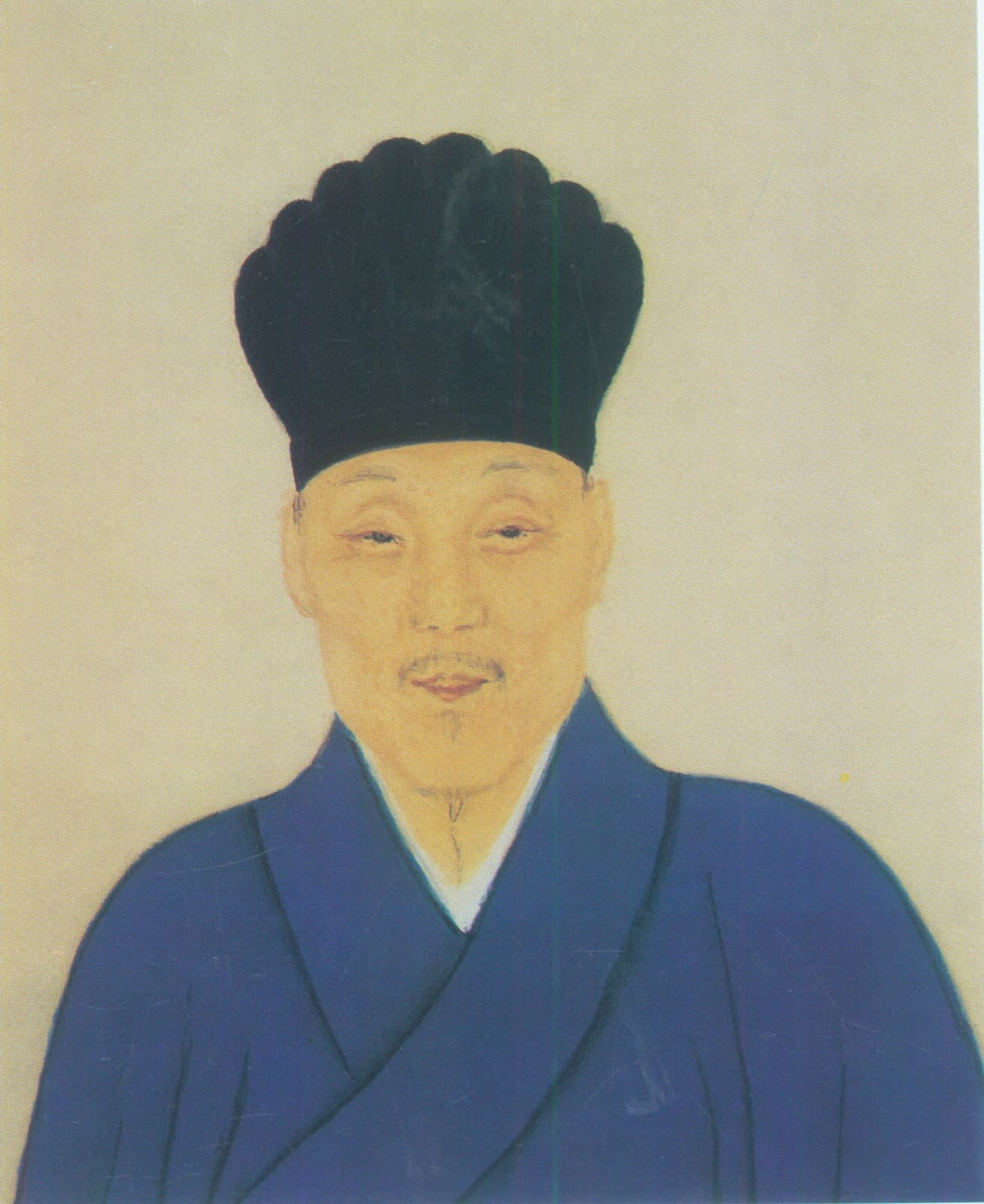
A portrait of Zheng Jing by a Qing painter. His father died while he was at Xiamen, and a faction in Taiwan had raised up his uncle; he crossed the strait and put the split down first.
Qing-dynasty portrait; Zhejiang Library
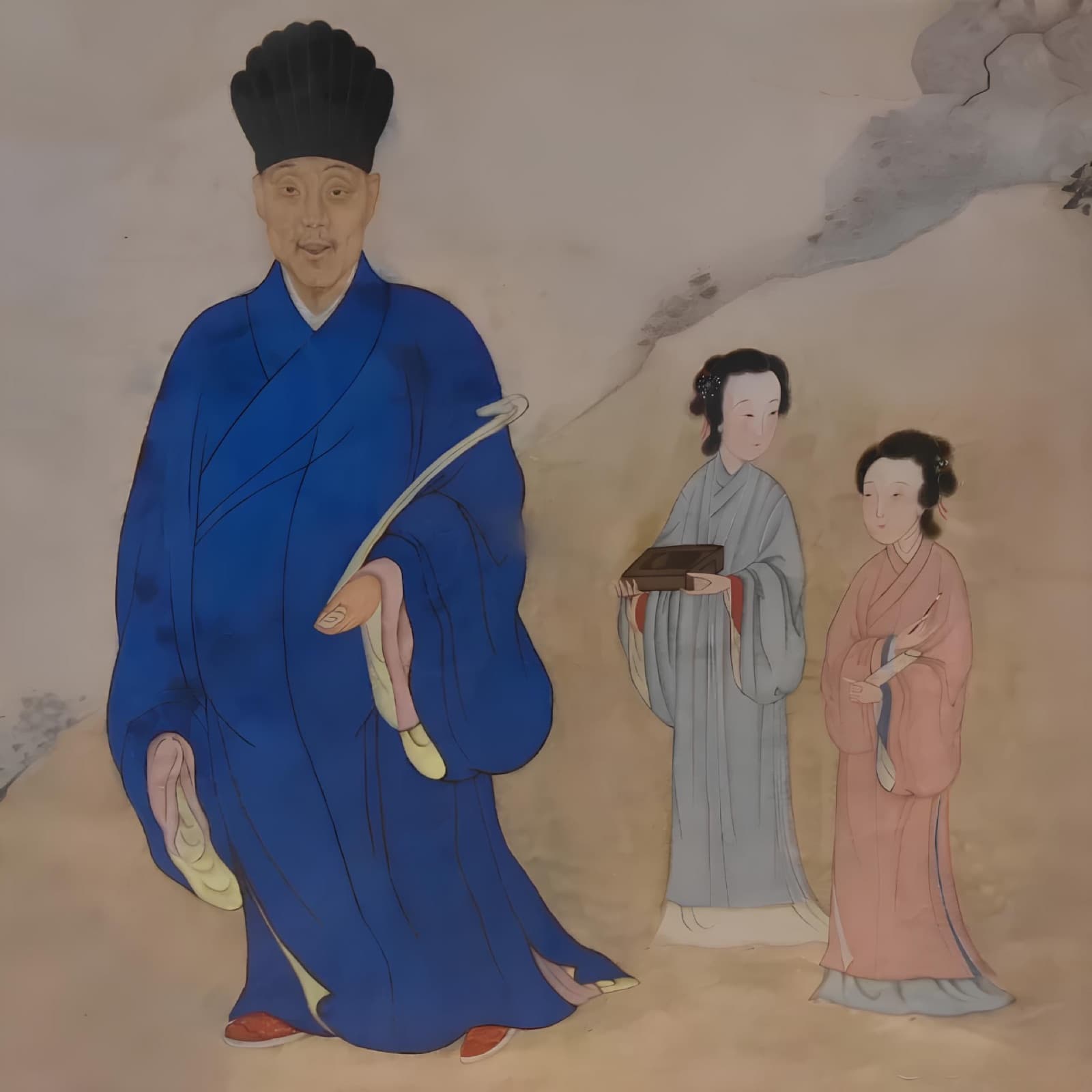
Zheng Jing with two attendants, in a blue robe holding a ruyi sceptre. Qing painters gave the Prince of Yanping the bearing of a ruler at peace rather than a soldier in armour.
Qing-dynasty portrait
Isle of Time