


The Birth of Hsinchu
The Han Chinese settlement of Taiwan's western plains proceeded roughly from south to north, and the town of Zhudian — known in the Qing records as Zhudian, today as Hsinchu, meaning 'New Bamboo' — was the crucial hinge point where the frontier of northern Taiwan tilted from wilderness into settled agricultural society. The name traces back to the dense bamboo groves that the Taokas indigenous people had long used as natural boundaries around their villages.
Wang Shijie, born in 1661, was among the earliest and most consequential of the Zhudian settlers. He arrived from southern Taiwan at the head of a group of tenant farmers and embarked on an ambitious program of land clearing and irrigation that, over more than a decade, converted the scrubland and bamboo thickets of the Zhudian plain into productive paddy fields. His approach was more contractual than coercive — he negotiated land-use agreements with local Taokas communities, exchanging cloth and iron implements for rights to cultivate specific tracts, establishing a pattern of transactional land acquisition that would characterize Han-indigenous interaction across northern Taiwan for generations.
By the early nineteenth century, Zhudian had become the largest commercial center north of Tainan. Lin Pinhou built a fo…
By the early nineteenth century, Zhudian had become the largest commercial center north of Tainan. Lin Pinhou built a fortune in the salt trade before diversifying into rice milling and landholding, managing the difficult transition from merchant to recognized gentry by making large donations to military funds during periods of unrest. In 1826 he directed the construction of Zhudian's first permanent brick city walls, transforming a prosperous town of wooden buildings into a fortified urban center — a physical statement that this community intended to endure.
Zheng Chonghe occupied a different position in this society: a locally-educated man of letters who served as an informal mediator in community disputes, helping maintain social cohesion during periods when inter-ethnic tensions threatened to tip into open violence. His son Zheng Yongxi would go on to become Taiwan's first native-born imperial examination graduate — a milestone that gave the Zhudian gentry its first direct connection to the scholar-official class that governed the empire.
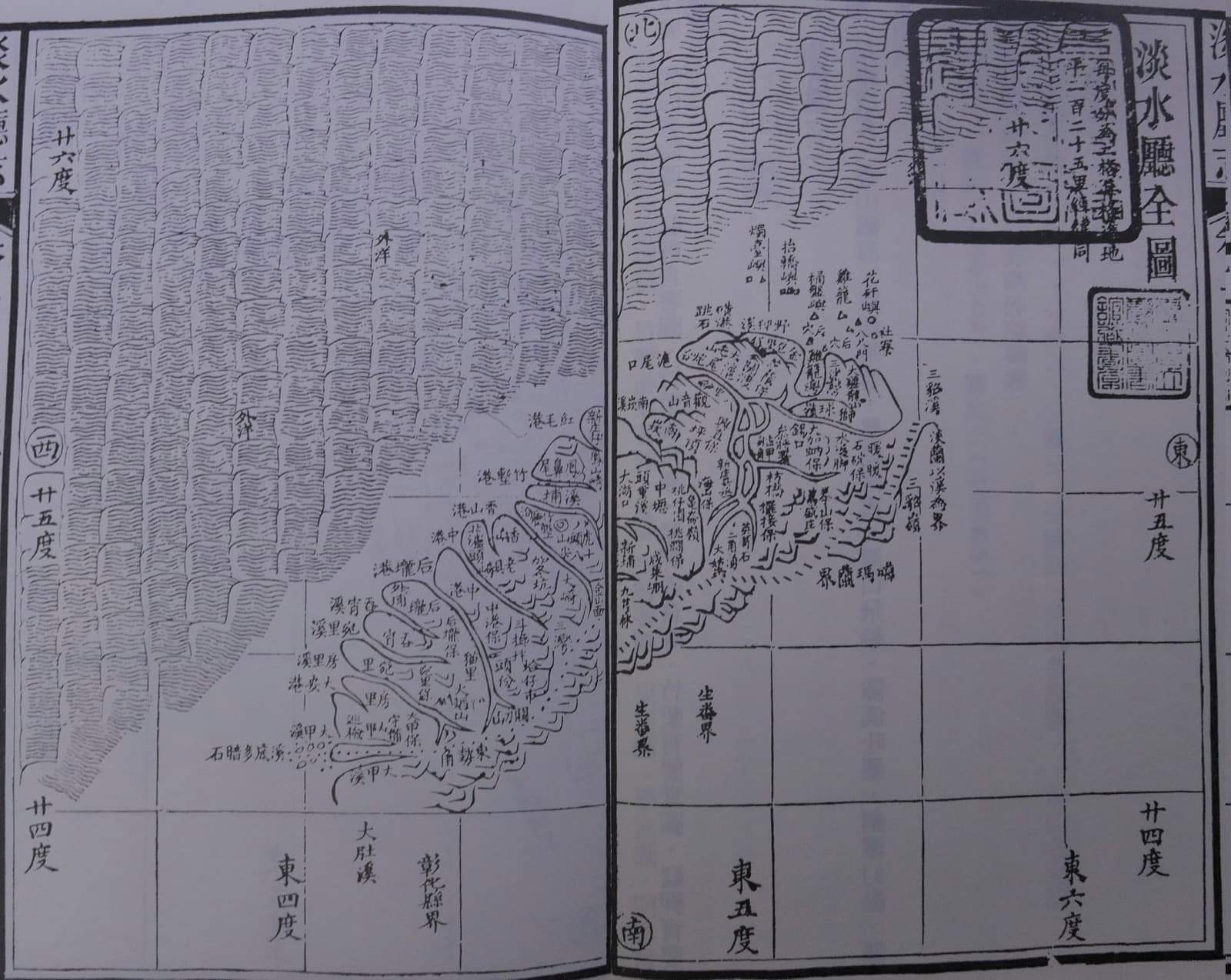
The general map that opens the *Gazetteer of Danshui Subprefecture*. Established in 1723 with its seat at Zhuqian, the subprefecture administered everything from the Dajia River north to Keelung.
*Gazetteer of Danshui Subprefecture*
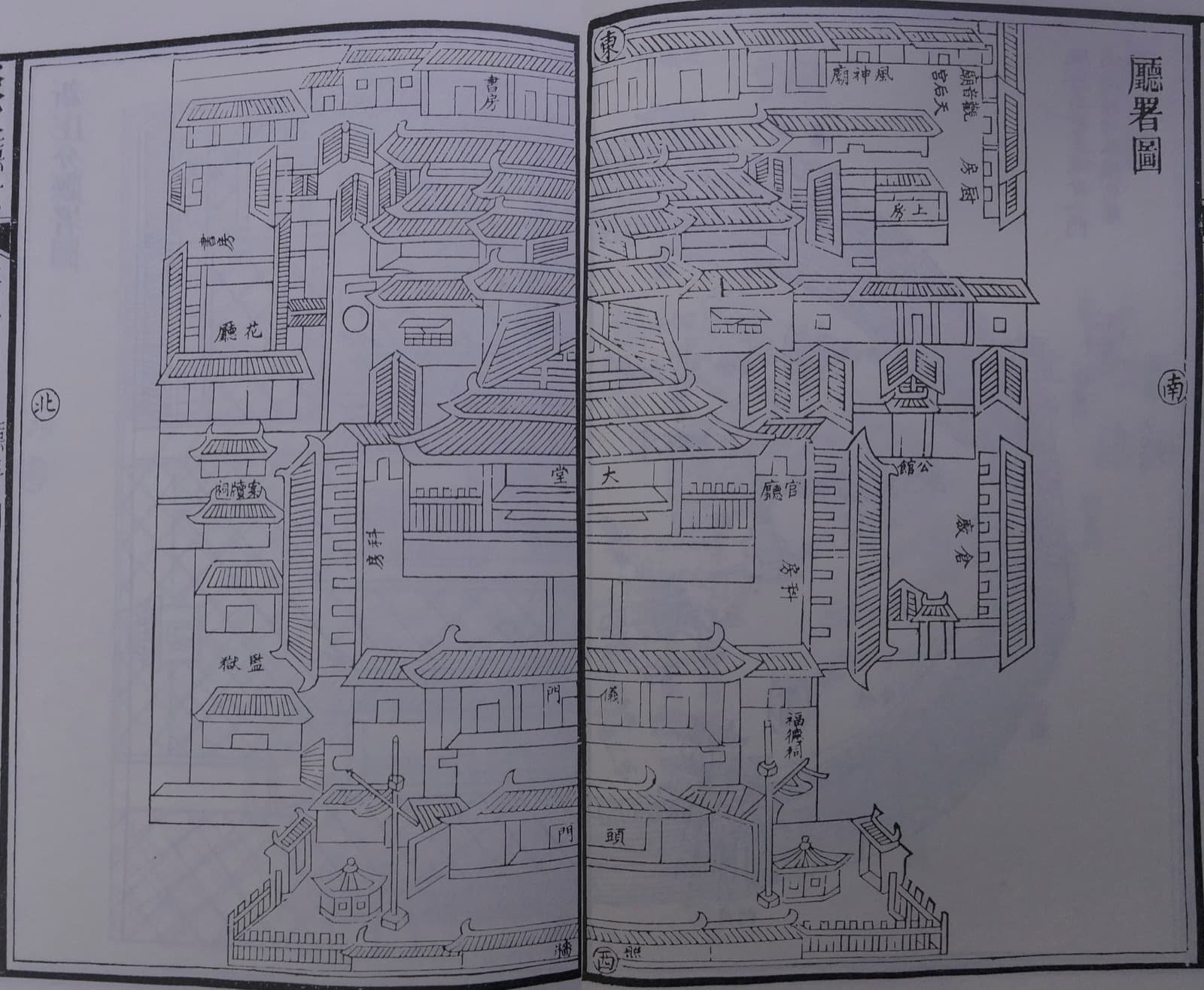
The subprefectural yamen. The office moved from Changhua to Zhuqian in 1756; the brick-and-stone wall went up only in 1827, and before that the town was ringed with thorny bamboo.
*Gazetteer of Danshui Subprefecture*
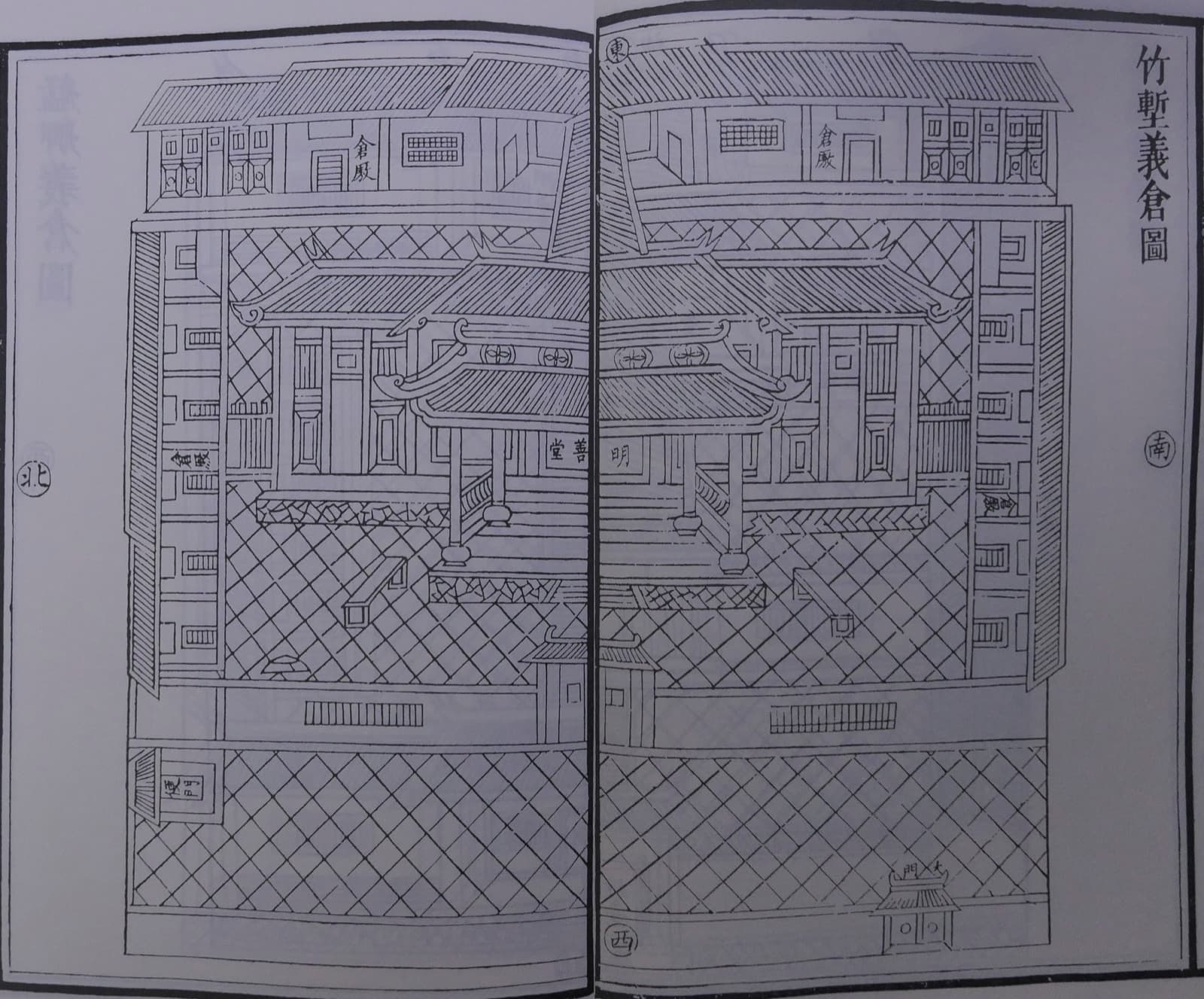
The charity granary at Zhuqian. Stocked with grain donated by local gentry, it was opened in bad harvests to sell below the market and keep prices from running away.
*Gazetteer of Danshui Subprefecture*
Isle of Time