


The Last Imperial Dream
In the winter of 1673, a political storm of cataclysmic proportions erupted across the half-shattered domain of the Qing Empire. Wu Sangui, the Prince of West-Pacification in Yunnan, Shang Zhixin in Guangdong, and Geng Jingzhong, the Prince of South-Pacification in Fujian, rose in open rebellion against the young Kangxi Emperor over his aggressive policies to dismantle their fiefdoms, a conflict known to history as the "Revolt of the Three Feudatories."
When this earth-shattering news crossed the strait to the Royal Palace in Tainan, the long-dormant court erupted into a frenzy of anticipation.
For the Eastern Ning sovereign Zheng Jing and his ministers—who had been penned up on their island bastion for over a decade—this was undoubtedly a heaven-sent, once-in-a-lifetime opportunity to launch a final, grand counter-offensive to reclaim their lost mainland empire. In the spring of 1674, Zheng Jing rallied his forces in Tainan and launched a massive westward campaign, mobilizing nearly all of Taiwan’s elite naval assets and grain supplies to cross the black waters of the strait, vowing to finish the sacred work of his grandfather and father.
Initially, the returning armies of the Zheng regime unleashed a display of unstoppable military might along the southeastern coast of China. Zheng Jing successfully landed his forces in Fujian, swiftly recapturing Xiamen, Quanzhou, and Zhangzhou—the historic strongholds of his family—while pushing the front lines deep into the territory of Chaozhou in Guangdong. As war engulfed the south, the Qing defensive lines along the coast buckled, and local citizens, hearing rumors that "the army of King Koxinga has returned," rose up in droves to join the rebellion.
Yet, this counter-offensive, which had seemed so assured of victory, began to quietly disintegrate as the allies fell prey to mutual suspicion and greed. Geng Jingzhong of Fujian, though fighting under the same anti-Qing banner, soon found himself deadlocked with Zheng Jing over the partitioning of land, military rations, and supreme command. Instead of uniting their forces to march north, the two factions turned their weapons upon each other in a series of bitter fratricidal skirmishes.
This internal fracturing granted the Qing court a critical moment to breathe; the Kangxi Emperor swiftly deployed a massive army of Manchu and Han troops, utilizing a brilliant strategy of divide-and-conquer to deal a fatal blow to the campaign.
When an overwhelmed Geng Jingzhong capitulated to the advancing Qing forces, the Zheng army found themselves entirely is…
When an overwhelmed Geng Jingzhong capitulated to the advancing Qing forces, the Zheng army found themselves entirely isolated along the mainland coast. The Qing navy and land forces launched a ferocious counter-offensive, forcing Zheng Jing to retreat into his stronghold at Xiamen, where the war devolved into a brutal war of attrition.
By 1680, after years of relentless combat, the troops and strategic resources accumulated over twenty years in Taiwan were utterly exhausted. Following a catastrophic defeat in a final, massive naval engagement, Zheng Jing saw that the tide had turned irrevocably.
To prevent the complete annihilation of his remaining forces, he ordered the abandonment of Xiamen. Amidst the smoke of burning fortifications and the weeping of his exhausted soldiers, Zheng Jing boarded his ship and sailed away. This grand campaign, which had lasted six years and drained the blood and wealth of Taiwan, ended in absolute ruin, forcing the battered remnants of the army back across the strait.
The failure of the westward campaign during the Revolt of the Three Feudatories sealed the twilight fate of the Kingdom of Tungning. The war had stripped the regime of its last foothold on the mainland and hollowed out Taiwan's economic foundations, leaving the island's populace impoverished and rife with discontent.
Upon returning to his palace in Tainan, Zheng Jing suffered a devastating psychological collapse; he became profoundly despondent, withdrawing entirely from state affairs and drowning his sorrows in alcohol. The dream of reclaiming the mainland had vanished forever like a mirage.
From that moment on, Taiwan was no longer a dynamic frontline base poised for an offensive strike, but a vulnerable, isolated stronghold awaiting the ultimate, inevitable judgment of the Qing Empire.
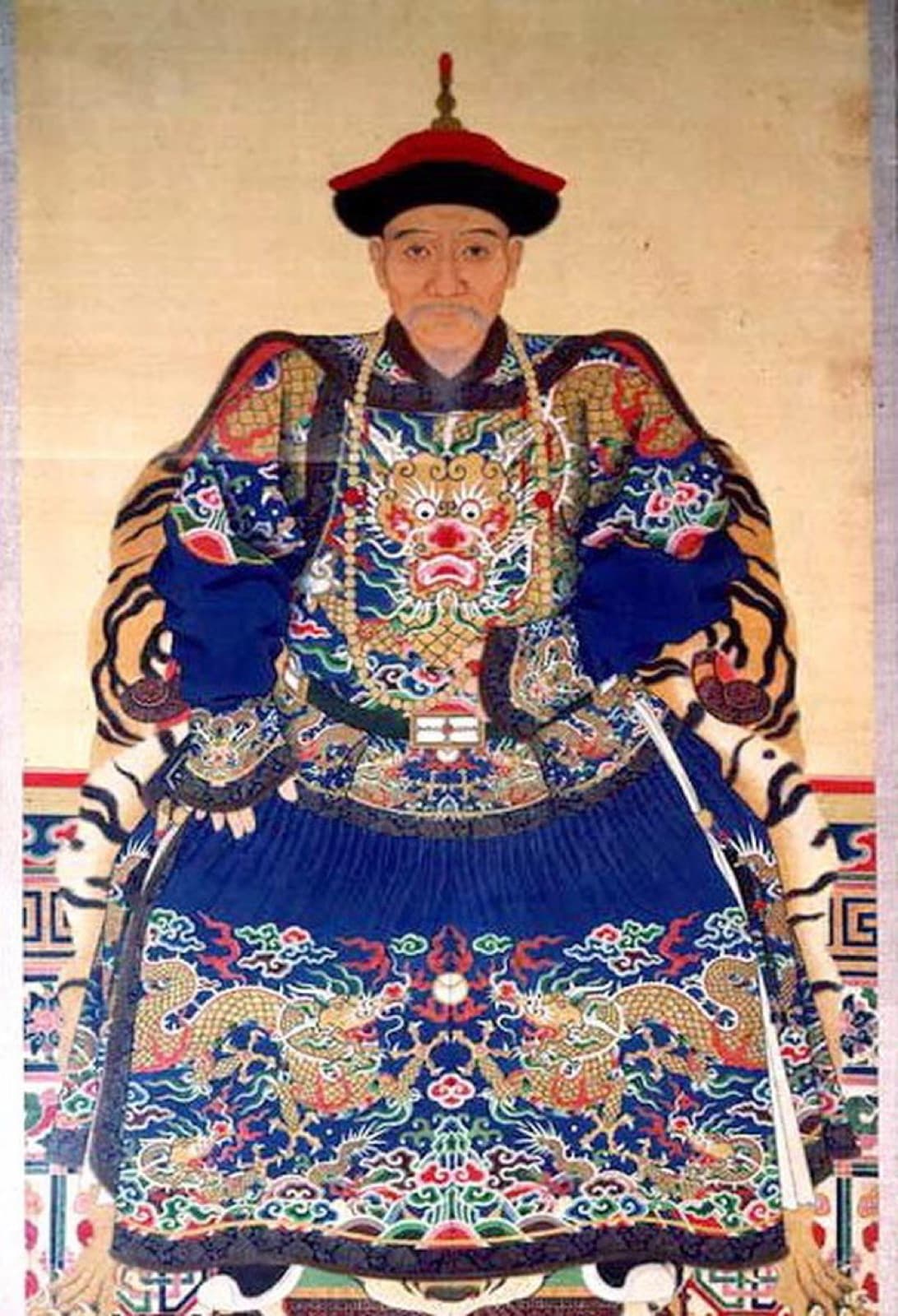
Geng Jingzhong, Prince of Jingnan. He rose against the Qing in Fujian in 1674 and invited Zheng Jing to cross over and join him. The two fell out over territory almost at once; the alliance never really functioned.
Qing-dynasty portrait
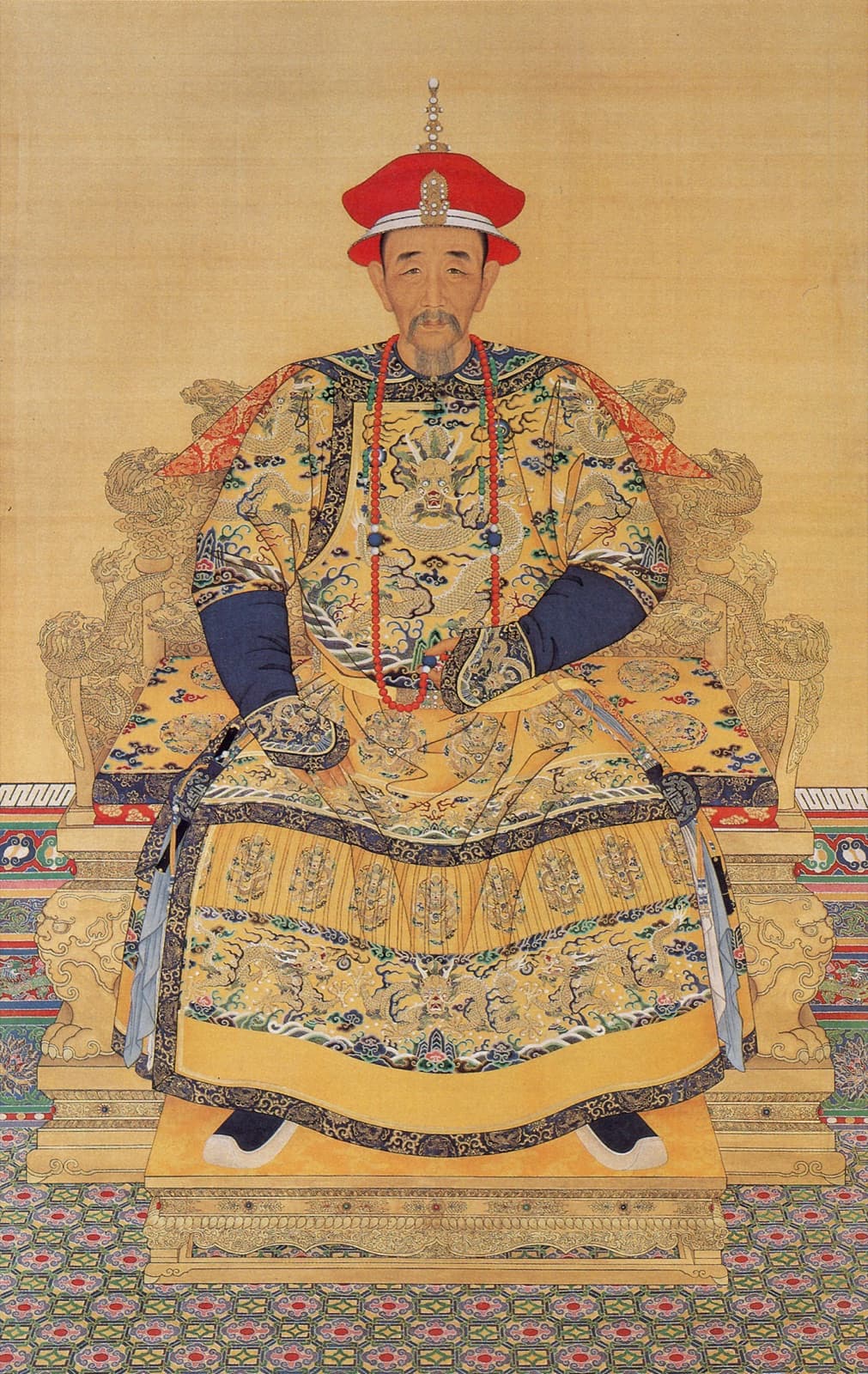
The Kangxi Emperor in court dress. He was twenty when the Three Feudatories rose; eight years later he had crushed them, and two years after that he took Taiwan. Zheng Jing's failed campaign cleared the young emperor's last obstacle.
Qing court painter
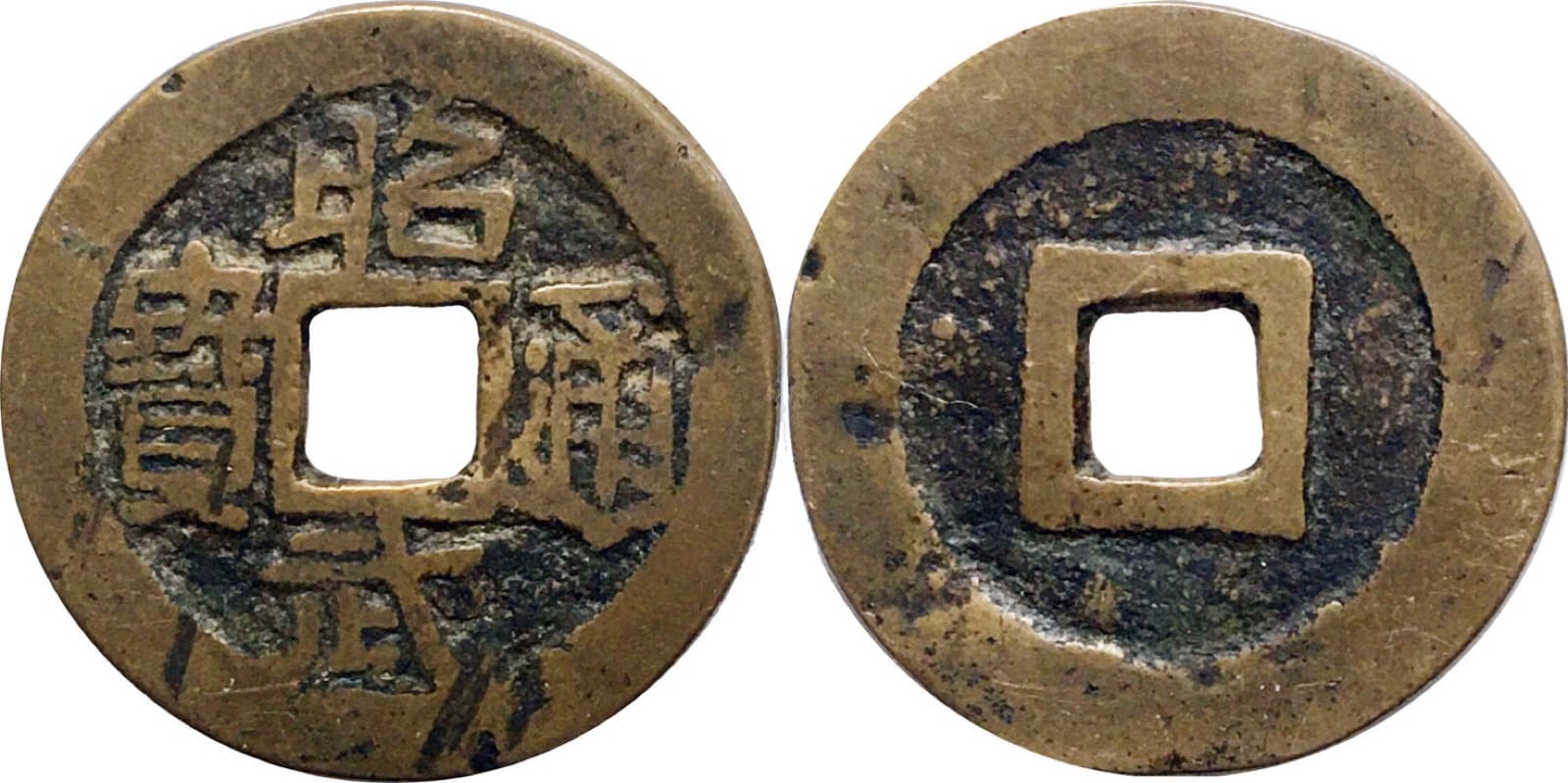
A Zhaowu tongbao cash coin. Wu Sangui declared himself emperor at Hengzhou in 1678, named his dynasty Zhou and his era Zhaowu, and struck this money. He died the same year; the coin circulated less than six months.
Struck by Wu Sangui's Zhou regime
Isle of Time