Isle of Time
Her Story

Story Thread

Her Story

From Tungning to today — the women who held up half the island.

The People

13 figures · 5 eras · 1681 – thread.span.present

Tungning Dynasty
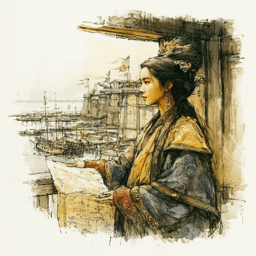
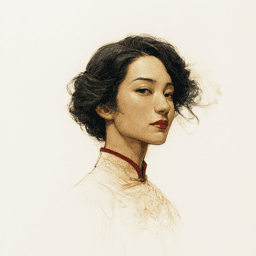
Lady Dong
Lady Dong?–1681
Japanese Colonial Period
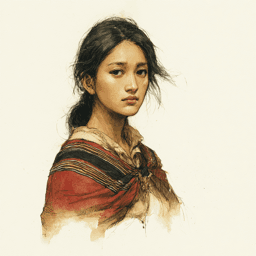
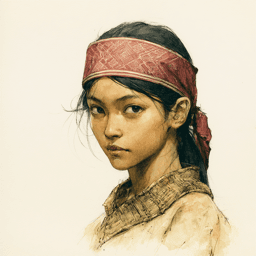
Mahung Mona
Mahung Mona1908–1973
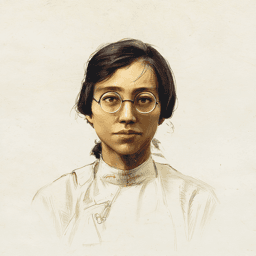
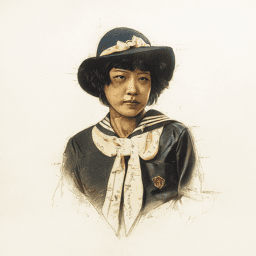
Tsai A-hsin
Tsai A-hsin1899–1990
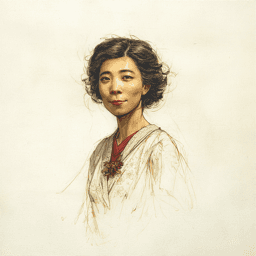
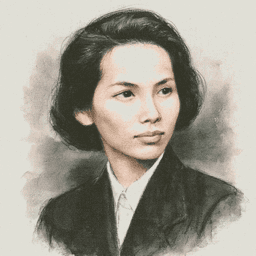
Chen Chin
Chen Chin1907–1998
Li Xianglan
Li Xianglan1920–2014
Sayun
Sayun1921–1938
Post-War & Authoritarian Era
Hsieh Hsueh-hung
Hsieh Hsueh-hung1901–1970
Democratic Transition
Lu Hsiu-lien
Lu Hsiu-lien1944–
Chen Chu
Chen Chu1950–
Modern Taiwan
Teresa Teng
Teresa Teng1953–1995
Chen Shu-chu
Chen Shu-chu1950–
Tsai Ing-wen
Tsai Ing-wen1956–
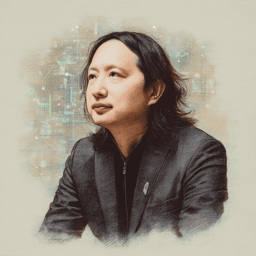
Audrey Tang
Audrey Tang1981–
Further Reading
1662–1683Tungning Dynasty
01

Prince Ningjing's Martyrdom

In the sweltering midsummer of 1683, a suffocating aura of despair hung over the city of Tainan. Ominous news had traveled across the black waters of the strait—the main naval forces of the Zheng regime had been utterly obliterated at the Battle of Penghu, and the twelve-year-old puppet king, Zheng Keshuang, along with his ministers, had already resolved to tender their submission to the Qing Empire.

1895–1945Under the Rising Sun
02

Kōminka Movement

In 1937, gunfire at the Marco Polo Bridge crossed the Yellow Sea and bore down upon this island. As freighters continued to load Taiwan's rice, sugar, and camphor for the Japanese home islands, and as the canals of the Jianan Plain went on watering a land already colonized for thirty years, atop the newly consecrated grounds of the Taiwan Grand Shrine at Yuanshan in Taipei, a ritual bell rang out through the morning mist, again and again. In that very same hour, inside a century-old temple on the island's western coast, the wooden body of Guanyin was kicked to the earth by the boots of the military police, and fire spread across the mud — this was the "Temple Rectification Movement." Shrine and flame together carved the deepest fissure in Taiwan's colonial history: the Kōminka Movement, a vast imperial project that sought, in less than a decade, to rewrite the soul of an entire generation of Taiwanese.

03

Wartime Mobilization

When full-scale war with China broke out in 1937, Taiwan's fate was utterly rewritten. No longer merely the colonial agricultural base of the Japanese empire, it was pushed forward as a frontline springboard for the 'southward advance' into Southeast Asia. Beginning with the last military Governor-General, Kobayashi Seizo, who proclaimed the threefold line of 'imperialization, industrialization, and use as a southward base,' the whole island was progressively remade into an indispensable part of the empire's war machine. The eighteenth Governor-General, Hasegawa Kiyoshi, who succeeded him in 1940, was the key figure who drove this line to its extreme. A Japanese navy admiral by background, he governed Taiwan in the crucial years when the Pacific War broke out in full, and in 1941 he founded the Kominhokokai (Imperial Subjects Public Service Association), enrolling the whole island's population from the top down in a service organization that mobilized manpower, materiel, and spiritual energy in support of the front. Compared with his predecessor he took a somewhat more conciliatory cultural stance, courting the Taiwanese gentry under the slogan of 'Japan and Taiwan as one' in an effort to win their full commitment to the war.


1945–1949Light & Shadow
04

The 27 Brigade

The gunfire of February 28, 1947, spread outward from Taipei, and the fury raced south along the trunk railway; within two days it had reached Taichung. On March 2, residents and students poured into the streets, and the city council convened an emergency citizens' assembly. Onto the platform stepped a woman of forty-six — Hsieh Hsueh-hung. Born into a poor family in Changhua and sold as a child bride, she had taught herself to read and made her way to Shanghai and to the Communist University of the Toilers of the East in Moscow. In 1928 she had helped found the Taiwanese Communist Party, and she had endured repeated imprisonment under the Japanese colonial authorities. In that moment, no one else on the island understood better how to forge a scattered crowd into a force.

1949–1987Silent Island
05

The Economic Miracle

The land reforms of the 1950s — the 37.5% rent reduction of 1949 that capped tenant rent at 37.5 percent of the annual main-crop yield, the release of public land originally seized from the Japanese sugar industry to cultivating tenants, and the Land-to-the-Tiller program of 1953 that compulsorily purchased landlord holdings in exchange for government bonds and shares in state enterprises — were among the most profoundly impactful socioeconomic policies in post-war Taiwan. Executed with U.S. technical advice and underwritten by the political reality that the KMT leadership had no local constituency among Taiwan's landowning class, these reforms dismantled the landlord system dating from the Japanese era, redirected agricultural surplus capital toward industrialization, and simultaneously weakened the economic and political power of the native Taiwanese landlord class in a way the regime could never have achieved on the mainland.

2000–thread.span.presentNew Formosa
06

Love Without Distinction

On May 17, 2019, Taiwan's Legislative Yuan passed on its third reading the Enforcement Act of Judicial Yuan Interpretation No. 748, allowing two people of the same sex to establish a permanent union in marriage by law, and Taiwan thereby became the first country in Asia to legalize same-sex marriage.