Isle of Time
The Trailblazers

Story Thread

The Trailblazers

From crossing the strait to semiconductors — those who ventured out from nothing.

The People

11 figures · 3 eras · 1589 – thread.span.present

Age of Discovery
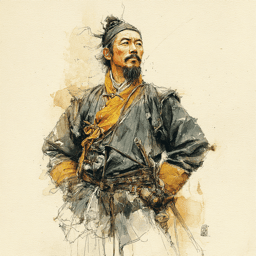
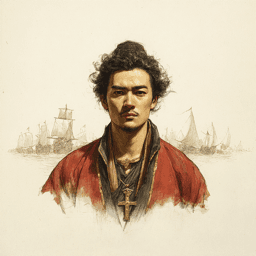
Yan Siqi
Yan Siqi1589–1625
Zheng Zhilong
Zheng Zhilong1604–1661
Hamada Yahyoe
Hamada Yahyoe?–?
Qing Frontier
Wang Shijie
Wang Shijie1661–1726
Wu Sha
Wu Sha1731–1798
John Dodd
John Dodd1838–1907
Li Chunsheng
Li Chunsheng1838–1924
Modern Taiwan
Wang Yung-ching
Wang Yung-ching1917–2008
Hsu Wen-lung
Hsu Wen-lung1928–2023
Morris Chang
Morris Chang1931–
Stan Shih
Stan Shih1944–
Further Reading
1624–1662Sea & Fortress
01

Fort Zeelandia

Following the landing of the Dutch on the Tayouan sandbar in the late summer of 1624, they were confronted with nothing but endless dunes and a pristine lagoon, entirely devoid of readymade fortifications. To establish a permanent foothold in this newly carved overseas outpost and to protect their rapidly expanding commercial wealth, the Dutch East India Company (VOC) immediately embarked on a monumental construction project that would span several decades. Selecting the highest vantage point on the sandbar, they utilized bricks imported from Batavia and red sandstone quarried from Chikan, bonding them together with a heavy compound of tropical glutinous rice juice, sugar water, and crushed oyster-shell lime to erect an impregnable European-style fortress: Fort Zeelandia. Designed entirely in accordance with the most advanced Baroque military architecture of seventeenth-century Europe, the citadel featured projecting star-shaped bastions to eliminate blind spots for defensive artillery fire. It was not merely a military shield against foreign invasion, but the supreme center of executive power for Dutch colonial administration and global commerce on Formosa.

02

The Deer That Built an Empire

If a modern person could travel back to seventeenth-century Taiwan, the most astonishing sight would not be Fort Zeelandia, nor the Dutch merchants, nor even the Indigenous villages scattered across the plains.

1662–1683Tungning Dynasty
03

The Architect of Tungning

In the year 1665, in the Ningnan Quarter of Tainan, the tropical sun pierced through the vibrant canopy of flamboyant trees, casting its warm glow upon the crimson walls of a newly constructed palace. This was the very first Confucian Temple in the history of Taiwan, destined to become the island’s highest institution of learning.

04

The Anping Secret Pact

In the summer of 1670, a majestic vessel named The Experiment, flying the flag of the English East India Company, glided gracefully into Anping Harbor in Tainan. At that moment, Taiwan was suffocating under the harsh maritime embargo of the Qing Empire’s "Great Clearance" policy, which had severed almost all supplies and trade revenues from the Chinese mainland.

1683–1895Imperial Frontier
05

The Golden Ports

In mid-eighteenth-century Taiwan, as the gunpowder smoke of rebellions and ancestral feuds slowly settled on land, a golden artery — woven from wealth, sails, and the currents of the Black Ditch — began to pulse violently along the western coast. It was an age called "Taiwan's money up to the ankles." As the Kangxi Emperor's once-strict crossing prohibition collapsed before the sheer pressure of survival, waves of Han migrants who had gambled their lives to reach Taiwan cut irrigation channels across the western plains, turning wilderness into endless seas of rice paddies and sugarcane fields.

06

Opening of Treaty Ports

Following the Second Opium War, the Treaty of Tianjin (1858) and the Convention of Peking (1860) compelled the Qing to open Taiwan's ports to international trade — a turning point that would transform the island from an imperial backwater into a node of global commerce. Tamsui, Keelung, Anping, and Takao (present-day Kaohsiung) were designated as treaty ports, and by the 1860s foreign merchants, missionaries, and consular officials had established a permanent presence on Taiwan's shores.

07

First Steam Locomotive

At the close of the nineteenth century, the Qing Empire stood in the bleak autumn of its decline. Yet on this side of the strait, in Taipei, an unfolding modernization experiment would prove the most radical and forward-looking the empire had ever attempted. Shaken by the Sino-French War, the Qing court in 1885 resolved to elevate Taiwan to provincial status, appointing the open-minded Huai Army general Liu Mingchuan — celebrated for his battlefield exploits — as its first governor.

1895–1945Under the Rising Sun
08

Modern Infrastructure

Japanese colonial rule brought systematic modernization to Taiwan on a scale unprecedented in the island's history. The colonial government constructed a north-south railway trunk line completed in 1908, expanded modern harbors at Keelung and Kaohsiung, built a comprehensive network of roads, and established a public health system that dramatically reduced mortality from malaria, plague, and cholera through quarantine stations, water treatment, and mandatory vaccination campaigns.

09

The Chianan Canal Miracle

In 1920s southern Taiwan, while the gunfire of the "indigenous pacification policy" still echoed faintly through the depths of the Central Mountain Range and the literati of Taipei's Dadaocheng still cried out for liberty and equality, a vast yet lifeless wasteland stretched across the horizon of southern Taiwan. That was the Chianan Plain — fully 150,000 hectares of it.

10

Sun Moon Lake Hydropower

To remake Taiwan from a farming colony into an industrial base that could produce for the empire, the colonial state craved one thing above all: cheap, abundant electric power. Casting its eye across the island, it found the answer in the ceaseless mountain streams deep in the central ranges. And so a plan took shape, audacious almost to the point of fantasy — to tame the waters of the mountains and channel them into Sun Moon Lake.

1945–1949Light & Shadow
11

The Early Economic Crisis

In the early days of the takeover, Taiwan experienced severe economic turmoil. The Nationalist government shipped massive quantities of Taiwan's resources to mainland China to support the civil war, causing skyrocketing prices and shortages of daily necessities on the island. Chen Yi's government implemented a command economy that monopolized major industries, and the monopoly bureau system provoked intense public resentment.

1949–1987Silent Island
12

Cold War Frontline

After the Korean War erupted in June 1950, the United States reversed the Truman administration's earlier position of strategic abandonment and reincorporated Taiwan into its Asia-Pacific anti-communist defense line. Within days, President Truman ordered the Seventh Fleet to neutralize the Taiwan Strait, simultaneously protecting the Chiang Kai-shek regime from a PLA invasion it could not have repelled and restraining KMT counter-attacks against the mainland. The 1954 Sino-American Mutual Defense Treaty institutionalized this commitment, stationing U.S. advisors, signals-intelligence facilities, and fighter squadrons on Taiwanese soil, and the massive American aid that accompanied it poured into Taiwan, stabilizing the embattled KMT regime and laying the foundation for Taiwan's economic development.

13

The Economic Miracle

The land reforms of the 1950s — the 37.5% rent reduction of 1949 that capped tenant rent at 37.5 percent of the annual main-crop yield, the release of public land originally seized from the Japanese sugar industry to cultivating tenants, and the Land-to-the-Tiller program of 1953 that compulsorily purchased landlord holdings in exchange for government bonds and shares in state enterprises — were among the most profoundly impactful socioeconomic policies in post-war Taiwan. Executed with U.S. technical advice and underwritten by the political reality that the KMT leadership had no local constituency among Taiwan's landowning class, these reforms dismantled the landlord system dating from the Japanese era, redirected agricultural surplus capital toward industrialization, and simultaneously weakened the economic and political power of the native Taiwanese landlord class in a way the regime could never have achieved on the mainland.

2000–thread.span.presentNew Formosa
14

Taipei 101

On December 31, 2004, as the New Year's bells rang out over Taipei's Xinyi district, a skyscraper reaching 508 meters officially opened — Taipei 101, in that moment the tallest building in the world, lifting Taiwan's skyline onto the international stage. Before its completion, the Xinyi Planning District was still a rising new urban area, and the tower's springing up from the ground was like planting in this city a flag facing the world, symbolizing how Taiwan, after its economic takeoff and democratic transition, yearned to converse with the world in a wholly new posture.

15

One Island, One Day

On January 5, 2007, the Taiwan High Speed Rail officially entered service. From that day, streamlined orange-and-white trains raced along the western corridor, compressing what had been a journey of several hours between north and south into roughly ninety minutes, thoroughly rewriting the Taiwanese imagination of distance and time, and turning the 'one-day living circle' from a slogan into daily reality.