Isle of Time
Indigenous Histories

Story Thread

Indigenous Histories

Four centuries of indigenous Taiwan — from Siraya manuscripts to recognition movements

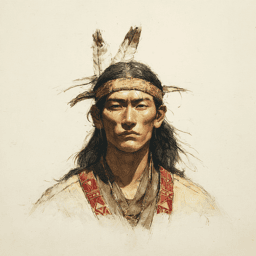
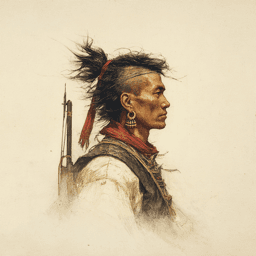
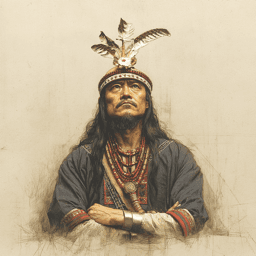
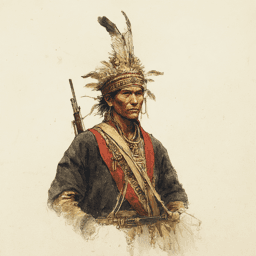
The People

6 figures · 1 eras · 1827 – 1886

Qing Frontier
Zhimuliu
Zhimuliu?–?
Pan Xianwen
Pan Xianwen?–?
Tauketok
Tauketok?–1874
Arokus
Arokus?–1874
Watan Yui
Watan Yui?–?
Pan Shengqing
Pan Shengqing1827–1886
Further Reading
1624–1662Sea & Fortress
01

Indigenous Encounters

Before the colossus of the Age of Sail crashed through Formosa's pristine coastlines, this emerald island had already thrived for millennia as a sprawling, vibrant, and entirely self-contained ancient cosmos. From the majestic heights of the Central Mountain Range to the expansive western plains and the jagged, sun-drenched reefs of the Pacific coast, countless Austronesian tribes called this island home. These original masters of the land, categorized by later historians as the Plain Tribes and Mountain Tribes, were by no means the isolated, primitive savages depicted in the early logs of Western colonizers. Instead, they had engineered highly complex, sophisticated social structures and spiritual worldviews perfectly calibrated to harmonious coexistence with the natural world. In their cosmic understanding, every mountain, river, and ancient forest was shielded by omnipresent animistic deities and ancestral spirits (Utux or Anito). Moving to the rhythmic cadences of seasonal monsoons and oceanic tides, they wove an extraordinary, unwritten tapestry of human civilization through song, tattoo, and sacred ritual.


02

The Madou She War

In the early seventeenth century, the southwestern plains of Taiwan were not a unified land ruled by any single state.

03

The Sinckan Script

In the early seventeenth century, the plains of Taiwan had no written language.

1662–1683Tungning Dynasty
04

Vanishing Plain Warriors

In the 1660s, the landscape of central Taiwan offered a stark contrast to the highly sinicized, scholarly atmosphere taking root in Tainan. This was a wild, untamed frontier nourished by the currents of the Dadu and Zhuoshui rivers.

1683–1895Imperial Frontier
05

The Dajiaxi Uprising

Before the tide of Han migration swept across central Taiwan, this fertile plain was already the homeland of the plains peoples — the Taokas, the Papora, the Pazeh and their neighbours — who for generations had fished, hunted, farmed and multiplied here. But as the Qing brought Taiwan into its realm, these "acculturated aborigines" were enrolled into the system of rule, becoming subjects burdened with corvée labour and tribute.

06

The Aboriginal Frontier

Throughout the Qing period, the relationship between Han settlers and Taiwan's indigenous peoples was defined by an official boundary — the 'savage boundary' (番界) — a line of earthen mounds, ditches, and guard posts stretching across the island's western foothills. East of this line lay the territories of indigenous communities whom the Qing classified as 'raw savages' (生番), largely beyond imperial control; to the west spread the Han-settled plains, where 'cooked savages' (熟番) — indigenous groups that had adopted Han customs and paid taxes — occupied an increasingly precarious middle ground.

1895–1945Under the Rising Sun
07

The Taroko War

The high mountains of Taiwan were the homeland of Indigenous peoples who for centuries had bowed to no lowland power. To a colonial state hungry for the resources of the forests and determined to complete its rule over the whole island, these cloud-wreathed ranges were the last and hardest frontier to conquer. In 1910 Governor-General Sakuma Samata launched a Five-Year Plan to Subjugate the Aborigines of unprecedented scale, resolved to bring the highlands into the fold by force.

08

Seediq Bale

After the fires of the Yiwei War died out in 1895, the Rising Sun flag was planted across the plains and harbors of Taiwan. Yet deep in the Central Mountain Range — those forests forever wreathed in mist, revered by the Seediq as the sacred domain of their ancestral spirits — the empire's rule could never truly conquer the human heart. Thirty-five years later, a rage of blood and tears, long suppressed, would erupt upon the hunting grounds of Wushe.

09

The Takasago Volunteers

When the Pacific War spread in 1942 into the dense jungles of the Philippines, New Guinea and the islands of the South Seas, the Japanese army — trained for temperate warfare — suddenly faced an enemy it could not overcome: not the Allies, but the tropical rainforest itself. Humidity, disease and trackless undergrowth paralysed supply lines and felled soldiers by the score. It was then that the army turned to an unlikely source of manpower — the Indigenous peoples of Taiwan's high mountains. Having lived for generations among steep ridges and deep forest, their skill at moving, hunting, finding paths and surviving in the wild was unmatched by any regular unit.

1949–1987Silent Island
10

Purge of Indigenous Elites

Beneath the shadow of Cold War confrontation and martial law in the mid-twentieth century, Taiwan’s authoritarian government launched sweeping campaigns to consolidate control over the island’s mountainous regions, natural resources, and indigenous communities. Determined to eliminate all potential local autonomy movements and prevent any perceived communist infiltration, the regime carried out systematic political purges across every level of society.

2000–thread.span.presentNew Formosa
11

Taiwanese Identity — Who Am I?

"Are you Taiwanese, Chinese, or both?" This deceptively plain survey question, first posed systematically by National Chengchi University's Election Study Center in 1992, has become one of the most telling barometers of a society in quiet revolution. At the outset, fewer than twenty percent of respondents answered "Taiwanese only." Three decades later, that figure exceeds sixty percent, while exclusively Chinese identification has collapsed to near single digits. No amount of policy, propaganda, or protest could have produced the shift alone; it is the cumulative work of democratic elections, a free press, generational turnover, cross-strait estrangement, and an expanding civic imagination.