Isle of Time
The Defiant

Story Thread

The Defiant

Four centuries, one refusal to kneel — the faces who rose against power.

The People

30 figures · 7 eras · 1652 – thread.span.present

Age of Discovery
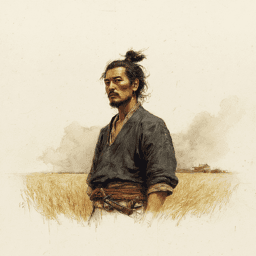
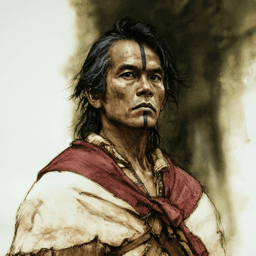
Guo Huaiyi
Guo Huaiyi?–1652
Qing Frontier
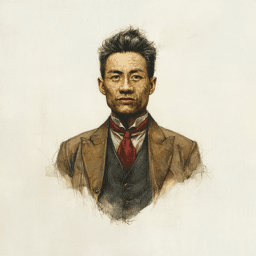
Zhu Yigui
Zhu Yigui1690–1722
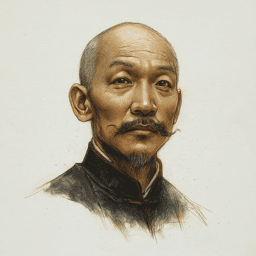
Lin Shuangwen
Lin Shuangwen1756–1788
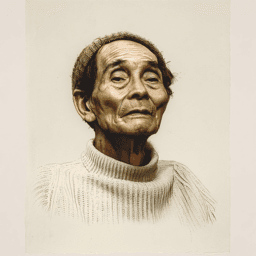
Zhuang Datian
Zhuang Datian?–1788
Dai Chaochun
Dai Chaochun?–1864
Japanese Colonial Period
Wu Tangxing
Wu Tangxing1860–1895
Hsu Hsiang
Hsu Hsiang1860–1895
Chiang Shao-tsu
Chiang Shao-tsu1876–1895
Liu Yongfu
Liu Yongfu1837–1917
Qing Frontier
Wu Luanqi
Wu Luanqi1833–1898
Japanese Colonial Period
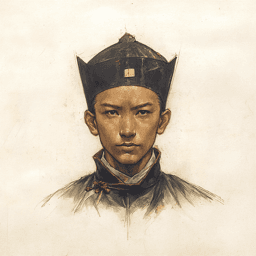
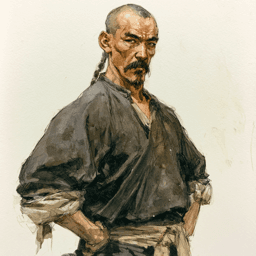
Jian Dashi
Jian Dashi1870–1900
Ke Tiehu
Ke Tiehu1876–1900
Lin Xiaomao
Lin Xiaomao1865–1902
Yu Qingfang
Yu Qingfang1879–1915
Mona Rudao
Mona Rudao1882–1930
Chiang Wei-shui
Chiang Wei-shui1890–1931
Lin Hsien-tang
Lin Hsien-tang1881–1956
Yang Kui
Yang Kui1906–1985
Chien Chi
Chien Chi1903–1951
Post-War & Authoritarian Era
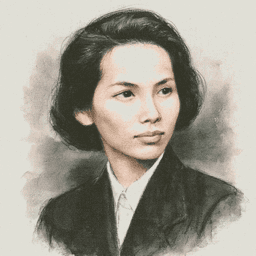
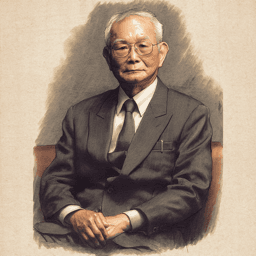
Hsieh Hsueh-hung
Hsieh Hsueh-hung1901–1970
Huang Chin-tao
Huang Chin-tao1926–2014
Wang Tien-teng
Wang Tien-teng1901–1947
Tang Te-chang
Tang Te-chang1907–1947
Kao I-sheng
Kao I-sheng1908–1954
Lei Chen
Lei Chen1897–1979
Democratic Transition
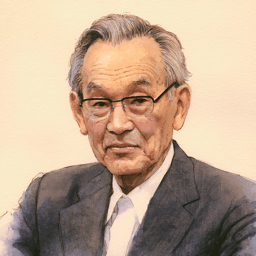
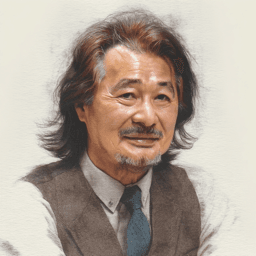
Peng Ming-min
Peng Ming-min1923–2022
Shih Ming-teh
Shih Ming-teh1941–2024
Lin I-hsiung
Lin I-hsiung1941–
Chen Wen-cheng
Chen Wen-cheng1950–1981
Cheng Nan-jung
Cheng Nan-jung1947–1989
Further Reading
1624–1662Sea & Fortress
01

The Guo Huaiyi Rebellion

In the 1650s, Taiwan entered a period of unprecedented population growth.

02

The Siege of Fort Zeelandia

On the pale morning of April 30, 1661, as the heavy mists over the Tayouan sea slowly dissolved in the dawn light, the Dutch garrison standing watch upon the battlements of Fort Zeelandia witnessed the most breathtaking and terrifying spectacle of their lives. Across the distant horizon, the turbulent waves of the Taiwan Strait churned beneath hundreds of massive Chinese warships. Their bows were carved into ferocious dragon heads, and their rigging fluttered with the crimson banners of the "Prince of Yanping." It was an elite vanguard of twenty-five thousand ironclad warriors, commanded by the legendary warlord Zheng Koxinga. Facing near-total defeat on the mainland by the advancing armies of the Qing Dynasty, Koxinga had turned his calculated gaze across the strait to this beautiful island, which had been governed by the Dutch East India Company (VOC) for thirty-eight years. This was far more than a routine campaign for territory; it was a titanic, nine-month clash between two entirely different maritime civilizations, military structures, and geopolitical ambitions, known to history as the Siege of Fort Zeelandia.

1683–1895Imperial Frontier
03

The Duck Lord's Revolt

In the early eighteenth century, southern Taiwan was a land filled with violence, resentment, and despair. Countless “Luohanjiao” — lone migrant men who had survived the deadly crossing of the Black Ditch — discovered that the island was not the golden frontier promised in rumors back home. Instead, they found themselves trapped beneath the ruthless exploitation of the Qing imperial bureaucracy.

04

Rebellions and Unrest

Qing-era Taiwan earned a reputation as one of the empire's most turbulent frontiers. The folk saying 'every three years a minor revolt, every five years a major rebellion' (三年一小反、五年一大亂) was no exaggeration — over two hundred recorded uprisings occurred during two centuries of Qing rule. The roots of this instability lay in the island's unique social fabric: a rapidly growing settler population, weak imperial oversight, ethnic rivalries between Hokkien and Hakka communities, exploitative local officials, and the absence of a deeply rooted gentry class to mediate disputes.

05

King of the Black Flag

While the Luohanjiao on land battled the Qing with broadswords and blood, the Black Ditch — the strait separating Taiwan from the mainland — entered its most chaotic and dramatic golden age. In the early nineteenth century, the Taiwan Strait was at once a golden corridor of merchant ships and rolling wealth, and a lawless blue wasteland beyond the reach of any government. Out of these storm-tossed seas rose a pirate king whose very name made the Qing Empire, Western powers, and merchant houses tremble: Cai Qian.

1895–1945Under the Rising Sun
06

The Yiwei War

In the early summer of 1895, an enormous fleet darkened the sea off Cape Santiao near Keelung. It was the Imperial Guard Division, led by Prince Kitashirakawa Yoshihisa, a general of the Imperial Japanese Army. For the people of Taiwan, it was a moment of historical despair — of being torn open. Across the strait, the Qing Empire had suffered devastating defeat in the First Sino-Japanese War, signed the Treaty of Shimonoseki, and ceded Taiwan and Penghu to Japan in perpetuity. When the news of the imperial court's "abandonment of Taiwan" reached the island, lamentations rose everywhere. Gentry cried out in anguish: "The prime minister has the power to cede land — but this lonely subject has no strength to turn back the heavens!"

07

Armed Resistance

The early decades of Japanese rule were marked by persistent armed resistance, revealing the depth of opposition to colonial authority across both Han and indigenous communities. In the first years after annexation, guerrilla fighters known as 'righteous bandits' (義匪) waged a sustained insurgency across the countryside, prompting the colonial government to launch massive 'bandit suppression' campaigns that killed thousands.

08

The Greatest Thief

In the early twentieth century in northern Taiwan, while the Imperial Japanese Government-General forged the island into an iron-bound police state through the strict baojia system and the omnipresent "branch-station" Japanese police, in the damp midnight of Taipei's Dadaocheng a dark figure was moving — gliding across the red-brick roofs of Baroque-style mansions, leaping rooftops in the night sky like a swallow.

09

The Taroko War

The high mountains of Taiwan were the homeland of Indigenous peoples who for centuries had bowed to no lowland power. To a colonial state hungry for the resources of the forests and determined to complete its rule over the whole island, these cloud-wreathed ranges were the last and hardest frontier to conquer. In 1910 Governor-General Sakuma Samata launched a Five-Year Plan to Subjugate the Aborigines of unprecedented scale, resolved to bring the highlands into the fold by force.

10

Taiwan Parliament Petition

In the early 1920s, a group of Taiwanese students living in Tokyo began, under the lamplight of a foreign city, to rethink their own destiny and that of their island. Japan was then in the high tide of Taisho democracy; the vocabulary of parliamentary politics, liberty, and human rights circulated through the streets and campuses of the imperial capital. Taiwan itself, however, remained bound by a colonial system in which the Governor-General held legislative, executive, and judicial power in a single hand. It was within this gap that these young men formed the New People's Society in 1920 — a core group to gather like-minded comrades and search for a way forward, and the seed of a political movement that would last more than a decade.

11

The Chih-ching Incident

The Taiwan of the early 1920s stood in an unusual political season. In the wake of the First World War, the ideals of national self-determination and constitutional politics swept across the globe and quietly crossed the strait as well. A generation of Taiwanese intellectuals, schooled in the new learning, was no longer content to live under the Governor-General's unchecked rule. Instead they sought, within the seams of the system, to win a measure of voice for the island's six million people. The stage they chose was not the street with its blades and guns, but the assembly hall and the petition — a struggle waged in the language of law.

12

The Erhlin Incident

Under Japanese colonial rule, Taiwan's sugar industry was built into one of the empire's most important economic pillars — yet that sweet wealth rested on the sweat and humiliation of the cane farmers. Through the system of designated "raw-material collection zones," the Government-General carved every stretch of cane field into the territory of a single assigned sugar company, so that the cane a farmer grew could be sold only to the one mill within his zone. As a result, when the cane would be harvested and weighed, how it would be graded, and what price each hundred catties would fetch were all decided by the company alone. The farmers had no room to bargain and no way to check whether the scales — held entirely in the company's hands — were honest. Day after day of toil brought them suppressed prices and weights that had plainly been tampered with. Small wonder that a bitter, wry saying passed from mouth to mouth: "the smartest man in the world can't beat the sugar company's scales." That single refrain captured an entire generation of growers' resignation and resentment toward this structural exploitation.

13

The Taiwanese People's Party

In the early 1920s, driven by the newspaper Taiwan Minpao and by lecture meetings held across the island, Taiwanese society experienced an unprecedented awakening. Islanders who had once known only taxes and corvée began to speak openly of assemblies, local self-government, and basic civil rights. At the forefront of this current stood a generation of newly educated intellectuals, physicians, and young landowners, gathered beneath the banner of the Taiwan Cultural Association, founded in 1921 with cultural enlightenment as its mission. Through reading rooms, summer schools, and touring lectures, the sparks of awakening were scattered into towns and villages across the island.

14

Seediq Bale

After the fires of the Yiwei War died out in 1895, the Rising Sun flag was planted across the plains and harbors of Taiwan. Yet deep in the Central Mountain Range — those forests forever wreathed in mist, revered by the Seediq as the sacred domain of their ancestral spirits — the empire's rule could never truly conquer the human heart. Thirty-five years later, a rage of blood and tears, long suppressed, would erupt upon the hunting grounds of Wushe.

1945–1949Light & Shadow
15

The February 28 Incident

On the evening of February 27, 1947, Monopoly Bureau agents seized contraband cigarettes from a widow outside the Tianma Teahouse in Taipei's Dadaocheng district, striking her with a pistol butt and, in the ensuing chaos, firing into the crowd and killing a bystander. More than a year of accumulated grievances — runaway inflation, food shortages, official corruption, and the exclusion of native Taiwanese from power — found their outlet that night. The next day, February 28, crowds marched on the Governor-General's Office to petition, only to be raked with gunfire from guards above. Word spread across the island by radio and by mouth, and within days, from Keelung to Pingtung, local committees formed and took over public order. A full-scale uprising against postwar rule had begun.

16

The Battle of Wuniulan

By March 14, 1947, the sky over Taichung had already changed. The 21st Division, which had landed at Keelung on March 8, was driving south, and wherever its machine guns and bayonets reached, blood ran in the streets. The 27 Brigade, which had held the city for barely ten days, could no longer stand against a regular army on the open plain. Hsieh Hsueh-hung and the officers of the operational headquarters made a decision that was heavy yet clear-eyed: to abandon Taichung and withdraw to the mountain town of Puli. This was no rout but a planned redeployment — to draw the fighting away from the crowded city, to spare its innocent residents the ruin of street combat, and, leaning on the barrier of the Central Mountain Range, to preserve the last strength of this young force. That night, trucks and marching fighters wound their way east along the mountain roads, their headlamps forming a thin thread of fire in the darkness, carrying rifles and ammunition — and the last desperate gamble of an entire generation of the island's youth.

1949–1987Silent Island
17

The White Terror

On May 20, 1949, the Taiwan Provincial Government declared martial law, initiating thirty-eight years of authoritarian rule that would bracket the island's post-war history and define the political reflexes of three generations. Within weeks of the declaration, the Taiwan Garrison Command assumed sweeping jurisdiction over civilians through military courts; a month later, the enactment of the "Statute for the Punishment of Sedition" and the "Statute for the Detection and Eradication of Communist Spies" provided the legal scaffolding that would justify four decades of extrajudicial detention, summary trial, and capital punishment, all under the legal framework of the "Period of National Mobilization for Suppression of Communist Rebellion."

18

Party-State Governance

During the martial law era, Taiwan's party-state-military trinity permeated every corner of society. The KMT controlled economic lifelines through party-owned enterprises such as Central Investment Holding, Central Trading and Development, the Broadcasting Corporation of China, and Central Motion Picture — conglomerates whose revenues funded party operations, patronage networks, and cadre training, and whose existence blurred every line between public policy and party interest. It monitored social dynamics through overlapping intelligence agencies that reported back to Chiang Ching-kuo in the 1950s and 1960s, and instilled party-state ideology through a centralized education system in which every classroom displayed the Generalissimo's portrait, every textbook framed Taiwan as a province of China, and every schoolchild recited the KMT-authored "National Anthem" before morning assembly.

19

The Luku Incident

At one of the harshest moments of Cold War confrontation in the 1950s — while the smoke of the Chinese Civil War had not yet fully cleared — Taiwan’s authoritarian government launched the largest anti-communist purge of the martial law era in an effort to eradicate underground armed networks affiliated with the Chinese Communist Party. The “Luku Incident” of late 1952 became not only the largest military suppression campaign and mass arrest operation of Taiwan’s White Terror period, but also one of the bloodiest political tragedies to devastate ordinary rural communities, destroying countless farming and mining families who had little understanding of the ideological conflict consuming the island around them.

1987–2000Breaking the Silence
20

The Dangwai Movement

Under one-party authoritarian rule, a group of courageous Taiwanese chose to seek political participation outside the KMT system. "Dangwai" (literally "outside the party") — originally a neutral administrative term describing non-KMT candidates permitted to contest limited local offices — gradually evolved into a sweeping democratic movement that coordinated lawyers, professors, journalists, shopkeepers, and former political prisoners into something approaching a shadow opposition without the legal right to call itself one.

21

The Kaohsiung Incident

On December 10, 1979 — International Human Rights Day — Formosa Magazine organized a massive public rally in Kaohsiung demanding democracy, an end to martial law, and the release of political prisoners. What began as a procession of torches down Chungshan Road escalated when authorities encircled the marchers with armored vehicles and tear gas, deploying riot police to forcefully disperse the crowd before launching mass arrests across the island over the following three weeks.

22

The Lin Family Massacre

On February 28, 1980 — the thirty-third anniversary of the 228 Incident — the late-winter chill still cut through the streets of Taipei. While the entire city remained shrouded in the grim atmosphere of the Kaohsiung Incident military trials, an ordinary residence on Hsinyi Road became the site of a massacre that would shake the whole island and remain unsolved to this day. The victims were the family of Lin Yi-hsiung, the gentle Dangwai leader who at that very moment sat in a military detention center awaiting trial.

23

The Chen Wen-cheng Incident

At dawn on July 3, 1981, the cicadas had not yet begun their song on the campus of National Taiwan University, and the morning mist had not yet lifted. A janitor discovered a cold male corpse on the lawn beside the graduate library. The body lay face down, limbs twisted — it was Chen Wen-cheng, the U.S.-based scholar who had been taken away for questioning by the Taiwan Garrison Command only the day before. This body, appearing suddenly within the nation's highest seat of learning, struck like a thunderclap that split open the seemingly tranquil halls of academia under martial law and sent shockwaves through communities at home and abroad.

24

Birth of the Opposition

On the morning of September 28, 1986, one hundred and thirty-five Dangwai activists gathered under the banner of a "campaign assistance committee" in the second-floor Ming Room of the Yuanshan Grand Hotel in Taipei. The announced agenda was to coordinate candidate nominations for the year-end supplementary elections to the central legislature; midway through, however, the participants overturned the planned program, moved and voted on the spot, and announced the founding of the Democratic Progressive Party (DPP) — a direct challenge to more than three decades of KMT one-party rule. With the ban on new parties still in force and martial law still in effect, it was a decision of enormous political risk: many in the room had steeled themselves for the possibility that everyone present would be arrested before the session adjourned, and some had brought a toothbrush and toiletries with them.

25

Lifting Martial Law

On July 15, 1987, President Chiang Ching-kuo announced the lifting of Taiwan's thirty-eight-year martial law — one of the longest continuous periods of military-backed emergency rule in world history. In a single stroke the Taiwan Garrison Command lost its jurisdiction over civilian courts, tens of thousands of blacklisted overseas Taiwanese could begin the long process of returning home, and the restraints that had governed every public gathering since 1949 were formally rolled back, replaced by a new Assembly and Parade Act whose loopholes the courts and the opposition would spend the next decade testing.

26

A Hundred Percent Freedom

At dawn on April 7, 1989, in the offices of Freedom Era Weekly on Minquan East Road in Taipei, a fire offered as a sacrifice of life suddenly engulfed the editor-in-chief's room. When riot police broke down the door, they were met not by a suspect surrendering, but by raging flames and a body that had immolated itself to affirm a conviction. That year, Cheng Nan-jung was forty-one. In the most resolute way imaginable, he proclaimed to an island still bound by the shackles of speech his belief in "one hundred percent freedom of expression."

27

Lilies in the Square

In March 1990, the chill of early spring had not yet fully faded from Taipei, yet on the broad plaza before the Chiang Kai-shek Memorial Hall a tide of youth gathered — powerful enough to shake the entire national order. Thousands of university students from across Taiwan sat in protest on the cold stone ground, taking as their emblem the wild lily, a flower symbolizing autonomy, purity, and resilience, and raising a deafening cry against a political structure long since ossified.

2000–thread.span.presentNew Formosa
28

The First Party Turnover

By the late 1990s, Taiwan's political landscape stood at an unprecedented crossroads. More than half a century of uninterrupted Kuomintang rule had weathered the lifting of martial law in 1987, the full re-election of the legislature, and the first direct presidential election in 1996. Yet the island's democratic transition remained incomplete so long as no opposition party had ever assumed the highest office. Internal fissures within the KMT, disillusionment with "black gold" politics, and the maturing organizational strength of the Democratic Progressive Party converged to set the stage for a pivotal contest.

29

Sunflowers in the Chamber

On the night of March 18, 2014, a group of students and citizens climbed over the walls, broke through the police lines, and stormed into the legislative chamber on Jinan Road in Taipei, launching an occupation that would last twenty-four days. This movement, later known as the Sunflower Student Movement, was one of the largest and most far-reaching civic movements in Taiwan since the lifting of martial law, and the first time the younger generation intervened so directly and resolutely in the decision of a major national policy.